For Walter Cybulski, exceptional poet and humorist bar none
“Arjuna said: How shall I strike my grandfather, my guru, and all other relatives, who are worthy of my respect, with arrows in battle, O Krishna?” — Bhagavad gita
[The Introduction will make this story a little clearer, maybe]
His Father’s Circus
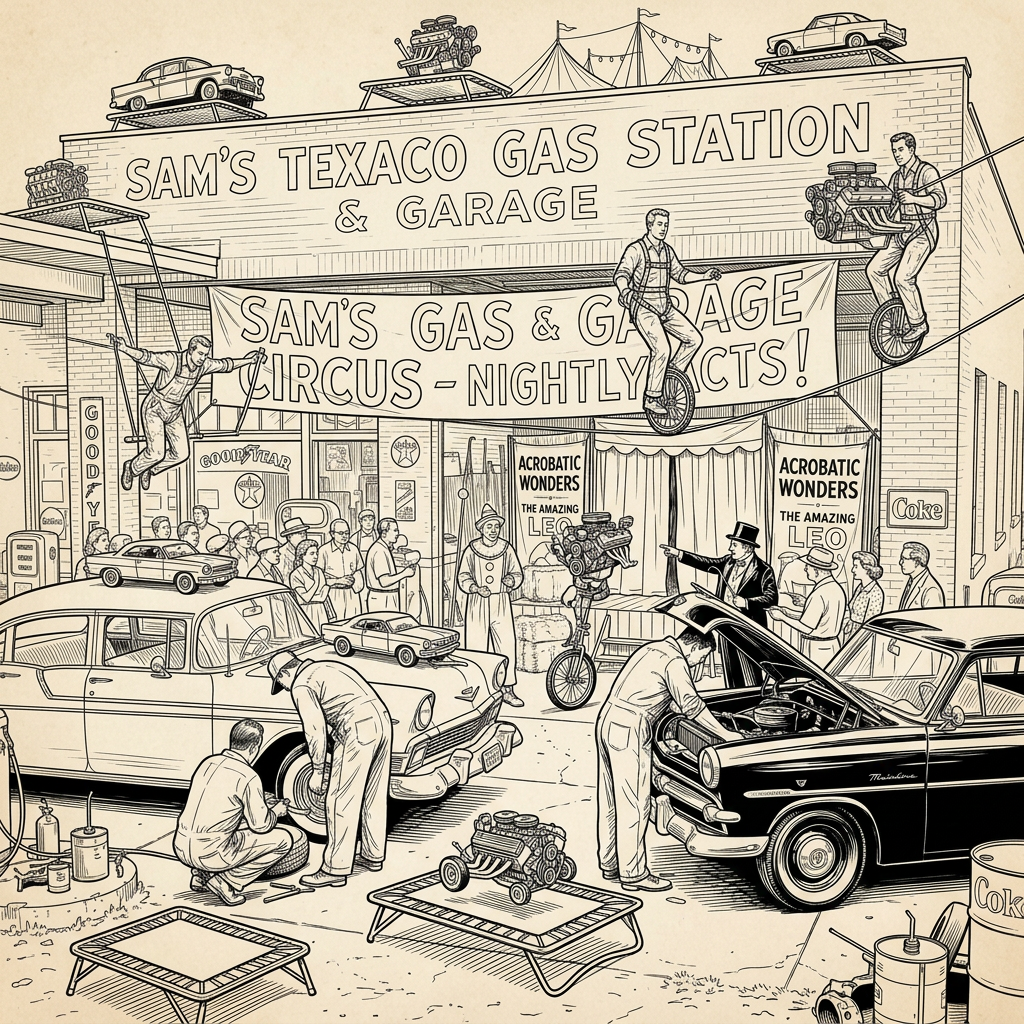
As a very young boy, his father ran a gas station. He was a mechanic and always carried a gigantic wrench, that was nearly 3 feet long and twice as heavy.
And when he wasn’t working on cars or trucks or busses or tanks, he would swing his wrench, and throw it high in the air and catch it, like a heavy metal drum major. And people would drive long distances just to have him fill up their tanks with gas, so they could watch him perform. And he would do somersaults out to the tanks and backflips all the way back to his office. And when he wasn’t working on cars or tanks or trucks, and the lines at the gas tanks had thinned, he’d finally close shop for the day and wander into the bar across the street and ham it up with his friends.
And the small boy would tag along, at first attached to his mother’s bosom, then to her hand, and finally alone, behind his dad, just large enough to be hoisted on the bar stool by a rough hand, and then given a little boost, and finally able to climb the bar stool by himself and drink coca-cola dribbled over huge tankards of ice, chewing the ice, absent-mindedly, while his father laughed and whistled and wagered fortunes on how many pushups he could do in an hour, or whether he could withstand a sledge hammer to his stomach.
Once, a dancing bear happened to be in the bar, and challenged his father to an arm-wrestling match, and the bear won two out of three, but never came back to challenge anyone again.
When the boy was 8 years old, he quit school to become a soda jerk, and got a job next door to his father’s garage. And over the years, as the garage business grew, all the other businesses in town grew by proximity, and profits skyrocketed all around. You could hear the sonic boom for miles.
And soon, his father erected a circus tent over the gas station and hired trapeze artists to clean the windshields and change the oil and repair the damaged tanks and airplanes, or locomotives, which pulled slowly into town, plaintively wailing, like lost whales, leaving long, thin divots in the road; or the Volkswagens, and Pontiacs and ox carts, which formed long lines — all repaired mid-air, the acro-mechanic grease monkeys jumping into engines from high wires or swinging low to tighten screws on a transmission bouncing on a trampoline, while his father dozed in the back row of the stands or stared vacantly into the corner of his small office, where he kept a box of ammunition for a gatling gun he kept in its box, still unopened.
Soon, everyone purchased broken vehicles, or broke their own vehicles on purpose, just so they could watch the work being performed on their own vehicles, like proud parents. And he had three separate areas of the tent set aside for different sized vehicles, and a clown in each one, who pretended to be even drunker than he actually was, and pretended to not know anything about engines, but lo and behold, the vehicle would emerge at the end of the day spotless and humming like a pigeon, or cooing like a razer.
And his father rode out to greet the customers now and then on an African elephant and accepted pelts of all kinds as payment, or Rosary beads, or statues of ancient kings, until finally, one morning, the axel fell out of his rusted pickup truck on his way to work, and he fell through the floor of the rusted cab, and died.
That night, the town went belly-up, and all the performers disappeared. Now and then, for years afterwards, you might chance upon a dancing bear along a dirt road, challenging a passerby to an arm-wrestling competition for everything the bear owned in exchange for anything you had, even a morsel of food. And now and then, elephants could be found wasting away in remote hollows and caverns, furry, now like wooly mammoths, and tribes of gypsy acrobats would show up begging for work in the grocery store, hanging from signs and light fixtures, and the boy’s hopes of being a soda jerk fizzled.
Sunny Days
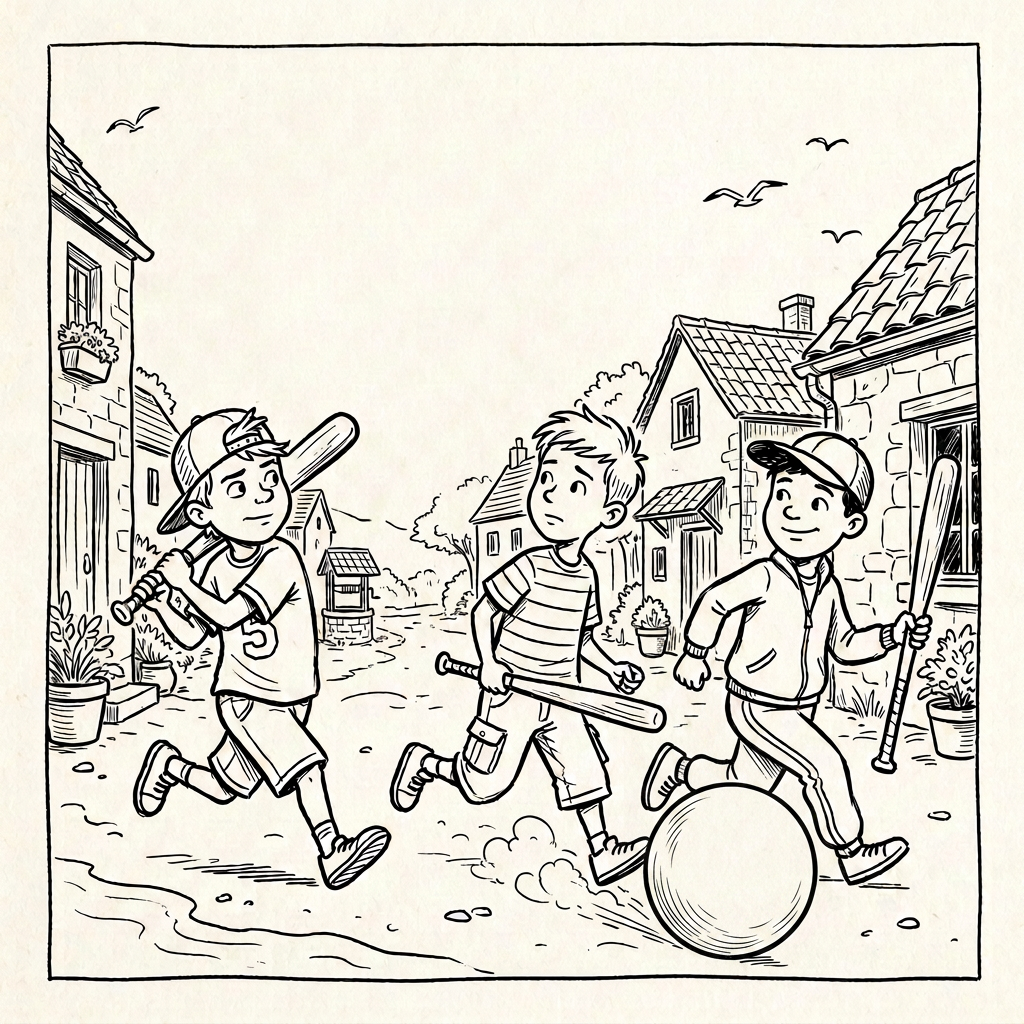
When he was a boy no more than 7, the sun fell, or more likely jumped, from the sky and landed in the road, where his friends were playing toss and catch. It was no bigger than a large beach ball and shone so brightly, they could play late into the night without their parents being concerned.
For weeks, they’d wait for the sun to pop down from the sky, or simply slide gently to the ground right at sunset. And it came when they called, learned to stay and beg for firewood, and would follow them everywhere they went, just like a brightly colored, extremely warm-blooded dog. Sometimes the sun would serve as a campfire. And it was so hot, it would keep them warm from 10 feet away.
But one night they all snuck down to the school grounds and played a game of night baseball. The sun sat up high in the bleachers to shine light on the whole field. But after about an hour, the little school stadium caught on fire. Some of the kids tried to put it out with water bottles from the drinking fountain. Others called the sun down and reassured it, because it was turning red with shame.
But the fire got out of hand and the boys and their sun stood there in the field watching the firefighters hosing down the remnants of the stadium. And before they knew what happened, the firemen came running at them with hoses. And the boys scattered into the dark, leaving the sun standing alone in the field, not knowing where to turn.
Next morning they got up in the early darkness to find the sun. They could see smoke still rising from the ruins of the stadium. And when they got there, they found a pile of smoldering ash, where the sun had been standing. “Nothing’s going to be the same now,” the boy said. And all the boys were crying over the smoking pile of ash. And overhead the milky way was brilliant enough to awaken the birds. And the moon came up and wandered across a dazzling field of stars, as if searching for the sun. And the day was so bright with piercing pricks of starlit sorrow that the streetlights went off, and the busy human world awakened and resumed its steady ways as if nothing had happened.
For weeks, the boys mourned their companion and would visit the pile of charcoal and ash. But eventually, most of his friends got used to getting up at night for school and playing baseball under the streetlights.
And eventually the Milky Way and Moon and most of the other stars gave up their search and settled back into the cooler patterns of night.
And the businessmen and bus drivers and construction workers and teachers all got used to living under perpetual streetlights, and never even seemed to notice a difference.
But the boy never stopped visiting the pile of ashes. Even when the coach had the grounds crew move the pile into the brush near the side of the field, he visited the pile after school, and even tried a little artificial resuscitation, by lighting campfires over the charcoal. And once or twice he thought he saw a flare of bright, yellow light spark and sputter. But eventually, even the boy gave up. But he could never get used to street lights, and never stopped mourning the sun.
How His Parents Met
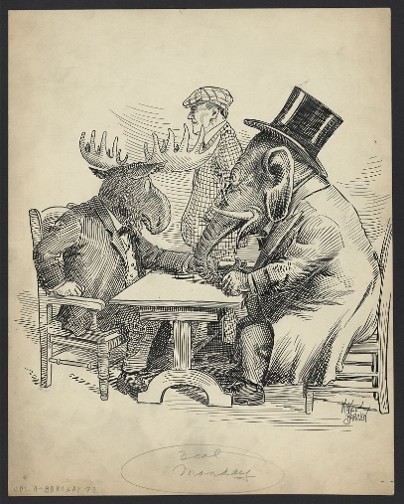
His father and mother met when his father quit the army at age 27, left Germany, walked across Europe, worked for food and a place to sleep wherever he could make himself understood by elaborate hand gestures, whistles and pantomime, and finally found a job as a Strong Man in a circus in Spain, where his future mother performed on the back of a surprisingly tame African elephant (named Ratón), doing handstands on his raised trunk, and whole floor routines on his back, while Ratón circled the Big Top.
When they married and he brought her back to live in northern Appalachia, she received Ratón as a wedding gift a month later, after the circus folded in the sudden absence of her shine of beauty.
The elephant ended up sleeping in their hay barn and adapting himself to the bottom of the social hierarchy of a herd of goats, who dominated the pasture.
Then they received another belated “wedding gift”, which was a surprisingly tame bull moose, who was an old friend of the elephant. But the moose mostly kept to himself, to avoid the tyranny of the goats as well as he could.
Naming the Boy
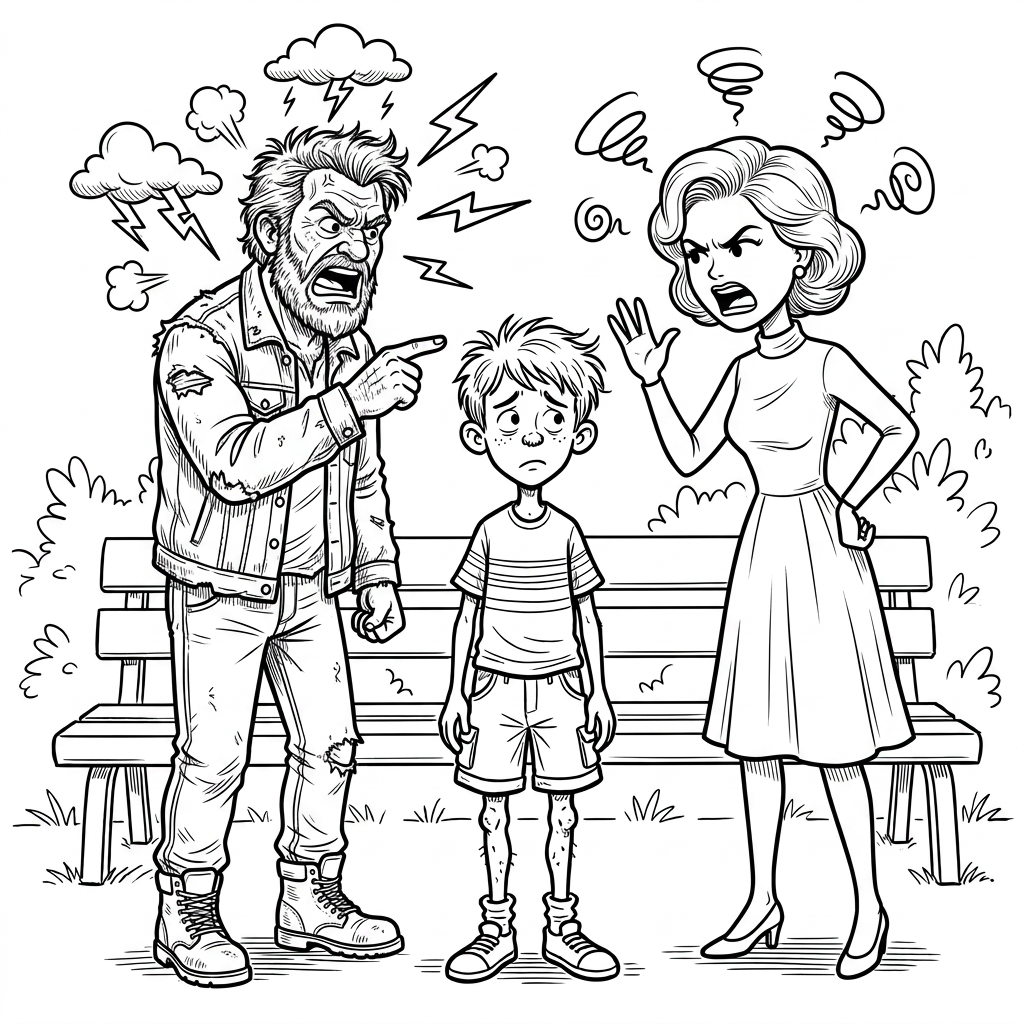
His Spanish mother wanted to name the boy “Ricardo”, but the father would only reluctantly agree to the compromise, “Richard”, which neither parent ended up using.
His mother detested the compromised form of the more musical and rhythmic “Ricardo”, and called him “Junior” instead – a vague allusion to their last name, “Juna” (itself a compromised form of the French, “Junot”, which was itself a compromised form of the French names “Jean” or “Juneau”).
His father refused to call him “Richard” or “Rick”, because he hated compromises of any sort, and especially any compromise with a woman – calling him, instead, “Boy”, or more often than not, “Hey!”
(For a while the boy lobbied to have himself renamed “Hayes” so that he would have a real name, but it didn’t stick).
Nevertheless, his mother secretly registered the boy at school under the name, “Ricardo”, which was a name so foreign to the people in this region of low mountains and dense forests that teachers and administrators overlooked the familiar diminutives, “Rick” or “Ricky”, and obsessively focused on the “outlandish” 2nd and 3rd syllables, calling him “Cardo”, and then “Cardio”, and eventually, by way of a series of orthographic mutations, and some randomly directed malignance on the part of one recently jilted administrative assistant, “Carbuncle”, which is the name that ended up on his school records.
Clumsy and Skinny
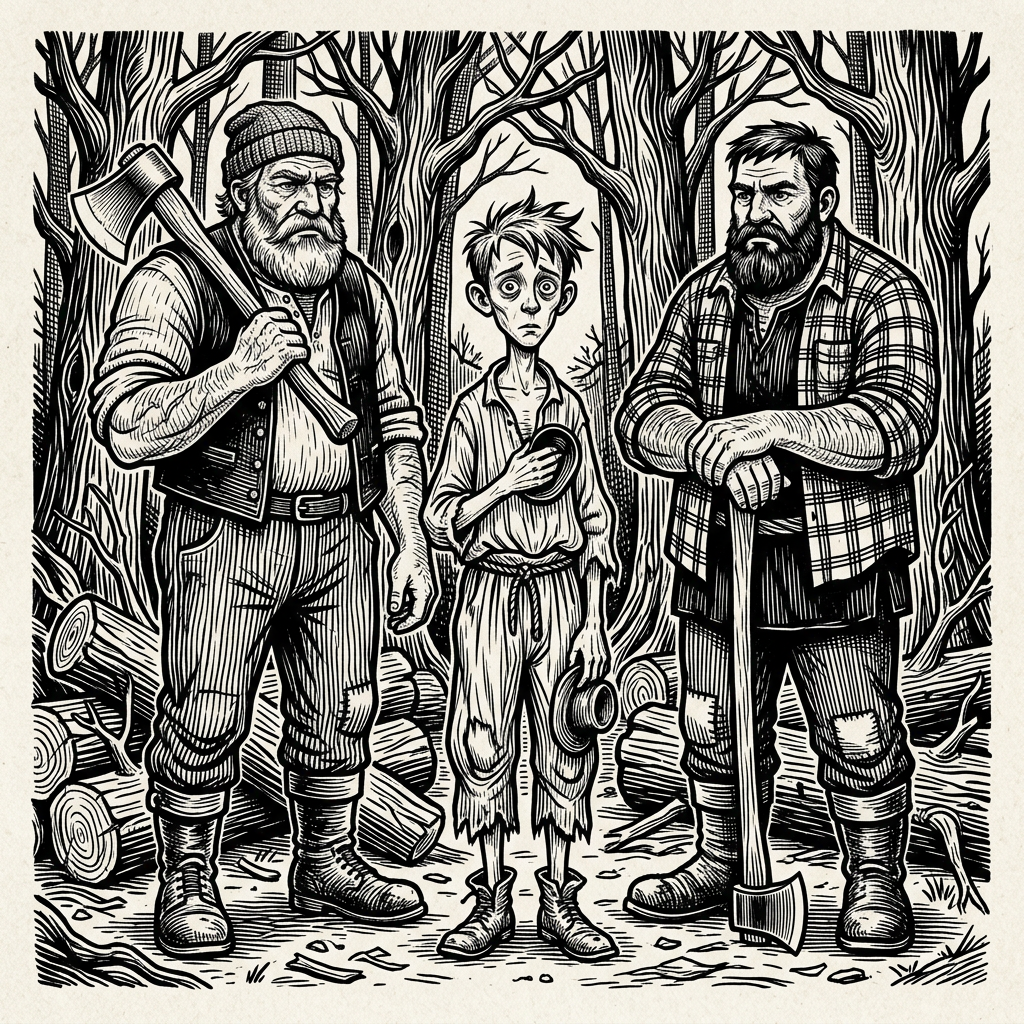
Although he admired the “exotic” beauty of his Spain-born mother, he had hoped to emulate the robust, rock-solid physique of his home-grown father. But alas, he ended up roughly tending towards his mother’s trim elegance, which (on a boy) looked almost disturbing, especially to rough-hewn, axe-grinding woodsmen in that region.
So, in a lame attempt to camouflage his appearance, he erased every trace of graceful movement, and adopted the lumbering gait of the woodsmen in his vicinity, hoping that would make him seem bulkier. But that only made him a skinny boy who was also clumsy. Although he could jump high and turn quick and agile if provoked.
Nameless Advantages
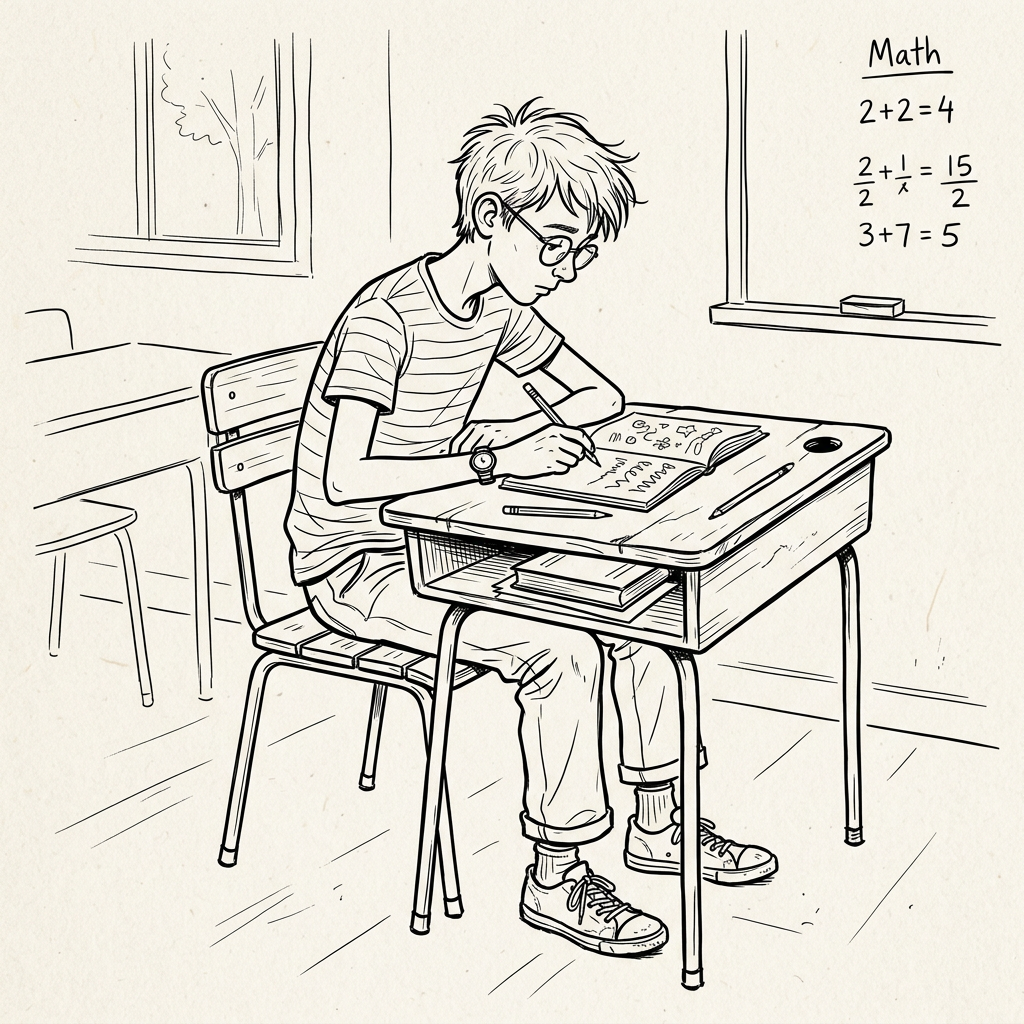
Although he could think of at least 300 names he’d rather have, after a while he found a certain advantage to the misnomer Carbuncle. The only obstacle between himself and detention was often only the small doubt his name stoked. It sounded almost unusual enough to be a stage name for somebody famous. And although the people in these villages mocked the famous, their knees would still buckle if one happened to cross their paths. And so, he got away with a lot that other boys named Jim, or Bob couldn’t get away with.
For instance, he once took his pet bull moose to school for show and tell, even though it was strictly against school rules to bring herbivores weighing more than 600 pounds to school. But “Carbuncle and his Moose” became a popular recess entertainment, and many of the teachers would crowd around the boy and ask for his autograph and try not to get trampled by the moose, who often grew restless in the afternoon, and would sometimes kick down a wall (always careful that nobody was behind it first, because he was a remarkably considerate bull moose). But even then, he never got in trouble for anything the moose did, because of how odd his name was.
But one day a boy named Burt brought a 6-inch caterpillar to school for show and tell, and was placed in detention, because five inches was long enough, the principal said. “How come Carbuncle gets to have a moose?” the boy named Burt asked.
“Because ‘Carbuncle’ is an unusual name for a boy, and we expect unusual things from a boy like that. But not from a boy named ‘Burt.”
But when a dancing bear came to school to perform for the faculty during a lunch break, the bear took a break from performing and “had words” with the moose, and the boy stepped between the two animals to settle their argument, and ended up in the nurse’s office.
Shortly thereafter, the moose and the bear also stopped coming to school to avoid each other, and the principal released Burt from detention and said “ok, we’ll accept caterpillars up to 7 inches from now on. You can take it to show and tell.”
But the caterpillar had already turned into a gigantic butterfly and Burt jumped on its back, and they flew together into a different school district.
He Seemed Invisible to Bats and Bees
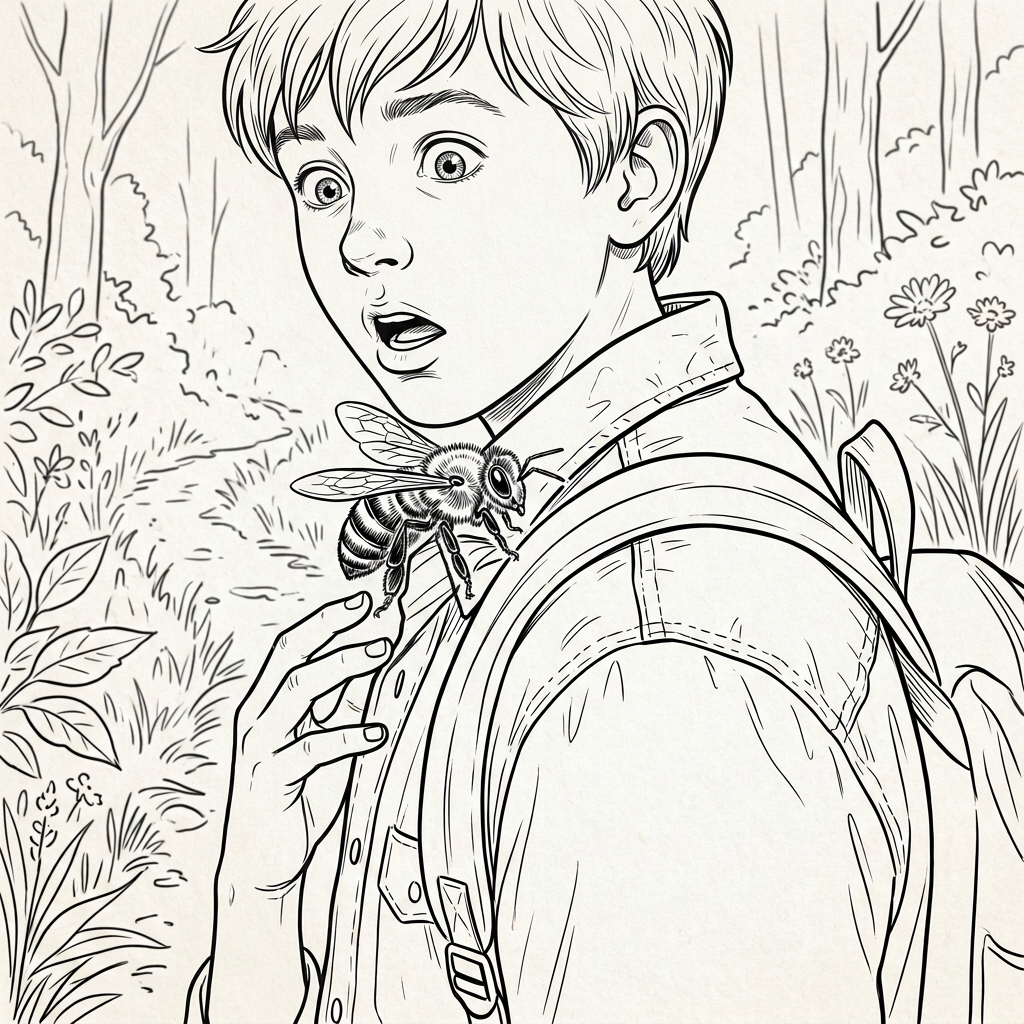
One day, two bees, at least one of them blind drunk, flew over the table right at his face. He instinctively ducked, colliding with the drunker of the two bees, who also over-reacted in her flight pattern and momentarily seemed to buzz-curse an octave lower, before hitting his chest, and then clutching at his shirt for stability and dragging itself over his shoulder blade and flying away.
The same thing happened when he was 14, 17 and 21. Then when he was 25, a bat did a similar thing, scrambling up his right sleeve, resting a moment and then jumping off.
The Witch’s House
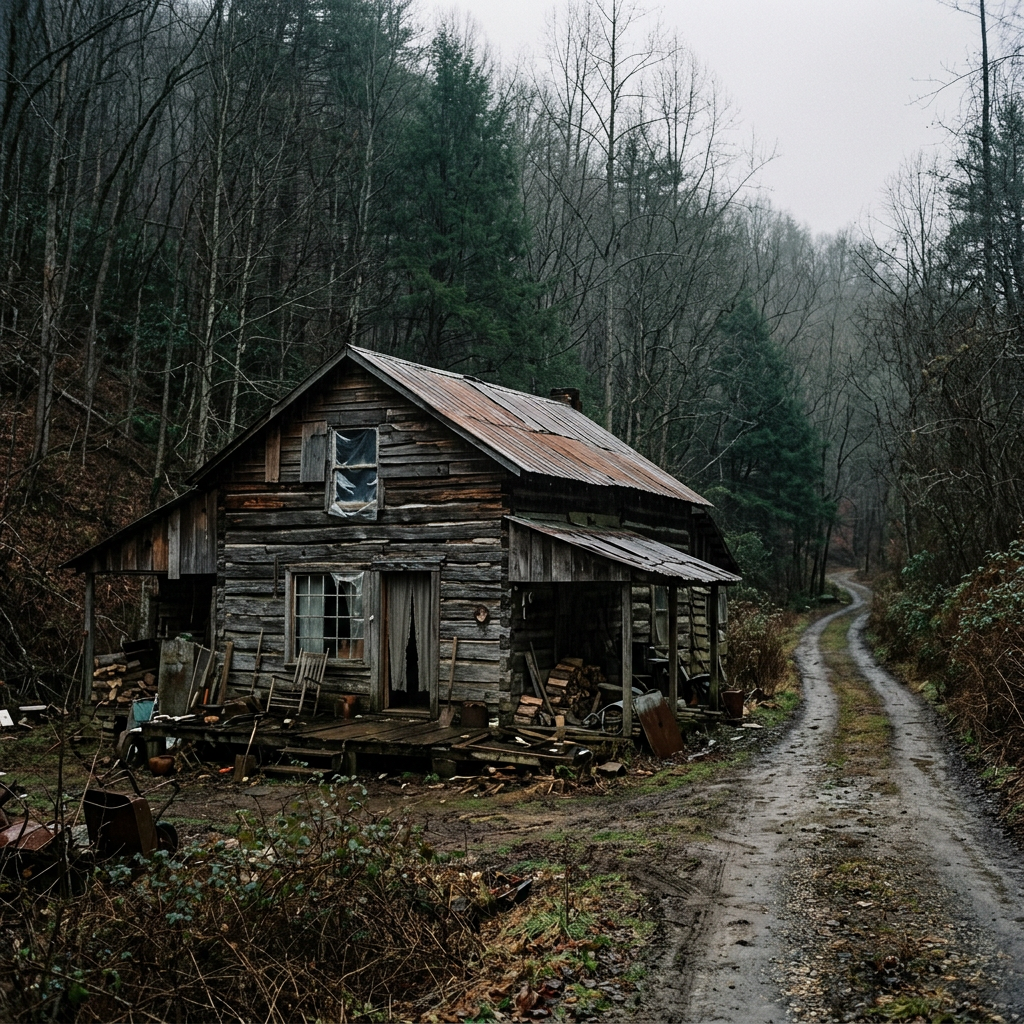
The boy was afraid of his neighbors up in Hadey’s Holler, who owned a gigantic stallion that came running in fury at him along the fenceline, with its ears flat back against its wet neck, and its nostrils enflamed. And the horse would always reach out his neck to bite him and then run away from the fence and charge again, as if preparing to jump the fence, but then stop abruptly at the fence, sliding a little in the mud, screaming furiously, and running off to start again.
And they had a gigantic red dog on a short and fraying rope that charged as far as it could reach before hitting the limits of the rope, swinging itself high and landing with a thump, and then clearly blame the boy for its pains.
One day, walking quickly past the house, which smelled of musty rot and worse, he overheard a conversation through the window:
“Hey, which of you boys died? Was it the oldest?,” their mother Hadey asked — a spot of ash from her cigarette cascading down her dirty apron.
“No, I’m the oldest. Doob died. Fucking broke his neck, he jumped, ‘member?,” said Bopp, poking through the remains of the fire. “The bitch can’t tell me apart from a corpse,” he mumbled to nobody in particular, even though his brother was sitting next to him, but as far as they knew, couldn’t speak.
Their mother leaned out of the kitchen window, spied the boy, and spat a chunk of something at the chickens. Then turning back to her son: “Oh, I thought you died,” she said.
“What difference does it make?” her son Bopp said.
“Don’t get snotty,” she said. “I was just trying to remember when was the last time I ate pork, because I remember eating pork when one of you died.”
There was a short pause in the conversation.
“I’d like to get my paws on some fresh pork,” she said, licking her chops.
A Hole in the Holler
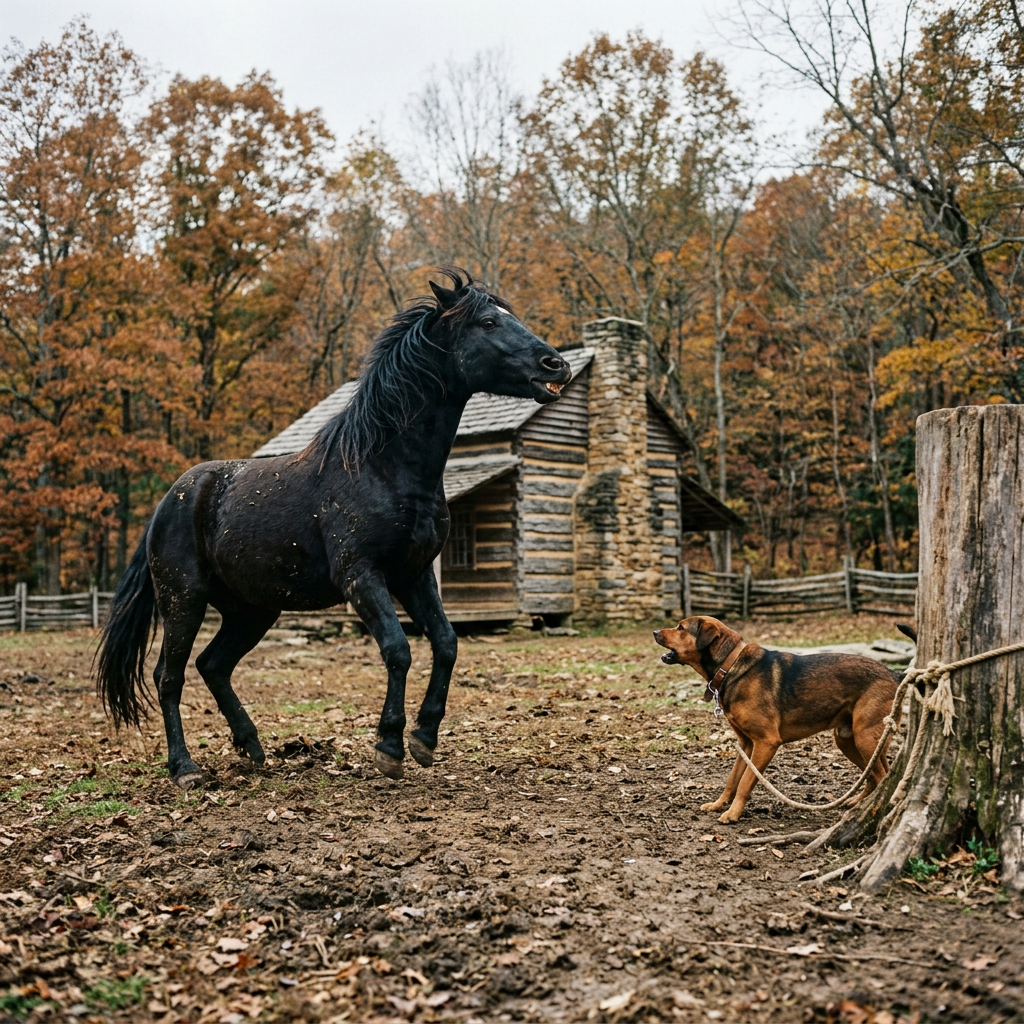
They had no “hollers” where the boy lived, only “hollows”. Except for Hadey’s Holler. But that wasn’t named for any deep valley tucked in the hills. In fact, the place was located at the top of a hill. And the only reason it was named a “holler” was because anytime you passed that way, something or someone was hollering at someone or something. Mostly it was Hadey herself, whose lungs would fill the air with long vowels and crackling consonants. And the dogs and horses and all her remaining kids hollered back. And what sounded like moans of dancing bears and great hollow roars of wooly mammoths. And for a time, the boy’s father did some kind of business with “old man Hadey”, whose real last name was lost even to him, covered up by his wife’s hollers and her reputation for losing track of visitors, or claiming they never arrived. But it was her kids and her kids’ cousins who bothered the boy the most. Because they didn’t go to school and they sat perched on overhanging tree limbs along the way, and spoke to him more often than not in a language that sounded like old truck springs or squeaky barn doors, and had black eyes and busted noses. One day the youngest boy jumped down from a branch over the trail and told him in plain English that the boy had no right to ever step off the trail over there. And he pointed to a hole about 8 feet in diameter. “That’s my hole,” he said. “And I was told I can blow it up any time I want. I got dynamite, and I’m going to do it, and you better not be there when I do.” And then he climbed back to his limb and spat a chunk of something at him and said something that sounded like a wagon wheel that needed oil.
Early Onset Adolescent Angst
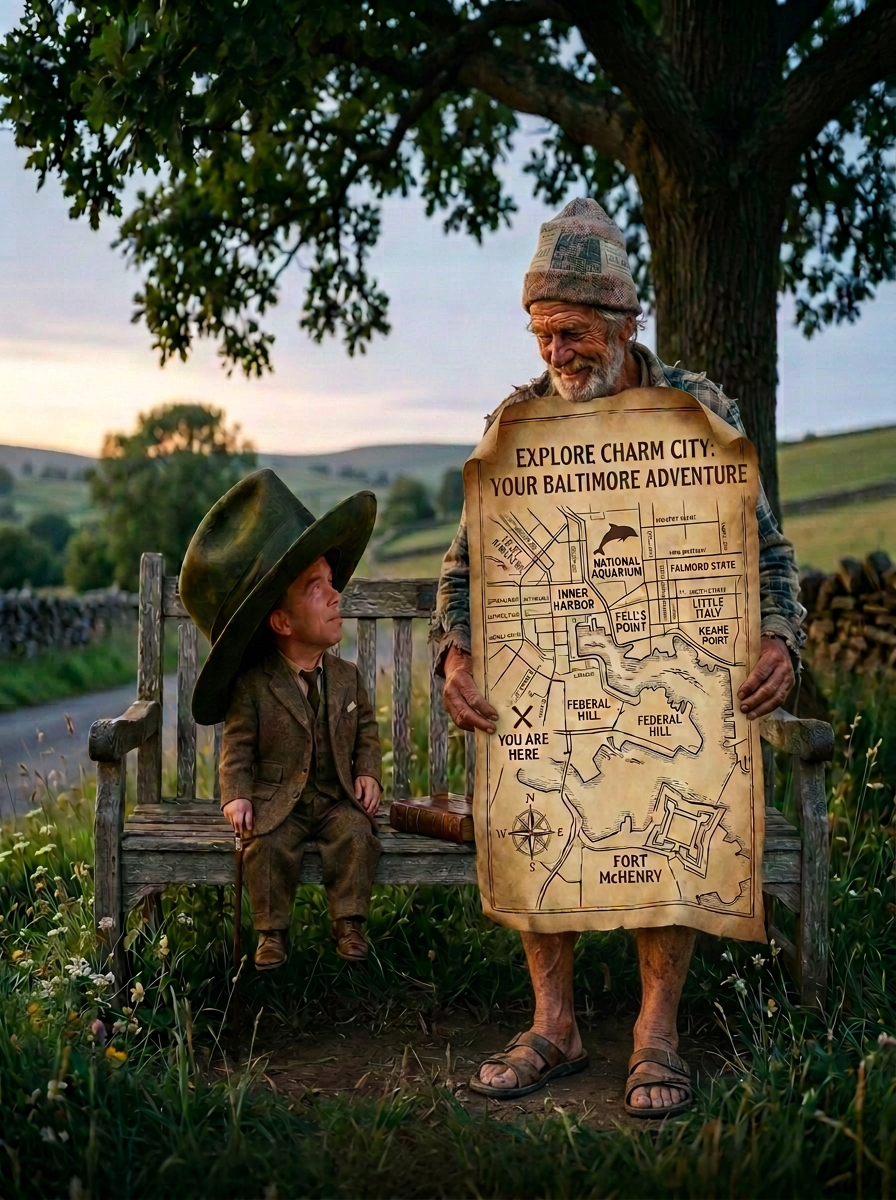
Just after his 11th birthday, the boy sat on a bench to contemplate the long summer afternoon, and saw a stranger with a crooked skeleton (bent by years of sitting on a bench) sitting on the bench on the other side of a well-traveled ditch, which was narrow enough to jump across, if you were so inclined.
Then a local man named Woodpepper – dressed as always in a cowboy hat and boots, who stood less than 4-feet-tall, a perfectly symmetrically bonsaied human being, with fine, delicate features, as if he were made of chicken bones – stopped in front of that stranger and said, “I pick up cans” in a tiny paper voice. The strange man pointed at a returnable bottle at his feet, but the cowboy angrily kicked the bottle as hard as he could, which caused the bottle to roll once and then roll back to where it started, and then he shouted in a voice that could barely be heard above the pitter-patter of birds’ feet on the soft sand of the ditch, “I pick up cans!”
The stranger nodded. And then Woodpepper placed his delicate blown-glass skeleton softly down on the bench very close to the strange man.
(The stranger was wearing a fedora – the photos are all utterly false and misleading reenactments performed by disinterested actors, so please imbibe them with indifference if not downright indignance).
The boy watched Woodpepper turn and look directly at the stranger. He didn’t seem to notice or maybe didn’t care that the stranger was not dressed normally for that region. The boy could tell, because the microscopic cowpoke was staring fixedly at the wattle hanging from the stranger’s chin and nothing else.
Therefore, Woodpepper didn’t notice that the stranger was sitting under what the boy mistook for a blanket, but was in fact only a poster advertising a special sale on a round-trip ticket to Baltimore. But then the boy noticed the poster and also noticed the price of the ticket and wondered what a normal price would be. But he regained his focus, and listened as the infinitesimal cowpuncher says to the other man (in a voice like the delicate tinkling of many tiny glass bells), “I’m all that’s left of what I used to call optimism.” And then he shook his head slowly up and down, and then topped it off with some slow head shakes to the left and right.
The stranger had to cup his ears with giant hands just to hear the petite voice.
The stranger nodded silently, but vigorously. He was used to conversations that jump-started like that, when he was still living at the grange hall under a borrowed jacket. He tended to start conversations in the same manner when he was still inclined to speak.
“…so, even though I’m obligated to keep you interested,” the little man said, “I’d rather not. My job is to look for cans. I get paid 2 cents for every returnable can I find. The village keeps three cents to pay for administrative costs in employing me, which is hard to argue with,” he said.
They sat for a long time watching a parade of ants, and then a pot-bellied stove on a coaster wagon being pulled down the ditch by a large canine led by a bestial man in lederhosen.
“Otherwise, you understand, I’ve lost my optimism,” he clarified. Then he added, with exasperation: “I’m no longer even optimistic about my career! Nor am I optimistic enough to expect your sincere attention to what I’m saying, let alone genuine interest!”
The two men shook hands – which resembled a giant side of beef wrapping itself around a scallopini — and turned to watch a pigeon and crow walking past them in opposite directions down the ditch.
Early Onset Introversion
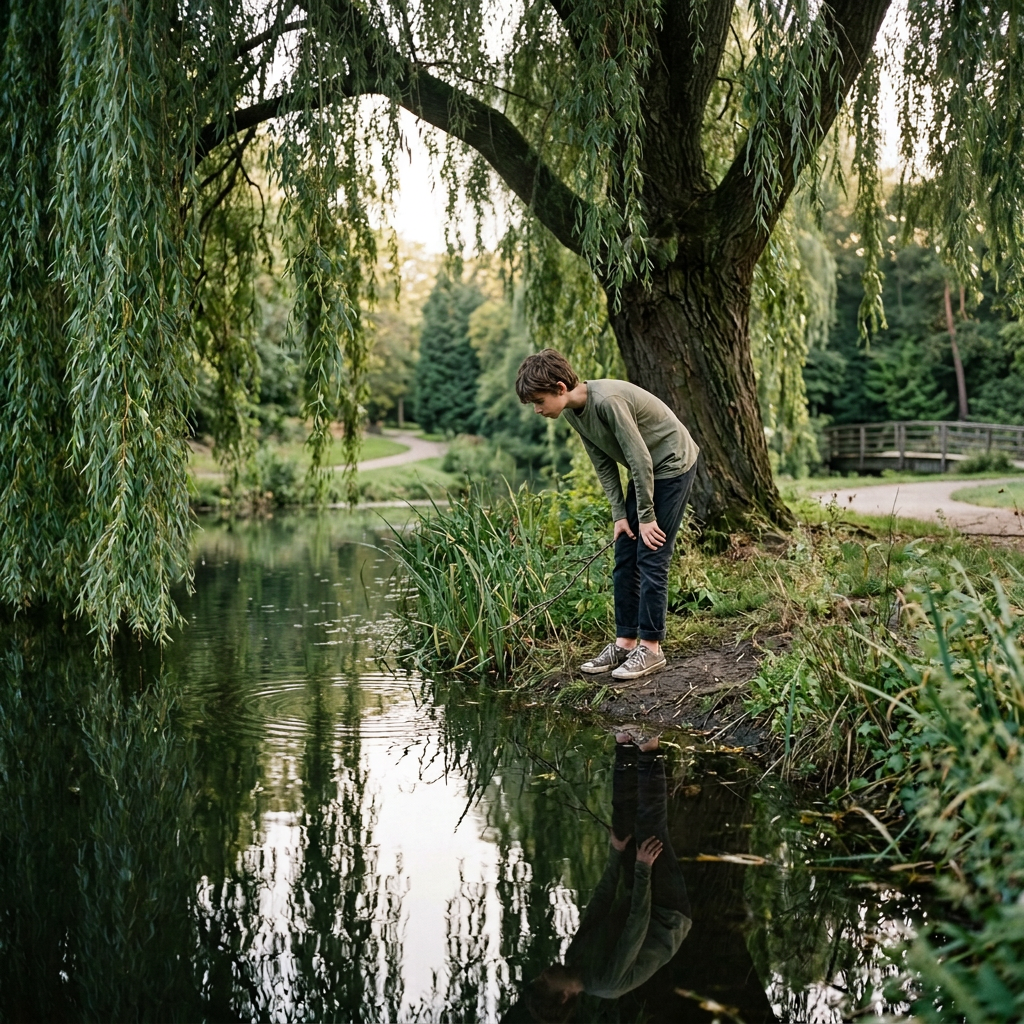
Just after his 13th birthday, he became intent on being honest about everything, which proved to be an elusive task, which drove him to pursue the challenge ever more intently. Because, if he was honest, all he ever recognized in himself was the dishonesty of his previous intentions. Thus, he became perpetually annoyed or disappointed in himself, as if he were chained to an imbecile from whom he could not jump free. For nothing about himself could ever evolve into his own idealized form of honesty. And the closest he could come was by way of enduring this endless series of deflating realizations that what he once took for honesty in himself was quite honestly dishonest and duplicitous. He could never appreciate the honesty of being perpetually aware of his own dishonesty.
Early Onset Over-Analysis
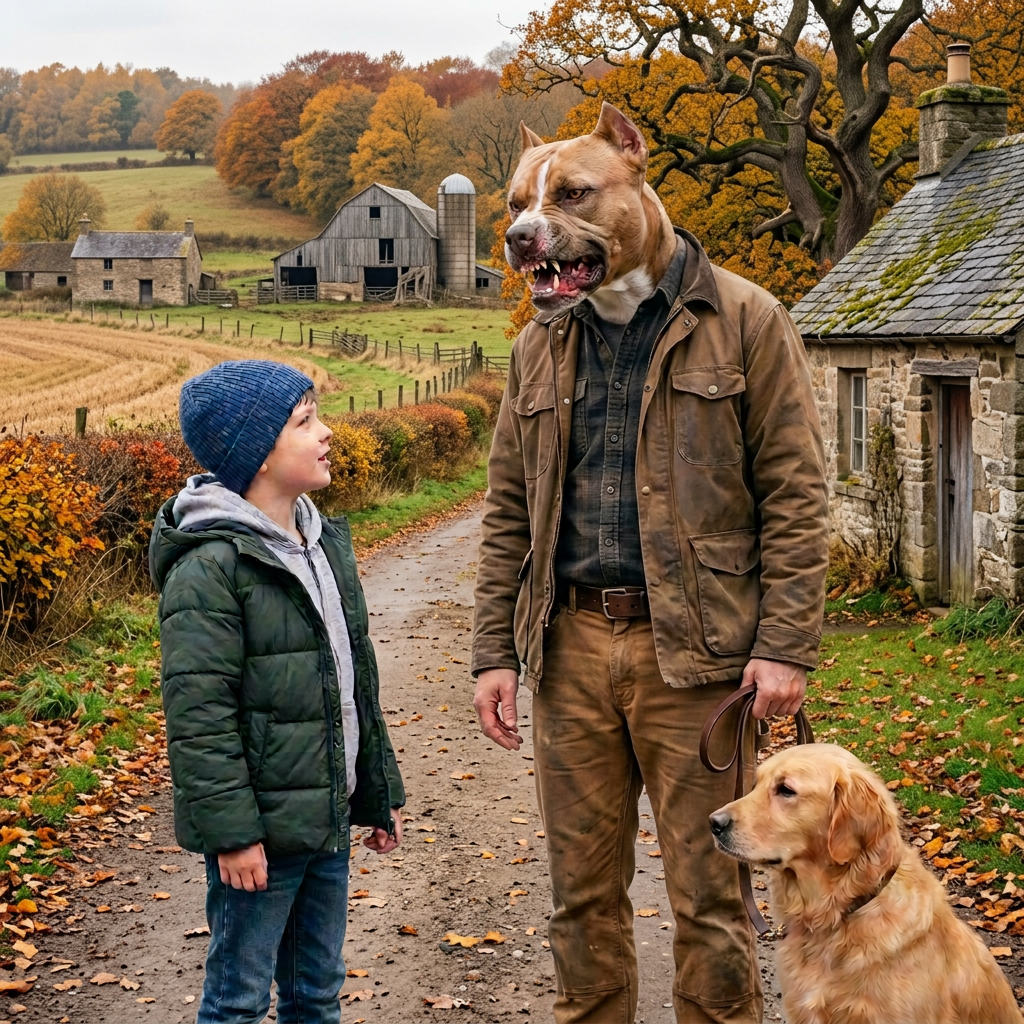
Sometimes the boy would discover things about himself that he sincerely believed were honest truths, but which turned out to be only half-truths and therefore mostly just lies. For instance, he once made the discovery that he never liked to speak to anyone unless there was a dog in the room, because dogs usually made him feel at home. And he loved his own dog, Little Yeller.
Then one day he realized that he had merely jumped to a conclusion based on a mere comparative differential of reactive emotion, meaning he was actually a little afraid of dogs, too, and only told himself he wasn’t, because he was less afraid of dogs than their owners. But he repressed this wider vantage point for years, because it would have turned his previous understanding of the situation – though honestly obtained – into retrospective dishonesty, and make him feel as if he’d wasted half his life believing lies, even though that would be the truth.
This same principle favoring the original (false) insight over the newer, wider and less false insight kept him from changing or learning anything beyond a certain point, yet to be defined. New information always left him feeling like a dupe. And this principle created great resentment regarding the whole concept of Honesty in general.
Ages 14 to 17 Not Yet Available — Stay Tuned for Later in the Story...

Late-Onset Adolescence
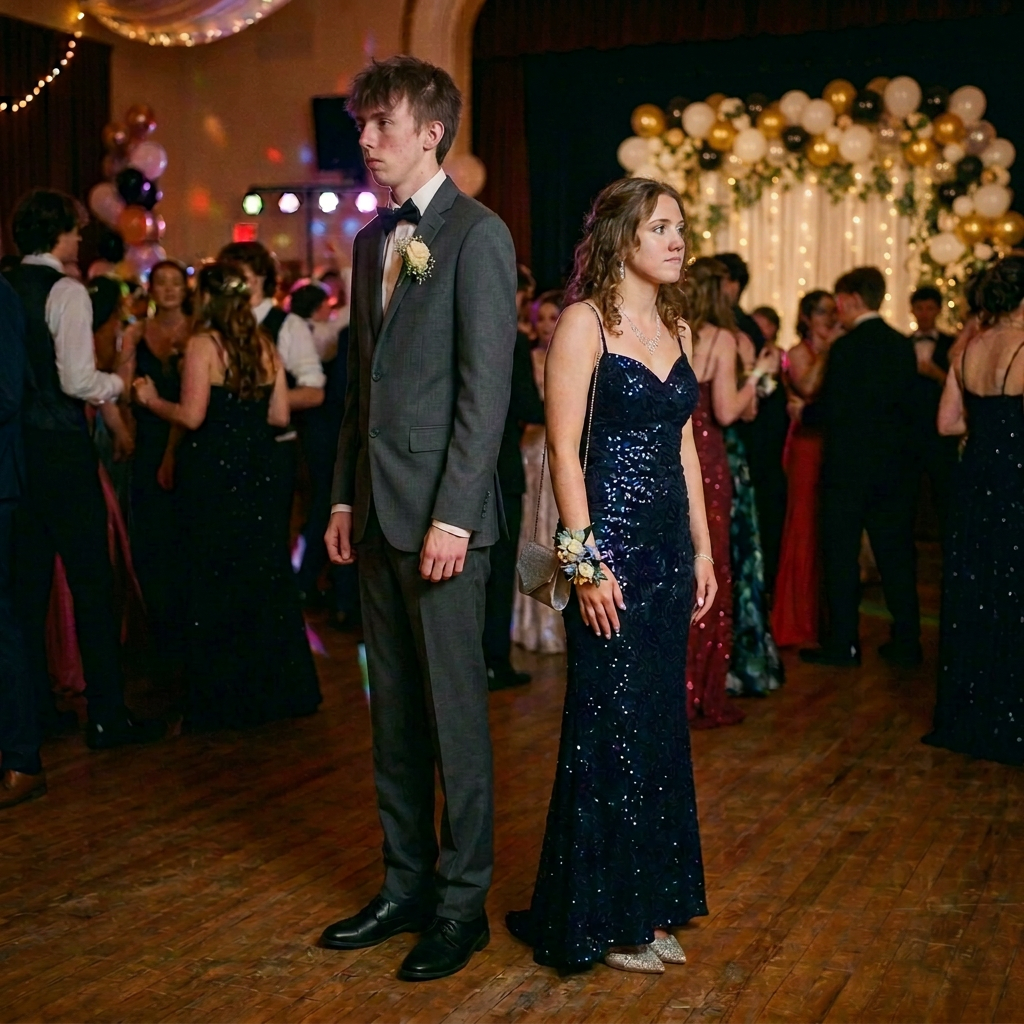
In his senior year, he had to repeat biology for the third time in order to graduate.
But biology class made him sick. There he learned about the various bodily fluids and scaly droppings that perpetually ooze from the human form. It made him feel like a slug who leaves a trail of slime wherever he moves.
Sure, the vision of a beautiful girl could take him out of that frame of mind while she remained in consciousness, during which time the human form became what he called privately a magnetic necessity. But consciousness is a fleeting condition. And the moment he saw his own oozing shape reflected in the judgmental eyes of the magnetic necessity (as he imagined those eyes judging his own judgmental vision of himself), he saw himself only as a slug, which had no business sweating and oozing in the presence of this magnetic personality. Therefore, striking up a conversation became impossible. The presence of a fine and noble figure illuminated the dripping slug-skin of himself, so that it became an insult to the universe to even approach such a figure, let alone ask one of them out on a date.
The very question – “would you like to go out with me?” – was not merely “hard to ask”; it was a breach of natural law.
Sure, the frog could ask the princess to kiss him, because the frog was narcissistically convinced that he was a prince in disguise. But the boy who is convinced he’s only a disguised slug wriggling at the end of a line has no such confidence in catching even the most floundering of princesses.
Showering, brushing his teeth, dressing nicely, combing his hair, applying deodorant (especially that), all felt like futile efforts to keep the gross form from oozing out of its containing shell.
And he became acutely conscious of all the effort he was expending to shove the accumulated dirt of that body back under its own rug.
At best, it was the act of constructing an elaborate disguise that would inevitably fall apart and end in ridicule as soon as he opened his mouth to reveal the slug of a tongue writhing behind the dripping, off-white stalactites and stalagmites of the oral cavity.
As he worked to clean himself, the very idea of kissing anyone began to seem revolting.
And as he pulled the brush through his knotted matt of hair, the hollow scratching sound was almost unbearable; I’m a walking corpse, he thought.
And by the time he left the bathroom, groomed and gussied, he felt severed from himself. His own visage became an intruder he couldn’t outrun. His feet were like two flapping fish hanging from his pole-legs.
Somehow one must at least peripherally admire one’s own form enough to admire another’s. Buried within desire is a secret narcissism that none of his friends dared to openly consider, but he did, and he couldn’t stomach himself; therefore, he couldn’t stomach anyone else.
Thus, his natural desire for the feminine form developed a Pavlovian inversion, whereby the more alluring the vision of a girl, the more disgusted he felt in her presence.
Nevertheless, he would not back out now. It was the senior prom, something he had to “experience” once so as not to worry his parents any more than he already had. But the date was more like a legal agreement made through a second party, his far more cavalier and confident friend. It was all arranged for him, without him having said a word to the girl. In fact, he hadn’t even looked her in the eyes at any point in their combined 24 years of sharing the same school building. But from the periphery she seemed cute.
With exaggerated nonchalance, his mother said, “have fun.” And her smiling eyes shone on him like two spotlights. This indicated the excessive hope they were placing on this one date; as if he might emerge from the primordial soup at last and take a few steps towards a human form. And now he knew they’d be watching him all night in their mind’s eye. Now he’d be forced to notice himself as he imagined they might see him at any given moment.
And he also knew he had to exercise his voice in response to his mother, or else his father would say, “hey, don’t be rude to your mother, she wished you luck.” Even though she hadn’t actually wished him luck. It was a Freudian slip revealing their hidden calculus.
“OK, thanks,” he croaked, not recognizing the body’s strained voice.
Saying “thanks” felt like an unfair imposition. It implied that they were doing him a favor in constantly nudging him towards social engagements, when in fact he was doing this for them — so that they might enjoy the pretense of having a normal son who enjoyed life without adding unnecessary complexity to everything.
Therefore, his own croaking acknowledgement of his mother’s far too weighty good wishes caused a certain familiar wave of resentment to flood his blood stream. But obviously he’d have to hide any trace of this rising resentment, which caused his facial muscles to strain, even though he did his moral best to conceal his real feelings.
Seeing this, his father felt obliged to add: “Cheer up, these are the best days of your life”.
Now he raced for the door before he exploded in a frustration he would never be able to explain. And if either of them saw any sign of this worsening internal tension – and he knew they were studying him under their spotlights – then his father would ask for an explanation, and he’d have no recourse but to regress to some masked form of temper tantrum, which would not result in recognizable human sounds, and which would only shine yet more spotlighted attention on his already ruined state of mind.
So, he raced for the door before it was too late.
Outside, he could still feel them watching. So, now he was no longer motivated to enjoy the evening for their sake or his own. In fact, his motivation reversed course, returning to its old riverbed, becoming a strong desire to not enjoy anything just to spite everyone, including himself. Nay, to spite life itself, especially “youth”, which was synonymous with an endless series of embarrassing ordeals.
So, he wasn’t in a particularly receptive mood when he met his date, who was dressed in a low-cut dress that also revealed her long slender back, and which reminded him by juxtaposition that he was a corpse stuffed in a three-piece coffin and had no earthly right to be here.
“Hi,” she smiled with genuine joy. “Hi,” he croaked with feigned happiness, adding what turned out to be a grimace of a smile (the aching facial muscles finally made that clear even to him). Also, he saw her cringe and adjust her dress in a direction away from his pant leg.
That subtle cringe was all he needed to complete the teleological trap he’d already set for himself several days earlier when he’d first agreed to the arranged date. Now he sat sullenly in the car, frantically unable and also somewhat unwilling to think of anything else to add to “hi.”
All he could think about was the imposition of everyone’s need for him to display pleasure. It was unbearably oppressive and annoying.
It would be a long night.
He watched her in the periphery of his sullen glare, while his friend was talking indecipherably to his girlfriend in the front seat. His date’s elaborate outfit must have taken her hours to complete, all for his sake, he naively imagined. And this made him feel hopelessly guilty, because he was going to wreck her hopes no matter what.
His demeaner softened into a hermetically sealed melancholy for her benefit, as he entered into an extended daydream of her childhood dreams being crushed. Her simple desire made him sad. All she wanted was the simple pleasure of being with someone who could reflect her beauty. And he was the shattered glass, the final crash of her whole high school experience. He felt such overwhelming sadness for her that he finally commiserated by saying, “the streetlights look so gloomy, don’t they?”
“What?” she said, with an emphatic and chastising slap of the “t”.
He was shocked and somewhat miffed by her lack of melancholy. Staring out the window at the gloomy lights, he realized his mistake: he hadn’t looked her in the eyes. She needs the mirror of his eyes. He had only glanced at her dress and marveled in passing at her long back, and then turned away just before his own self-revulsion got too strong. He needed to look her in the eyes, and he spent the next several minutes working out how this might be accomplished.
But before he came up with a plan, his friend started asking him something, no doubt trying to jump-start a conversation for him, which made him feel even more incompetent and incapable of speech. And his girlfriend seemed to be trying to help also.
They were already applying psycho-social defibrillation techniques to the couple in the back seat, just like his parents were undoubtedly doing from the safety of the television room back home (he could feel their distracted gaze even from here).
Thankfully, the muffler of the car was dragging a little, which made conversation impossible. Not only that but his friend was playing some kind of loud music he couldn’t decipher. He considered grunting something in response just to fill the gaping holes on his end.
But then he had a brilliant idea. He turned and looked his date directly in the eyes and asked, “can you understand a word they’re saying?”
Unfortunately, she said, “yes, they’re asking if…” but he couldn’t hear anything else she was saying. And he considered asking her a second time, but she was already leaning forward and excitedly talking to his friend’s girlfriend, so he used the opportunity to take a breather and look out the window at the gloomy lights.
The three-piece fraudulence began to feel like a saddle and bit. The discomfort quickly occupied his every thought. He kept trying to adjust his strangling tie, and pull his socks up, until he realized she was looking at him queerly. And then he spent several minutes desperately repressing a fart, which only made him more acutely conscious of the difference between his fake exterior and his hellishly real interior.
They passed a horse farm, which seemed like a strange synchronicity. He could just make out the magnificent shapes of the noble beasts ruminating or whatever they were doing in the dark. Standing at attention, without saddle or bit, probably asleep. He wished he could be a horse that lived in some eternal night. There’s no shame in a horse, especially at night.
He wondered why he was able to admire the bodies of other animals, such as horses, even though horses poop without restraint, even when they’re nuzzling another horse. Somehow, they retain their dignity no matter what. He himself had never experienced dignity, even though in comparison to the horse he hardly ever pooped.
He didn’t even like saying the word, it made him cringe. His friends were always making crude jokes, which he didn’t find funny. To soothe his nerves, he briefly resurrected a familiar old fantasy of suicide.
When they finally arrived, it took him a few minutes to regain his hearing. He waited until his date came clip-clopping around the car. Then he adjusted his gait to match hers and walked sullenly towards the incongruously decorative gym entrance, marching in slow procession like two horses pulling a gallows wagon towards the execution grounds.
Jackal
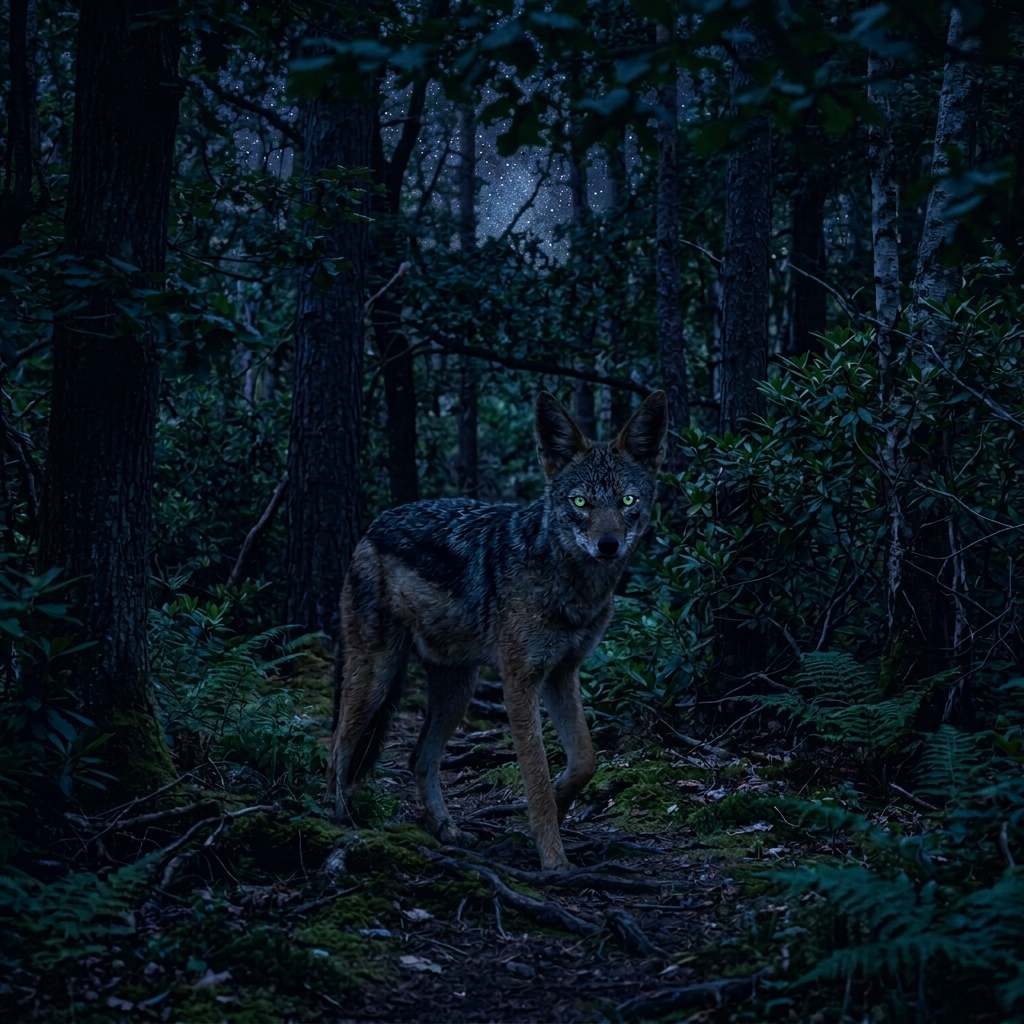
The boy slept poorly and awoke early in anticipation of the mission that night. Then he threw up several times. It was a familiar dread, pre-jump jitters. Not just performance anxiety, or the fear of death, nor the heavy regret of knowing he placed himself in this extreme, and insane predicament voluntarily, nor the envy he feels at breakfast, seeing the carefree jocularity of the ground crew, and the meteorologists, who would never directly enter battle, let alone fly to the roof of the atmosphere itself, and leap into almost pure, frozen space, a half-assed astronaut, a momentary falling spacewalker, until the double-bag static line finishes unfolding, and holds him in a tug-of-war between the canopy pulling up, and the heavy load of his equipment, pulling down.
And then of course, what follows.
But something else was weighing him down now, and had been for quite some time, slowing his every step, as if he were sinking in sand. And it was preventing the boost of adrenaline he’d soon need.
A few hours prior to rigging up, he was hanging out with his “stick” (his paratrooper team) and they were ribbing each other and shooting the shit. Their last moments of relaxation.
But he could never banter very well. He sat on the floor with his back against a door-jam, enjoying the mild grinding pain of the spine against the edge of the jam.
This was his first serious combat jump, a HAHO deep into enemy territory to take out a relay post, and then bushwack back to safe ground, in what’s called an overland exfiltration. In about an hour, they’d start the elaborate procedures and checks and rechecks that took up the better part of 3 hours, prior and during the flight, which was going to be a long one.
Then they’d ride the canopy for a long way this time, about 30 miles, to a drop zone (DZ) in a narrow clearing in the fairly dense coastal forests and then make their way to their objective.
And only then would the real work begin.
His stomach was caught in a nest of butterflies, which no amount of puking could dislodge.
Although he was confident by now in his own body’s knowledge, he couldn’t slow his thoughts. He’d been slipping in his resolve over the last few weeks. And worse than that: On the edge of an old, familiar sinkhole, which he thought he’d finally outrun for good.
He was half-listening to the banter, which occasionally targeted him, but was mostly high-spirted and brotherly.
The eyes of Sergeant Max, who was both the jumpmaster and the stick leader on this operation, shifted sharply into his own. To avoid the eyes, he looked at his hands, wringing themselves repeatedly, trying to get out of this world. He apologized to them. He spoke to them in his head, as if they were individuals. He was trying to squeeze his consciousness into the refuge of their little world. It was something he did since he was a small child. He became a finger hiding in a pocket, oblivious of everything.
What if they knew he was thinking these thoughts?
For some reason, he started recollecting the rhyme, “there was a crooked man, who walked a crooked path.” There was something that haunted him in those old fairy tales and rhymes. As a little kid, he’d read them over and over again. They were like flares of a lost memory, a world that was no more or less real than this one, but dim and unearthly. The sky in that world had a mild orange sheen that was ominous and sickly, or like a storm brewing. And yet it was appealing in some crooked way, because that world seemed more gigantic than ours, ungoverned and unmapped. A twisted place of promise and peril, closer to hell than our world. And maybe closer to Heaven too. Because this world seemed to float in a distant pretense that was farther from either. Or, maybe that world was a shadowy reflection of this one. All those horrible lives peeking out from between the sanitized rhymes and disinfected remnants of strange old tales, a starving old woman with her empty cupboards and whining dog, another stranded woman living in a worn-out shoe with all those kids, the horror of the Juniper Tree, and the Robber Bridegroom, cannibals, curses, witches and giants.
But this world was no less weird and absurd, flying 30 miles through the air in a battle between vague digital kingdoms, a tug of war to add unimaginable hordes of wealth to already unimaginable hordes, while all the subjects of these kingdoms were becoming ever more impoverished.
Every experience he’d ever had in this sharp, cold, metallic reality faded quickly into memories that were less real than the stories he knew as a kid.
“Green and yellow,” he kept whispering to himself, rocking, almost hypnotized. He was always the yellow greenhorn, the boy who could only grow up in fits, starts and quick retreats.
But the others were looking at him now, so he sat still and closed his eyes.
The brave thing would be to stand up right now and leave. That would be a reasonable rebellion from this madness. To give up the cowardly pretense of being brave. Kept here only by a fear of what they’d think.
He glanced at the Sergeant, which caused these dreams to fade, and allowed the dream of what lay ahead to rise to the surface.
It was one dream or another, no matter what he did. But the surface of his mind was being agitated by the magma of an older fear deeper than death. Everything was melting into illusion once again. His thoughts were chewing through every solidity he thought he’d found since the first eruption of that hell-hole in early adolescence. And now, at the worst moment.
He got into the special forces by way of a late adolescent surge of adrenaline — a mirage of confidence and daring.
And by the time his enthusiasm for all this wore off, he’d already immersed himself deeply enough in the training and memorizing and web of mutual support (which felt at first closer to love than anything he’d ever known), until he realized he was trapped by nothing less than peer pressure and false pride yet again, and felt he had no choice but to double-down.
And only now, with minutes remaining until the whole routine starts, the rigging and checking, the slow self-encasement in one layer after another, all that tech setup, the mental exertions, the focus that finally quiets all this thought, or let’s hope it does, and all the while sucking pure oxygen, draining the nitrogen from the body, just a weak monkey-body encased in artificial skeletons and skins, encased in a material illusion, and chanting all these vows and cliches, which might as well be nursery rhymes. He has only minutes of slack remaining. It’s already pitch dark outside, the plane is fueling. At the edge of this immense task, his thoughts are openly rebelling.
He’s not meant for this. He knows he’s been driven to these extremes by forces that were always external to him. A hollow center filled by the flung bullshit of madmen. The sharp rebukes and heavy hands that molded each of them into madmen themselves. I’m going to kill people I’ve never met, with whom I have no argument. It’s all on someone else’s word. And someone else beyond that. Nobody knows what’s real. Either they fear reality or the bottomless absence, the hellhole, where all the demons hatch.
He was in high dudgeon within himself now.
All this bullshit about being their own men, when all they did was take orders. He almost said this out loud.
Some did, now and then, openly admit they’d enslaved themselves to fools. But they’d laugh! They’d soften it into a cliché! Taking orders from leeches, educated pedophiles in high places. We’re just punks to these fools, some would say, after a jump, while dreaming of promotion.
But he’d go farther in his head: When they need bodies to die for their profit, or because they were bored by the usual circus, they’d dredge up the high and mighty language of patriotism and honor, and we’d lap that shit up like starving dogs.
He didn’t say it out loud, but they saw it in his eyes, and didn’t like what they saw.
Even now, he thinks he’s sitting quietly against the door jam. But his eyes are giving him away. He is blaming the others for his own cowardice. They can smell it.
All those sacred vows they took! What’s the Pledge of Allegiance but a nursery rhyme? If they admitted it, they’d start sliding like him. That hole would open. They’d know what he knew. And if they knew what he thought right now, all these comrades in arms, this warm embrace of this stick, would turn on him like a pack of demons. Unity was a lie they couldn’t admit. The nation they were killing and dying for, where was that? There was no unity there either, just demons tearing at each other, and calling their temporary alliance a nation.
Breathe Breathe.
“Hey, Junior, what are you mumblin’ to yourself?” says a bear of a man, the DPL (or deputy team leader of his stick), who might or might not have been nick-named “Bear”, because his real name was “Floyd Daniel Baer”, a corporal.
The boy couldn’t help admiring him. Even though Bear always made him conscious of his own immaturity and weakness, and ashamed, now, of all these critical thoughts he’d been having. Because Bear was no starving dog. He wasn’t a naïve white boy like himself, disappointed when the fairy tales of American virtue turn out to be fairy tales.
Bear shakes his head and laughs at the boy. But the laugh is more disarming than critical. He flings it out there like a small mercy to head off a stronger rebuke from the Sergeant. But now all eyes have turned to the boy.
“Just getting ready Sir,” the boy mumbles, rubbing his sweating palms.
“You think too much, boy,” the Sergeant says.
Bear looks almost worried for him. But he speaks like a slap in the face: “Buck the fuck up, kid.” And everyone goes silent, and back to their own forms of waiting.
He feels the deceitful softness of his scrawny child’s body under all these artificial skins. Even the slender female combat medic, Jody Caine, seems sturdier than he did.
She lets straight yellow hair grow long, and almost dares you to call her “a blond”. And her thin-lipped smile contradicts her unsmiling, metal-blue eyes, which never waver until his own finally do. And then she always looks at him like a judge and jury, which always knock the wind out of any attempt to engage her in conversation. Even though he towers over her, he always feels like he’s straining his neck up to meet her level gaze.
She’s still studying his behavior, even as they all move into the staging area of the hangar to start suiting up.
Every one of them has a feisty edge to their smiles, and a gravitas he can’t even fake. He felt inferior the moment he met them. And yet it was easy to push their buttons. Just a wrong facial twitch could get them agitated. But they weren’t “starving dogs” either. They seemed solidly grounded, but in what? They moved with a measured grace that made him conscious of his jittery instability, and seemed unfamiliar with the demons that drove him to these extremities of thought and worry.
And yet he couldn’t trust their quiet calm. They might concede that the world’s whole framework was constructed by demons, but they had a job to do, and the rest was beyond their pay grade. Staying humble and sane, they called it. But is it sane to serenely submit yourself to this insanity? Are they any saner than him?
After all, his father had been like them, and look how he turned out. He was also a large-boned man with a voice of grit and gravel, who breathed easier at the first sign of danger, but vibrate like a bursting pressure cooker in every idle moment.
Even before the bottom fell out of his business, he could see the demons nibbling softly on his father’s limbs. But afterward, they devoured him completely.
The boy thought he saw a nobility in the way his father absorbed the brunt of that demonic energy within himself, although acids leaked through his tongue, and many inanimate things took a beating. But otherwise, he seemed to hold the demons in check within his body, until there was nothing left but an arthritic skeleton that shook the coffin with rage in the hands of the DT’d pall-bearers, when they laid him “to rest’ that previous fall.
And rumor is, even Old Man Hadey used to be a man of substance, a veteran of the second world war, who survived a brutal Japanese internment camp and won all sorts of medals. And now look! He’s nothing but maggoty corruption.
And there was a farmer in his village who was a big, gentle, slow-moving man, doffing his cap at ladies and never getting excited under any circumstances, who woke up early one spring morning and butchered his wife and children, and set his cowbarn ablaze, the screaming of the cows haunted the boy almost nightly. And then this gentle giant sat on the front lawn and tenderly placed his crying infant granddaughter next to him, the only survivor, and blew his own brains out.
So, he didn’t trust these signs of quiet maturity whatsoever. They were steadfast and mature only because the demons that drove them were sated for the moment.
That’s how he deflected his feelings of inferiority. And this deflection gave him a stink of superiority that made some dislike him. He felt superior in being aware of the demons feasting on him. He could feel it in a way the others didn’t. So, the others lived in blessed ignorance of their madness, as far as he could tell. That’s what kept him skinny and nervous, keeping the demons at bay. And the demons weren’t happy being half-exposed in him like this. They needed the dark to take full control.
The boy reckoned that they all bargained with the devil in joining the military. And it’s the kind of deal that can’t be completed in broad daylight. The fine-print of the deal needed to remain unconscious. But in bold print it justified the surrender of their autonomy to a chain of command. They tried not to notice that the chain extended all the way to Hell’s front door.
What they got in exchange for that surrender was a lot. A meaningful role in a world they already knew as dog-eat-dog anyways. A stable order, as opposed to the chaos of home-life. A temporary freedom from conscience, although he knew they’d bristle at describing it that way, but it was right there in the fine print – without it, they couldn’t be good soldiers. And all in all, they got a respite from the demons gnawing at them.
It was like attaching themselves to a static line and letting the whole sequence of events unfold automatically from there, without having to bother with bigger questions. Only now, the boy was trying to renege on his deal, which caused the demons in him to erupt.
However, the others saw their own surrender to this chain as a form of humility. It wasn’t the loss of autonomy the boy accused it of being, but the conversion of a floundering, rootless, self-centered Self into a Self that is grounded in a larger order, the larger being, of a country, a military, a unit.
Meanwhile, the boy is only fleetingly reflecting on all this – mostly silenced by the complex assembly of equipment, which is happening now.
No, the weight of the assembled harness is so great that pretty much everyone is seated and sealed by now. And now and then the Sergeant calmly speaks a command or reminder over the tactical radio. But at this juncture, all they can do is wait, prepare themselves mentally (which the boy was not doing), and keep breathing that bends-preventing pure oxygen, which always made him a little dizzy for a while.
The Sergeant completes his last pre-flight inspection of everyone in the stick, and even gives the boy an encouraging tap on his headgear. Then he silently signals that boarding begins in 20 minutes.
The boy loved the military at first because he understood that logic of surrender to something larger and more real than his own fictitious self. But that trust in the chain connecting them to something larger wasn’t possible for the boy to maintain. He had no real confidence in the reality of a country or its military leadership, or any of them, for that matter. He wasn’t exactly the naïve white boy, born with a silver spoon up his tight ass, which Bear took him to be.
And yet, the boy also missed the point here. The others didn’t trust in these things either, not really. The flag, the pledge, even Jesus Himself – these things were only vaguely understood ideas, but firmly held signifiers of belonging. In fact, they preferred all those things to remain vague. The point was sharing a common loyalty to these gang symbols (and Jesus, don’t ever call them “gang symbols”!). Whatever the fuck a God or a country is, they didn’t really know. But they’d kill anyone who threatened one, because they were the things that gave them an identity, no, let’s not use that word: It gave them, specifically, a place in this mad world, a more predictable family and a way to feel esteemed in the eyes of those who matter to them.
Besides, Lord knows, an identity is too vague to survive on its own without such props. Besides, “identity” isn’t exactly what they wanted to call it, not with all these liberal air-heads tooting their own identities everywhere you turn.
At any rate, God, guns, country, and Leaders they could “trust” to keep this whole charade going was how they made order out of the chaos of their pre-military world. Or, it was the only order they ever knew. An order that had to be hewn rock-solid from the slacker’s drift of otherwise meaningless existence.
So, all the boy’s talk of what’s illusion and what’s not sometimes came close to placing him in enemy territory. Don’t think too much, kid, he could feel the cold-blooded warning behind the snickers and mild rebukes.
“Ten minutes”, the Sergeant spoke quietly into his earphones.
What they really trusted was the material reality of the world, this hard-nosed task they faced, this physical activity, this trained body.
But the boy couldn’t even trust his body.
For some reason, his body slid through adolescence almost unchanged. He was more or less still built like a 12-year-old-boy who’d been elongated until he became wiry. But he never outgrew the thin frame, and never lost the whisker-incompetent, red-cheeked face of a boy, which had been a perennial goad to rednecks and jocks.
Admittedly, this sometimes gave him the advantage of surprise, especially when his tired and timid demeanor finally boiled over into volcanic rage that burnt bright, before quickly burning itself out.
And while the righteous rage lasted, he could whip his limbs and twist his narrow upper body at a terrific velocity, punches that snapped with just the right timing, and he could absorb punishment with pride. But he lacked the thick coal-beds of murderous resentment that could keep such a rage stoked long enough to finish the job, which the Hadey Boys and even some of these soldiers had in abundance.
Of course, he had a somewhat higher opinion of his ability to fight than he should have had. And his touchy demeaner suggested he knew this on some level. He knew his only chance sometimes lay in leaping into the elevated orbit of blind rage, like a berserker of old, as when he fought the youngest Hadey kid, who flicked a lit cigarette in the goad of his apple-cheeks, and (as the boy talked it taller over time) nearly “decapitated the motherfucker” for his insolence.
That is, he started to choke the kid, revenging himself on the whole monstrous world in the form of this one kid’s neck, until he saw the boy’s scared and sad eyes and abruptly fell from righteous orbit, relented, collapsing into apathy, and leaving the miserable young Hadey kid no other option but to return to Hadey’s Holler with his tail between his legs and get his ass kicked for real by his brothers, who would obviously hear what happened.
So, when he joined the army, he expected the same gauntlet of ridicule he’d already unevenly survived back home, and therefore came into the army nursing his small pile of white-hot-coal-rage just in case, which earned him an almost heedless reputation for irritable immaturity that wasn’t exactly what he intended.
So, he toned it down, and was mildly surprised when the army turned out a little easier than his home town crowd. Probably because the army worked them hard enough at first to tire everyone out, while constantly scolding everyone into thinking more or less as a team.
But he did, in fact, end up in a fight, once, with a big, muscular recruit, who was even more childish than himself. And he didn’t surprise himself, but everyone else, when he knocked the guy down.
But then a familiar pity erupted for the hurt-looking brute mid-fight, which quickly translated into apathy and shame, becoming something like an out-of-body experience, as he observed the whole shitshow with distant dispassion, even as the embarrassed man, bleeding from his mouth, rushed at him mad with shock and shame, and lifted him like a sack of feathers and threw him to the concrete.
He took the beating with a familiar satisfaction. Almost the same feeling he had in the confession booth, when he still believed in all that. A cleansing erasure of his own persistent guilt. He bathed in the pounding fists and kicks to the head and stomach, and felt reborn when the spectators finally stepped in with something close to tenderness, to save him from the overzealous vengeance of the larger man, who had not yet recovered from the shock and shame of the “skinny faggot” who made him look bad in front of everybody.
This earned him some genuine respect, he knew it would. That’s all he wanted. Enough respect to mislead the majority into thinking he belonged here. Capable of hurting and being hurt. Enough respect to earn him a teasing nickname, Snapper, like a guy who snaps, or maybe the snapping turtle coming out of its shell for a moment. But it was a familiar niche — being a mascot to tougher guys. Sure, they’d maintain the right to obliquely (carefully) ridicule him, but now they’d also protect him to a degree. And thereby free him from the need to be brutish himself. Plus, he wasn’t just weird now. He was “crazy”. Crazy was a minor promotion. Sideways maybe, into a category that left him somewhat apart but also somewhat beyond judgement.
And being set apart gave him space to nurse his private fantasies of being superior in a way he couldn’t articulate, which he also knew was bullshit, but which arose automatically as a soothing compensation for his equally indefinable feelings of inferiority. After all, let’s note in passing, conceit is impossible to separate from feelings of worthlessness, and vice versa.
At last, they are boarding the C-130 Hercules and going through another series of checks and listening through the headphones to what the pilot has to say about the weather and adjustments to the flight path. Now, the portable oxygen system is being tested, and now they resume flushing the nitrogen from their bodies.
His stomach has settled, but his focus is still wavering dangerously.
Now, they are all sitting on canvas wall seats facing the center of the cargo bay, and they’ll be making an exit out the rear cargo ramp. There are 12 of them in the stick. And as the plane leaves the ground, his mood momentarily lifts. He feels the mild turbulence as a kind of soothing caress that almost puts him in a state of vapid euphoria. And although he has to maintain his focus and listen to the sparse commands that come over the tactical radio through his headset, he breathes easier, being hidden from view under his mask and gear.
But the euphoria itself is held in check by the heavy responsibilities ahead and by an even heavier dread approaching from the past. Because under all this fleeting rage and mild social anxiety, and sinking feelings about the work they would do, there lurks a bigger and “more real” problem, which nobody knew anything about. All they can see is the strange outline of a “man” who’d been stretched into adulthood without ever emerging from the cocoon of early adolescence.
But in fact, he is in some ways grotesquely stunted by a secret insanity (he knows!), which sounds harmlessly ludicrous whenever he makes the error of trying to tell anyone about it. And even though it is (in fact) ludicrous, it’s no less horrifying for its ludicrousness.
It is a terror that could nobody could ever detect or properly address. And this combination of ludicrousness and terror caused wide shifts in his own regard for himself, as well. And it was also the reason for his streaky jumps in capacity, which included his unexpected success in earning his way into an elite group of paratroopers.
Back home, people were less bowled over by the unexpected news of his inclusion in the paratroopers, than deflated by it. Teachers had always felt almost insulted by these infrequent leaps in capability, because they could honestly detect only abundant signs of incapacity, and had (with reasonable justification) written him off. And when he unexpectedly did well on a test, they were inclined to believe he was cheating, rather than be forced to admit that their previous judgement of him – though honestly obtained – was, in fact, false.
And half the time he probably did cheat, but not always.
His own father — ravenous for signs of growth — could still only say “good boy”, when he heard of his acceptance in the paratroopers.
“Will I ever be more than a boy to you?” he asked with uncommon bluntness.
“No,” his father said bluntly in return. And they left it at that, because there was something undeniably incomplete in his nature, no matter what he did. And they both knew it, and both resented it.
What his father didn’t know is that the boy was slowly emerging from something that can’t be labeled too easily, but let’s start by calling it insanity or a hellish hallucination, which started when he was 13. And signs of this condition remained invisible even to a psychologist (a fat and stupid pedophile, he recognized the signs immediately), which the school hired to scan the junior high student body (and him in particular) for signs of budding depravities.
The psychologist recommended Ritalin to 70% of the 7th and 8th grades (which came to 52 students), and dismissed the blank and unresponsive boy as a simpleton, nothing more.
What they didn’t know was how desperate his psychic condition actually was. And he was very afraid (reasonably so) that he would end up in an asylum, just like his uncle and aunt before him.
But what he didn’t know was whether he was hallucinating, or worse yet, not hallucinating, for there was nothing solid in the world against which to measure the deviation of his perspective. He believed that his perspective was not hallucinatory but (unfortunately) true, and that the blood-draining terror he felt was a reasonable (and uncurable) response to what he’d discovered, and which nobody else seemed to notice, mainly because they didn’t exist (that’s the ludicrous part, but chilling, if believed).
Simply put (or as simply as he could put it), one November morning in his 13th year of life he realized (realized!) with the ferocity of revelation – arriving like a high-voltage jolt — that everything was hallucination, and that neither he himself, nor his now obviously fake friends, nor illusory parents, nor even his formerly beloved dog, nor the crisp fall air, nor the smell of bacon in the morning, were real. This deflated the pleasure of everything instantaneously. They were revealed (revealed!) to be projections of an inexplicably isolated singularity of awareness, which invented every sensation of sunlight and love in a desperate attempt to fill the emptiness of its eternal and claustrophobic isolation. And it’s impossible to disprove. (Oh, he tried, he tried!).
How would he know this, you might ask? Because a figure appeared in his room that morning at 8:10am, and he instantaneously realized that this figure was a reflection of himself, but monstrous. And there was no way to peer past the mirror into any reality that wasn’t already this self. Thus, it was a figure that reflected the entire universe.
This was an insight, for sure. And it occurred to him in a quick succession of shocks. If there is no way for an awareness — for any individual — to arise on its own, then this individual consciousness is a singular phenomenon, meaning he alone existed. Others were merely projections of himself. After all, other people only appeared when he was conscious of them in his mind.
And this is also a surprising insight, well beyond his years. In fact, so far beyond his 13-year-old understanding of things that it didn’t land as a unifying vision of wholeness, as it might for a more mature individual. But it landed as a terrifying contraction of experience to a single rootless awareness without connection to anything or anyone else, as if you woke up in an MRI machine, from which there was no escape, no outside world. And this insight also revealed the imaginary nature of his own reflected existence as well. A reflection without a source. A world without any being at all, only the illusion of being.
So, this didn’t inflate his consciousness into the more typical mania, which asserts, “I am God.” Here there was no space for a God, and there’d be nothing for Him to command. So, it didn’t enlarge his sense of Self, but squashed it into a hellhole of non-being, a mere beheaded consciousness floating in a waveless sea.
In effect, one morning he woke up in an empty universe; a waveless sea ten feet deep, with just enough space for his head to stick above water to remain conscious of his predicament. In other words, the problem seems too outlandish, unless you experience a claustrophobia of that sort as a persistent reality (the only reality!).
So, he was forced to keep paddling day after day with no hope of getting anywhere or being saved. But he kept paddling because he was convinced that if he surrendered to drowning, the drowning itself would never end, because consciousness of his predicament could never cease. In fact, suicide might make his suffocation even worse. So, he had nowhere to turn accept to heartlessly pretend he had heart and continue with the charade of living as long as he could hold out.
But the difficulties of trying to live with persistent, draining terror, while going through the motions of life, had initially caused – from 13 to 17 –enough collateral social issues to raise eyebrows. These secondary social symptoms were worrisome to others, but not the actual perspective that haunted him, which was too ludicrous for anyone to take seriously.
Therefore, he paddled through life with a heavy, tense, lethargic, hopeless, manic indifference, but not enough indifference to sink, punctuated by irregular eruptions of adrenaline to keep afloat.
In other words, he was an undiagnosed schizophrenic. But it was the ordinary world he was hallucinating. Otherwise, nobody else would exist. He hallucinated them to hide from his own isolation.
To call this “lonely” would be to make it sentimental. It produced a blood-draining coldness that no warm touch could penetrate.
When he told his closest friend what he was suffering, the friend said, “how cool! You can do anything, just like a lucid dreamer!”
And that was the last time he ever tried to mention it, or ever again believed in the notion of a “close friend.”
For he was far more lucid than the most lucid dreamer. Unlike him, lucid dreamers remain blessedly duped into dreaming that they exist as a reality over and above the dream, which only means they are unconsciously asleep in a way he was not. And thus, they hallucinate being able to “wake up”, which he recognized in his non-hallucinatory insight as a delusion. For every sense of Self is only another dream.
Thus, his hallucination and his insight became hopelessly entangled and unable to resolve themselves. He was a prisoner of infinite regression, which is why he remained a boy, no matter what he did.
So, he had to keep paddling with uneven enthusiasm from one inevitable mirage to another in order to distract himself from the real nightmare that nothing, nothing at all, exists, except this claustrophobic emptiness clustered around an unshakable illusion of himself as a paddler without end.
And thus, he remained stuck in a hell too absurd for anyone to notice. But he was trying not to think of all this while sitting on the plane, because he needed the intoxication of adrenaline to believe in the situation enough to survive, allowing himself to get pulled into the dream with enough passion to keep afloat a while longer.
“Twenty minutes”, the Sergeant says blandly through the tactical radio.
They switch their oxygen supply to their portable bailout bottles. Another safety inspection.
The urgency of this “real” predicament forces him to focus. None of this is a game to him. The war and his unresolved state of mind have merged into a single horror. They both demand a resolution. He has to end this fear for good.
By his senior year, he’d already studied the problem long and hard enough (like Papillon on his prison-island, he thought), to obtain glimpses of a resolution to this isolation. And his moments of adrenaline often coincided with these flashes of a way “off the island”. He couldn’t hold these breaks. But by age 18, the fear had diminished, although it remained a dread and could erupt at any moment and leave him feeling as if they had never gone away.
Those periods of adrenaline and wild eruptions of euphoria are what turned him into a minor hothead at times. Being a social ignoramus, he abided by the reverse cliché that the best defense is a strong offense. It kept his father at bay too, glad, for once, to see the boy acting like a man.
The Sergeant’s voice: “Ten minutes.”
And then, in what seems like no time: “Stand up”.
“Hook up”.
Then they perform one final equipment check on one another.
“Stand by….”
His stomach immediately falls and threatens to come back up very fast.
The cargo bay door is open now. The cold rushes in and the sound of engines and wind intensifies.
“Go! Go!”
A sudden rush of frigid air, and the mild double-jolt, surprisingly soft, which miraculously turns him into a bird. And then the always astonishing, almost disconcerting peace that follows. The peace of floating in the dark of early morning. But through his dual tubes (enhanced night vision goggle/binoculars), the slender curve of coastline becomes starkly visible and overwhelmingly saturated with the white lights of human habitation and long white lines of roadways.
The glide will last over 30 minutes and take them 35 miles into yet another undisclosed war zone.
Despite the layers of clothing, the intense cold penetrates his body and his consciousness, and makes him shiver. But it coincides with a quick thrill that momentarily erases the dread.
He has to pay attention to the Sergeant’s occasional commands to adjust their direction, and he must keep peripheral attention (at the very least) to the infra-red light at the top of the canopy below him. They are flying in a stacked formation, all 12 of them pretty much directly over one another, but stretching out steeply in front a little. For the most part, he can only see the canopy directly below him.
But he can’t resist turning towards the horizon for a moment, to see the curvature of the earth, and seeing also the all-too bright white glow (in the dual tubes) of what (to ordinary eyesight) is only a dim hint of red sunrise that won’t be visible on the ground for several hours still. He turns away quickly, before the faint glow of sunrise causes the mechanism to flash and temporarily blind him.
His thoughts turn to the job ahead of them, the stealthy bushwack towards the relay facility, the possibility of encountering a small patrol in the vicinity, the hope that they can get in and out without being noticed, without having to kill anyone. Or, be killed.
His doubts about the operation become overwhelming now. They’ve been driven to this extreme without even knowing why, without even caring to investigate the issue from all angles. The chain of command is all they focused on, staying “humble”. Was this humility, he wondered, or a failure to be responsible to themselves? Don’t blame them, to himself? Everything he ever did to erase the unreal feelings placed him in situations that were even more unreal and ludicrous. Floating here above a war zone, enjoying the view, regressing further and further from his commitment to the operation. There is nothing sane and realistic about any of this.
He is a fulcrum between two uneven weights, balanced slightly in favor of survival – the 300-pound weight of his pack, oxygen tank, body armor and weaponry pulling him towards earth, and the life-saving restraint of the canopy, which clings to the empty air.
The bright white dawn along the stark curvature of the earth shrinks and fades as they fall farther beneath the edge of night.
They are at about 10,000 feet, now. In about 15 minutes they’ll reach the drop zone. In this area, the lights are scattered, just some villages and quiet roads. But he can also make out a thin difference in the shading that marks the shape of the coastline. The waves near the green-tinged coast are producing a narrow line of glowing white light through his dual tubes.
Five-thousand feet. Now the bright white line of surf along the shoreline becomes clear. And the mountains and forest edges can be discerned as gradations of green shadow. Apparitions of fog rise from the upland forest, which also glow a greenish white, and glide towards the long bay, almost a fjord, which curves deeply inland.
A memory flashes of his mother singing to herself, while he played with his wooden train by her feet, the sun slanting through the motes of dust and making lines for the train on the kitchen floor. And the curve of the coastline just visible now brings to mind that peculiar bend in the branches of the “rope willow”, which used to make him think of a slender girl bending over to watch them swim. That tree had been a witness to his whole childhood, the overlooked grace of the tree itself, these almost playful caressing touches of the warm and cool breezes rising from below are the same breezes he felt on a summer night, when he and a small group of friends were all bullshitting on the bank of the crick, sitting on soaked tee shirts and roots, when that blue, green and yellow fireball stopped all the chatter.
In an instant these bodily memories of summers so brief, of crushes on girls too fleeting and unrequited, as if he’d always been falling through a fading paradise into hell. As if the body desired nothing more than the earth, now, and all that lost and betrayed beauty, the heartbreaking faces of girls he pretended to ignore, that time he sat on a school bus going to the lake, next to a slender and graceful girl in a bikini, their hips touching, who said something to him softly he couldn’t hear, the euphoric inebriation, the slow syrup of his blood, the crushing touch of her body too near to bear, she meant everything to him in an instant, but he couldn’t talk to her or look at her, it would be like looking at the sun, he could only wallow in her wake, and when the bus stopped at the lake, she rose quickly and disappeared into the giggling crowd, while he sat there until the bus was empty, smelling the ebbing tide of her delicious scent, and the smell of sun tan lotion and the lake, and now it was the world itself which seemed to be leaving before he had even realized he was alive, and that space and color were real.
Three-thousand feet, only a few minutes remaining.
He remembers that they had been rowdy that evening, arguing over baseball, sitting on the bank after sunset, the adventure of a 13-year-old’s summer night stretching infinitely before them, just a month before the fear erupted, sleeping out as they called it, but mostly just roaming around trying to get drunk on warm cans of Budweiser and a sliver of a joint, walking around the sleeping village, more intoxicated by their own mildly criminal presence in the dark-houred underbelly of the village.
Later they were at their campsite near the swimming hole on the crick, under that same tree, arguing about baseball, yet again, and who was stronger among them (yet again!), fighting their exhaustion, when the blue fire ball with a shimmering green edge streaked through the sparse branches of the rope willow, giving the fireball a wavy appearance, as if huge yellow flames were rolling in its wake.
It was so close overhead, like a burning house falling on them – he marvels even now! – a gigantic, blue ball of green-tinged fire, with a flowing cape of yellow flames, falling across the vast star-fields of his last fearless summer night, as if bound to land in the woods across the crick, so close it seemed, and they jumped up and uttered inhuman sounds and all their chatter stopped.
For a long while they had no desire to even shout the obligatory “holy shit!”. They just sat there. And felt ashamed of themselves and all their boastful banter, and then the summer night, the last summer night, was done.
One-thousand, five-hundred feet.
The chain holding him to this insanity seems unbreakable. If he glides away right now and tries to reach that secluded beach, and ditches his beacons and monitors, he’d still have little chance of survival, and he’d place his comrades in danger. They were chained together.
He hadn’t been obligated to join them. It had been his choice, or so it felt; an insanity of his own making. And now he was obligated to fulfill the deal he made, the mutual dependency, the pact, they formed. The cowardice of breaking this bond was too much to consider.
But obligation is a strange power. Because the power doesn’t reside in other people. They don’t actually hold you to anything. They can only threaten, despise and punish you if (when!) they catch you. But nobody is obligated to continue being insane. Why not fly (fly!) away now and leave them stranded? Say it, what is a worse crime? Or, is it a crime to feel obligated to maintain a mutual hell? It is one betrayal or another. He does damage to human beings in any case. What is he doing here except violence on behalf of corrupt organizations? Living a life that is never ours. Celebrating this self-betrayal as a virtue. Carrying out the work of demons.
As if a deal with the devil is worth keeping, or as if the inertia of one’s own corruption obligates a continuation of corruption. I don’t walk away only because I’m already a coward, a worse coward, afraid of spoiling nothing more real than a so-called reputation, this illusion of myself (and them!), this unending hell.
He is sinking into the quicksand of terror. It rises from the graveness of the predicament itself. And the predicament gives him no room to avoid (finally) a direct confrontation with the old devil itself, who has prospered so long at the bottom of that sinkhole. He is done running. He is sick of himself.
For a moment, the ludicrous (unimaginable) isolation and claustrophobia return. It had never really left, his freedom had been another illusion, that’s all.
The night vision goggles are adding to the feeling of entrapment. So, he flips them up.
And then it happens. His perception jumps. The immediate spaciousness! The stars, the dark mountain wilderness and curving coast stops his thoughts. And in that spacious cessation of himself, he sees something in that fear that he’d never seen before.
From a location beyond his reach, beyond the source of the brain, or body or figment of himself, he laughs. Surely, he is going mad. But it’s a quick, disarming laugh that takes him by surprise and shakes the devil in his empty hole.
Over a war zone, he laughs! And then he laughs harder when he realizes he’s laughing.
A resolution of his whole problem explodes into being and sets off a rippling avalanche of understanding. What he sees surpasses anything he could reach on his own. It’s something instantaneously recognizable as an intelligence beyond any possibility of identification. And in that quick, healing blast, he realizes that the horror of being stranded in an empty world was also only another illusion.
All those years ago, he had genuinely discovered the surface unreality of everything. Except the stranded sufferer himself, his own surface identity.
And then, in the spontaneous absence of himself, everything is blooming. Reality rushes in to fill the vacuum where he had once existed. And in the few seconds that remain until the landing commands would be given, he notices the unfamiliar newness of every thought. They rise only as a tension between two opposing fears. Every small truth he resists becomes an opposing enemy within him, or small demon. And the moment he loses resistance to his own repressed wisdom, the whole thought (the me and its shadowy demon) dissolve into this splendid and infinite intelligence, which has nothing to do with who he thought he was.
But it’s a flash, yet again, just a flash. The devil was certainly, badly shaken. But the devil has home-field advantage in a war zone. He may have lost some limbs in this explosion. But he has one more trick up his sleeve.
One-thousand feet: Crack, crack, crack. Muffled snapping sounds can be heard, and when he flips his night vision goggles back down, he sees the red heat-indications of gunfire. And then the urgent voice of the Sergeant over the tactical radio: “Break, break, enemy fire on the DZ! Execute Alpha. Now, now now.”
The pre-briefed plan to abandon the primary drop zone is engaged. He breaks left with six others in the stack, the others brake right. His group fans out about 45 degrees from their original line of descent and perform flat turns. The jumpers lower in the stack – Sergeant Max and Corporal Bear, among them – perform sharper turns to avoid fire, while those at the top of the stack (and he was the last jumper), have to perform far wider turns to avoid mid-air collisions.
They are all forced to land in the thick woods surrounding the original DZ. That means he has to keep his emergency rucksack attached (its load-lessening release on a tether would complicate the landing severely). They’ve practiced these procedures, but the moment of truth is here. He tucks his chin tight to his chest and wraps his arms around his neck and head and clamps his legs together as hard as he can. His left forearm takes a heavy blow, but the landing isn’t as bad as some he’d experienced in training.
Then he immediately extracts his lowering rope, ties it to a tree limb with some difficulty, and unbuckles unbuckled his canopy lines. When he is securely hanging from the lowering rope, he slides out of the heavy harness, unclips his reserve parachute and lets it fall. And then he repels to the ground without too much difficulty.
He flips up his night vision goggles and adjusts to the natural dark.
These woods aren’t nearly as thick and dense as the woods back home.
He can’t hear any gunfire for the moment.
Then he removes his helmet, and takes the Go-Bag from his rucksack, pulls out the emergency beacon and other signal equipment and throws them to the side. Then he also ditches the GPS unit on his wrist and leaves that with the other equipment.
Then he removes his freefall suit, heavy jacket, fleece layers, gloves and balaclava and is dressed only in his thermal underwear and military uniform.
His name, “R. Juna” had already been ripped from his uniform prior to jumping, as well as all insignia that might indicate his division, rank or national origin. He is nameless and homeless now.
And he also leaves his weapons on the pile of discarded equipment, although he keeps the fixed-blade knife.
He is deserting.
He has no real hope of surviving, but he pulls out his maps and compass and vaguely aims to make a wide detour around the likely landing spots of his former stick, and avoid the alternative rally point (ARP).
He is vaguely planning to make his way deeper into the mountains, away from the centers of resistance, if possible, and see how long he can survive.
But then he retrieves his communications equipment and listens to the dead silence. They are in a tactical period of quiet, called the “lurk” period, waiting to see any enemy patrols in the area.
A wave of fear and guilt rise, erasing the certainty he had felt in the canopy. It was stupid, he realizes. There’s no chance. And he moves to regather his essential equipment, when he sees a flash of movement in the brush, no more than 5 meters away.
His body freezes. It’s a jackal, its eyes glowing greenish yellow. It seems to marvel at the nature of this broken bird, which had fallen from the sky.
They are staring at one another without moving.
He eases himself down slowly against a tree. The jackal cautiously lowers its head and takes a timid step towards him, and then turning its head in a neutral direction, sits down.
The sudden appearance of this ghostly, Golden Jackal overwhelms and quiets his mind. What if I interpret this moment as a dream? “I dreamed I saw a Golden Jackal with greenish yellow eyes staring at me kindly in a dark woods and felt at peace with the world. What does it mean?”
The last 24-hours seem impossible. It is no more believable than a fairy tale. But maybe realism is the most delusional fairy tale of all, because it doesn’t know it’s a fairy tale.
The animal is so beautiful. They seem to form a bond. The moment he starts to feel anxious about his predicament, the jackal stirs, rises. And as soon as he recognizes how the fear tears a false division within his field of perception, which creates the illusion of a Self separate from the world, the division heals within him, and he ceases to exist as a self-conscious entity, and immediately the jackal relaxes and sits back down.
This happens several times until the bond between them expands back into that vision of wholeness which had erupted when he was floating in the canopy. Every subtle form of resistance that rises in him is a break in being, and a severance of that strange bond with this jackal.
It is a world without boundaries, without a concept of the real and unreal, the me and the you, in anything more than a practical and transient sense. Like a fairy tale that he recognized as a fairy tale, which keeps him at peace. These thoughts rise and subside without leaving any trace of a stranded and isolated self.
He had always had glimpses of this, but now he was living it. It seems to click in place, and as he feels an actual “click”, the jackal lies down and goes to sleep.
There are strange things in the world, but the strangest is ourselves. If we’re not self-conscious, we move in secret harmony with others, with plants, animals and the earth itself, which sometime surprises us as coincidence. But these are coordinated rhythms that aren’t always discernable, because selfish concerns drown out everything else.
He often wondered if the clouds, for instance, are sometimes more than clouds. They are surely part of the coordinated rhythm of an orderly and intelligent earth. They are sometimes, not always, the complex patterns of a dreaming, knowing world.
He knows now that there are also are demonic forces in the world, but they are weak by themselves, and can only build on what we start. They take sustenance from our energy of resistance, which is always a resistance to a broader perspective, or a truth that undermines a sanctuary of self-enclosed illusion. He notices that every time he speaks to himself in his head – every thought – creates an artificial division in his consciousness, a kind of militarized border within him, which makes an enemy of his own rejected wisdom.
And demonic forces, weak though they are, encourage the formation of stronger and stronger borders within us, strengthening resistance by the perpetual whisper of what might happen, of what needs to be done, or who we need to become – compulsions that are unconscious panic.
And yet, the demonic forces are so weak they can only barely emit a whisper of memory, or a glimpse of imaginary danger. And then we supply the added energy and build the solid structures according to a demonic plan. Eventually, we are even convinced to give these demons a solid form of their own, by lending them our own bodies and dissolving into the whispering minds of the demons themselves.
And he recognizes the whole military chain of command, the whole enflamed world, its systems of government, its economics, even its institutionalized charities, its schooling, the way we make our living, the roads and housing we build, so much of it has been heedlessly and ravenously built by demonic plan, driven by the stolen, hypnotized energy of human beings, who have mistaken themselves for the reflections of their own small demons. These forces have possessed the world through a whisper campaign, which has no power in itself.
But they have whispered for countless generations that we are inherently evil and that nothing can change. And it is this small-minded message which has blinded us to ourselves. They have made a tapestry of small arguments in our minds, which wrap us into confusing patterns of argument and counter-argument. But it is a tapestry of illusion.
Despite its success, it remains utterly powerless to stop any single human being from doing what it could. Anyone, anyone at all – not special people, not geniuses, not experts, but anyone — who sees the illusion as an illusion, and recognizes the weakness of evil, and its ludicrous plans for the world, dissolves this illusion.
A human rebellion from this ancient enslavement to hell amounts to nothing more than walking away from every hand that clutches at your sleeve with appeals to honor, duty and decency. And you will see the fear and suffering, anger and panic in the eyes of the human souls bedeviled into trying to keep you chained.
But these are the last fragmenting strands in the tapestry of illusion. Because it’s the devil’s decency we are preserving, the devil’s duty and honor we are promoting. You feel the devil’s cries of pain and fear that he is losing you. And the poor, betrayed souls of human beings possessed by these demonic values will accuse YOU of betrayal.
Ignore them, ignore them for the sake of life itself, no matter what happens. You can’t save anyone. But in saving yourself, you’re not saving a separate human being. It’s humanity itself that awakens in you. It’s the dissolution of who you thought you were. And your example – though ridiculed and condemned – sends shock waves through the whole ocean of being. It is the only way to save the prisoners themselves. Walk away from prison for their own good, not yours. They won’t thank you, but you are breaking a chain around their necks, which they don’t see.
Leave, and bear the ignominy of desertion. There is no compromise with the devil. Betray this world fully, or humanity itself will remain trapped in hell. Only the dissolved individual, the anonymous human being, can free the world. They will not be known, even to themselves. But they will be an unprecedented agent of rebellion.
He puts his night vision goggles back on and quietly rises from the base of the tree and has no more doubt. The jackal reacts by leaping to its feet and running in the direction he was already intending to take. He has no settled plan about where he should go. He had looked at the map earlier and found no easy route between the hostile forces, but it’s a wild land and mountainous and he’d travel cautiously towards those mountains, and let be what comes.
The jackal pauses in his trot, turns and looks at him, yet again, as if he were waiting. Perhaps suspicious, perhaps just curious, but he wonders if he should keep following the jackal, even as it finally turned abruptly and moves towards a deep ravine, which he doesn’t believe he can easily traverse in the night.
So, he moves more cautiously in a radius around the ARP, hoping nobody is there yet. The jackal has disappeared.
Then he sees a figure about 40 meters away, hanging in a tree. He walks cautiously to the base of the tree and sees Bear hanging in his harness, bouncing slowly in the branches. He must have drifted a long way from the DZ. His arms and legs are moving rhythmically, as if bear is dancing, suspended in his strings, dead, because he can see that the man’s head has been ruined.
He leaves the area as quickly as he can, taking cover, in case his body has become an ambush.
Then he sees two figures close together, about 30 yards away, the one tending to the other. He has no hope of getting past them, so he steps behind a tree and studies the body shapes for quite some time, before confirming it’s the Sergeant and Corporal Jody. He makes a sound signal to alert them to his presence and moves cautiously towards them.
“Is he OK,” he asks Jody.
“Just some puncture wounds on his arm and leg, from branches,” she says. “I’m handling it. The others are making their way here. Keep a perimeter watch.”
He feels an urgency to get away before the others arrive.
“Bear is dead,” he tells them. “He’s in a tree about 300 meters from here, maybe 10 meters up.”
“Oh, shit, no, are you sure?” Jody asks. “God damn it!” the Sergeant whispers furiously from the ground. His gun is lying next to him, while his arm is being bandaged.
“Yes, I’m sure,” he says.
Then Jody lifts her eyes from the Sergeant and looks at the boy, flipping up the goggles.
“Where’s your weapon?” she whispers furiously.
He hesitates to tell the truth, but then doesn’t care anymore what happens next. One way or another he is done. “I’m leaving,” he says. And he starts to walk away.
“What the fuck?” she says, cutting him off. The Sergeant stands up and turns to look at him. “What are you saying?” he asks. The Sergeant also takes several steps towards him, limping, forgetting his gun. Perhaps his injury, or maybe he’s unconsciously afraid of what he might do to the boy at that moment.
Judy is pacing in front of him, scanning the woods.
“I’m deserting,” he says.
“You’re not going anywhere,” Jody says, still scanning. “If you try to walk away, I’ll shoot you.”
“Yes, mam,” he says.
“Oh, aren’t you the brave coward!” she hisses and spits at him, then turns and scans.
Both of them are walking in slow, menacing circles in his vicinity, cursing him out quietly, watching the woods.
Then the Sergeant turns abruptly and in a low voice: “I was mentoring you, didn’t you see that? You impatient, stupid boy. I gave you credit for a potential you don’t have. You’re nothing but a coward, a traitor.”
He keeps pacing a close circle and says: “You could have quit after the mission, instead of putting the mission and everyone’s lives in danger.”
They’re both pacing in small circles, scanning and cursing under their breath.
He thinks about keeping his mouth shut, but then says: “No sir, I’ll never get out if I compromise this moment. I have to break the chain now, I’m done.”
“Oh, you self-important dick. And don’t call me sir, you fucking hypocrite,” the Sergeant says: “You chose to join the service, you clawed your way into the paratroopers, barely. And don’t speak anymore, you’re under arrest.”
Jody and the Sergeant move away to talk briefly in private.
“We’re tying you to that tree until we get back,” the Sergeant says. “Keep a perimeter watch.”
The coordination of events is not chance. The chaos of the world is a secret order.
He sees a green shadow moving in the brush behind them. If it had been a member of their stick, he’d have made a sign. And in one smooth, unalarming movement, he reaches for the Sergeant’s gun, lying at his feet. And while Jody and the Sergeant are digging out some rope to tie him to a tree, he raises the gun, and three quick shots, two of them his own, ring out.
While Jody falls to the ground, the green shadow of a man falls from a tangle of brush no more than 10 yards away, both dead.
He walks quickly over to check on the man he killed, while the Sergeant is tending frantically to Jody, telling the boy to keep watch.
The dead man was skinnier than him, smooth-faced, delicately constructed, like bird bones, a beautiful boy, nothing more.
The stupid momentum of his whole hitherto life led inevitably to this murder. The guilt fell on his former life.
And then he walks away quickly, without a second thought.
Solitary
Maybe you’d be a gardener at some remote hermitage, living in a small cabin nearby, built high on a cliff overlooking a bay dotted with the round basket boats of fishermen, and you would wake up with the sun every morning, listening to the call of the Eurasian Golden Oriole, one of whom you befriended. She taps at your window, waiting for food. And you open the window and let the bird land on the back of your chair and feed the bird from your hand. And then watch her fly out over the cliff and back into the wood. And you would hardly use your native tongue anymore, not because you are afraid of the world, anymore. But because you have nothing to add to the world’s silent majesty. And the people would be chatterboxes as you pass them by on the way to the market. But they would also know how to be quiet. And they’d sit near you sometimes, smoking their bidis at sunset. And you would learn their language. And then sometimes they’d greet you on the path to the village. They’d bow to you and you to them. And the years would have passed faster than hours. Or, the hours as slowly as years.
A Friendship with Death

As death approached, the only memory he cared about was his first memory. It wasn’t even a memory. It came from his bones. But what he really meant was it came before his bones. Some might mistake it for a past life, but he didn’t see it that way either. He saw it as a kind of lamination that was simultaneous to this life. But if you were to suggest that it was a parallel life’s memory, he would scoff. You can’t pin it down, he would have said. It’s neither here nor there. It’s formed by the force of a green refusal to prolong this life, which drives the flower to set seed and wither.
And as he rid himself of unnecessary baggage in his approach to death, the shiny surface of this visionary seed is what shone forth. And the closer he got, the clearer it became.
Some would prematurely pick it apart and call it a false memory, but he knew it was neither a real memory, nor a falsification of anything, but the truest essence of something that could not otherwise be grasped. And it became more vivid and specific as he let it be.
It was like the current of death itself, a refusal of this world’s illusions, motivated by a force beyond knowing, clothed in images shaped by this world and other worlds, which were laminated together, forming this one real, last vision.
It was pulling him towards the cataract of a final renunciation. And on the appointed day, when he was standing on the banks of death, blindly watching his possessions fall one by one and wash away, the ecstasy of freedom caused him to jump into the current as he might have jumped into a swimming hole as a boy. And then he felt himself wash away, pulled towards this last vision, which was more real and familiar to him (as he approached it) than anything he’d experienced in this fantasy of a short life.
Until finally, he was once again that two-year-old child, wrapped in furs and tied to a sled that was being pulled very fast through an ancient northern forest in deep snow by a wolf. He could make no sense of the vision, had no context, but it was everything that remained of this sparkling jewel of a life passing.
This wolf was his greatest friend, that’s all he knew, and was bringing them urgently to some mysterious refuge. And he could see the great wolf turn his head to look behind them, with fear in his green and golden eyes, panting as he runs, even though the night is frigid.
What courage, what stamina, what love!
The furs are warm and he feels safe under the loyal, vigilant eyes of the wolf, whose tireless gallop is the peaceful current of death itself.
Nothing else remains now but this one clarity. It is everything,
Everything!
Dissolution
As he dies, a 6-foot clown owl suddenly appears in the room where he has been laid out, towering over the table. The man jumps imperceptibly (they could all see it), not from fear, but from the suddenness itself. The owl speaks in a voice that sounds like the rip of brittle newspaper. And the owl doesn’t look at him as it speaks, but stares constantly through the thick walls into a perpetual dusk, where the sun never rises or sets, where rainy days were as dark as a starless night. And the owl says things the man can’t understand, some prayer or sacred chant perhaps.
Suddenly, the owl spreads his wings and looks at him directly, and the man becomes a shadow that fades quickly under the dawn sun breaking fast over a dew-drenched world.
 Negative Geography
I have not read the entire Jump but as far as I got into it tonight, I am quite amazed as well as bewildered by the flights of fancy dream world that is well woven into a tall tale great story fantasy and hallucination based on the collective vision of what one was reality a minute ago.
LikeLiked by 2 people
The main two sections are in a realistic style. The second one takes up almost half the whole 35 pages and is a war story. It asks, “what would happen if a paratrooper saw through the illusions of identity (not just national identity, but personal self-identity), as he’s falling into a war zone?” In other words, what if a paratrooper became “enlightened” at the beginning of an operation? It also allowed me to fully explore and finally metabolize a truly horrific psychological horror that had entangled me throughout adolescence and a bit beyond. I drew from my experience with a small boxing club in Bridgeport, CT, for the “warrior” mentality as best I could. Thanks for reading. It’s too long for most people, and a little bewildering — a jarring mix of styles.
LikeLiked by 1 person
Tom, did you end up having any qualms about the course of the later story, Jackal? I’m curious for your honest feedback.
LikeLike
[…] colorless, drab. [Recently, I wrote a story titled “Jackal” (within a longer story titled “Jump“) which describes this fear more vividly than I’ve ever described it […]
LikeLike