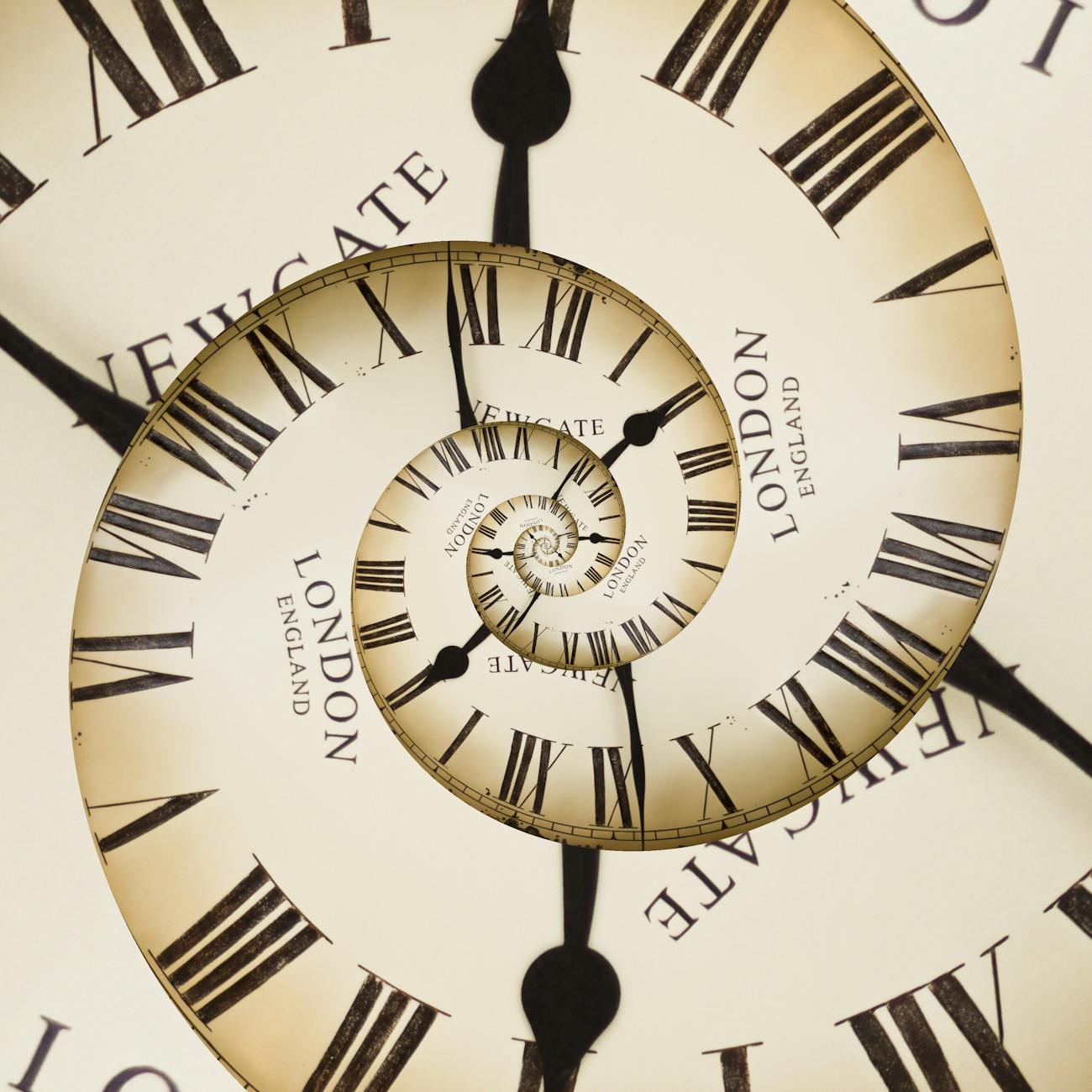
The entrapment implied in “the past constantly determining the future” is broken by realizing that the so-called future (this new Now) can even more freely and open-endedly determine (or utterly abolish) the past and all its pains and sorrows.
Take war, for instance (please). It’s nothing but a delusional chain of cause and effect (aggression and counter-aggression), each claiming the other started the chain.
But a chain of events has no real beginning or end, because it starts and stops in the present imagination. We can always imagine a new cause. But what we haven’t tried to do very often is stop re-imagining an outdated and deadly past. That’s because we’re afraid of the quiet absence of our dramas (and our Selves) more than war and misery itself.
In other words, a chain of events is based on the belief that the past causes the future — some ill deed by another person or group “forces us” to act in retaliation. And this retaliatory act justifies the righteousness and vengefulness of the ones retaliated upon, and vice-versa, ad infinitum. Therefore, we chain ourselves to the past and then measure our progress by how much effort we put into pulling on the chain.
But if we understand that “the future determines the past”, then we see that what we do now (in the so-called “present”) forms the chain (or breaks the chain). The past has nothing to do with it, because the past and future don’t really exist except in our imagination of them in the “present”. So, every retaliation is in fact the originating aggression.
And if we wanted to break the chain of aggression, we can only do it now, by refusing to do the bidding of the past and walking away from the chains of aggression. But we don’t want to change the past, because it preserves the mirror enemy which gives us our illusion of identity. So “the future determines the past” is a very under-used human potential for immediate and drastic change.
And this applies even to the smaller, mind-forged chains of our personal history and self-images. Whatever we did in the past that makes us feel compelled or trapped into being a certain kind of person or perceiving ourselves as a victim or noble sufferer, or wretch, or mundane same old, same old, it is the past that is “causing” us to be this way. And at every single mundane moment of the day and night, we pick up those chains from the past and reattach them to ourselves and then yank in misery.
We want to believe that only the past can determine the future, because it gives us an excuse to wallow in a familiar old Self and keep the empty spaciousness of life itself — the infinite freedom — as far away as possible.
All of it is a dream world reasserting itself over and over again without cause, because it’s all happening Now.
The solution to human misery has always been close at hand. But we reject it simply because the past is a comforting illusion to those who are afraid of the emptiness and silence and peace of not being anybody in particular — losing all that history of misery we’ve come to cherish. This rejection of that loss is suicide, but it’s not polite to mention reality among fellow sleepwalkers. They toss and turn violently in their sleep whenever you mention it.