


Have you ever accidentally meditated? The key word here is “accidentally” — as in strolling through a peaceful garden and being suddenly clobbered on the forehead by a rake-handle. Instant karma: Instantaneously encountering the consequences of your own unconscious behavior.
This slapstick experience is a kind of split-second meditation. Action and consequence, mindlessness and its inevitable manifestations, are too instantaneously linked to leave any time for an aggrieved imagination of my “self” to erupt and blame the rake, as mindless thought tends to do.
In the instant of the collision, one either gives up the ghostly illusion of one’s own dignified self and laughs at the idiotic nature of existence, sans “me”, or stays trapped in the skull running in circles in search of an escape from the echoing sounds of one’s own circular running.
You know the experience of the internal voice and its endless chatter.
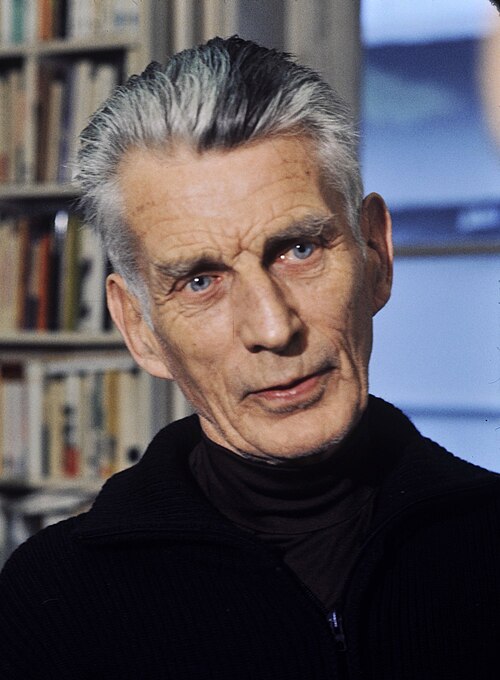
This is the experience of reading Samuel Beckett’s “The Unnamable.” Either you are transformed in fits of gut-wrenching laughter by these collisions with your own stupidity, or you will have no idea what I’m talking about and will hate the book and never finish it.
And don’t be fooled by the word “meditation.” Although it’s an accurate description of the experience of reading Beckett’s trilogy of novels (Molloy, Malone Dies and The Unnamable), it’s also misleading in some of the term’s popular guises. By “meditation” here I don’t mean trying to remain peacefully aloof, or sitting cross-legged until one’s eyes cross in pain, or struggling to not struggle.
I mean something that a typical Subject will never Verbalize. No subject, no verb, no observer, no thing observed, no effort, no expectations of peace, but something that stops the little “me” short and reveals the farce of this me’s incessantly noisy reincarnations as “better angels” — these efforts to escape its own noisy disappointments. By meditation, I mean suddenly coming face to face with this ongoing monologue of self-centered thoughts racing across the skull and tripping over themselves in slapstick futility.
The laughter that erupted from “this reading body” (I couldn’t call it “me” at that point) was like a volcanic explosion that changed the geography of this small life. Every sentence gymnastically tripped over itself in mental slapstick, like a literary Charlie Chaplin, landing with sprained expectations, and then blaming the previous sentences for the faults of the present turn of phrase, ad infinitum, like the head of a dog blaming its tail-end for spinning in circles — thereby multiplying the number of reincarnations — each “me” seeking an escape from the “me” of the immediate past.
It was a revelation of reality. It was the most honest thing I’d ever encountered.
Because what I encountered on the page was exactly what I encountered in my own head, albeit in a less raucous, gritty, sublime, and breathtakingly — delicately — insightful manner of speaking. I couldn’t breathe from laughing. There was no time between each sentence to feel idiotic and self-conscious, only space enough for the giddy relief of surrendering to one’s own reflected stupidity, forgiving myself in the absence of time’s excuses.
It was a meditation no less abrupt and unexpected than a rake handle to the forehead.

