My First Commandment [here] is “write to live, don’t live to write.”
This is a self-inquiry, not a lecture, although I attempt to organize what I am discovering so that you can understand what is otherwise – without this form-finding work – an interior chaos. I share this so that you and I will know we’re not alone. We are fellow prisoners, cutting free our chained minds.
We don’t trust our children to unfold as they will. The society wants consistent shapes that can serve as cogs in the inorganic machine. We are trained to serve the machine, not vice versa.
Education at its best teaches us self-knowledge, while education at its worst teaches us who we are.
Instead of focusing solely on building technologies to save us from disease, couldn’t we have primarily focused on altering our poisoned way of living so that disease was less common?
I hear in my own brain (and from what I derive from others’ brains) something similar to government propaganda in the way it defends and justifies itself by referencing selectively edited memories (or fake news), in order to preserve the illusion of a stable and presidential “me” who does no wrong.
I need an image of myself. I have to be aware of whether or not my behavior is suited to the moment. And this naturally inspires the brain to summarize how I’m behaving (or other people are behaving) in some short-hand form. But these images perform coherently only when they remain provisional mirrors of behavior – lighting up along the periphery of attention as proprioceptive reflections and refractions, which keep the organism tethered to some portion of reality. Even Buddha had a self-image of that sort.
The “small” self (or “me” sensation) is an estimation of how “I” look in someone else’s eyes. Other people serve mainly as mirrors for perceiving this self. This self can’t exist if it’s not imagined from the perspective of an Other.
The “I” is merely a rehearsal of how others should see me. It’s chained to others’ opinions. So, this “I” is always a social construct, and is not “who we really are.” We always exceed our own expectations if given half a chance.
In focusing too much on trying to unfold a new identity, all we end up doing is shifting from one combination of socially imposed definitions to another, and then calling that shift from the old prison to the new prison, freedom.
Where I expect to find a real character within (or within another person), I find only a stream of language describing one.
We’d like the other people in our social web to stop trying so desperately to free themselves. Our own entangled stability depends on it.
This sense of “self” is not a soul but only the body’s imaginations of itself as if from the outside. It is a secular conception of soul, minus the traditional soul’s connection to a nested hierarchy.
Everywhere in this culture, the small Self and its waking dreams have been given permission to supersede the reality of earthly life (biology and planet). It’s a general permission slip to discount reality in favor of a pretense of soul.
A “soul” was not originally conceived as the atomic essence of a separate self, but as an idiosyncratic expression of a universal being that can’t be identified in any positive sense, except through metaphor and myth. This humbling sense of a soul is lost when it’s converted into a separate Self, who doesn’t have to answer to anything but its own imagination.
This capacity to imagine ourselves outside our bodies is less real than the body, because imagination is only a derivation of the body and is in no position to tell the body who or what it is.
“I have a thousand brilliant lies For the question: How are you?
I have a thousand brilliant lies For the question: What is God?
If you think that the Truth can be known From words,
If you think that the Sun and the Ocean Can pass through that tiny opening Called the mouth, O someone should start laughing! Now” (Daniel Ladinsky, inspired by Hafiz)
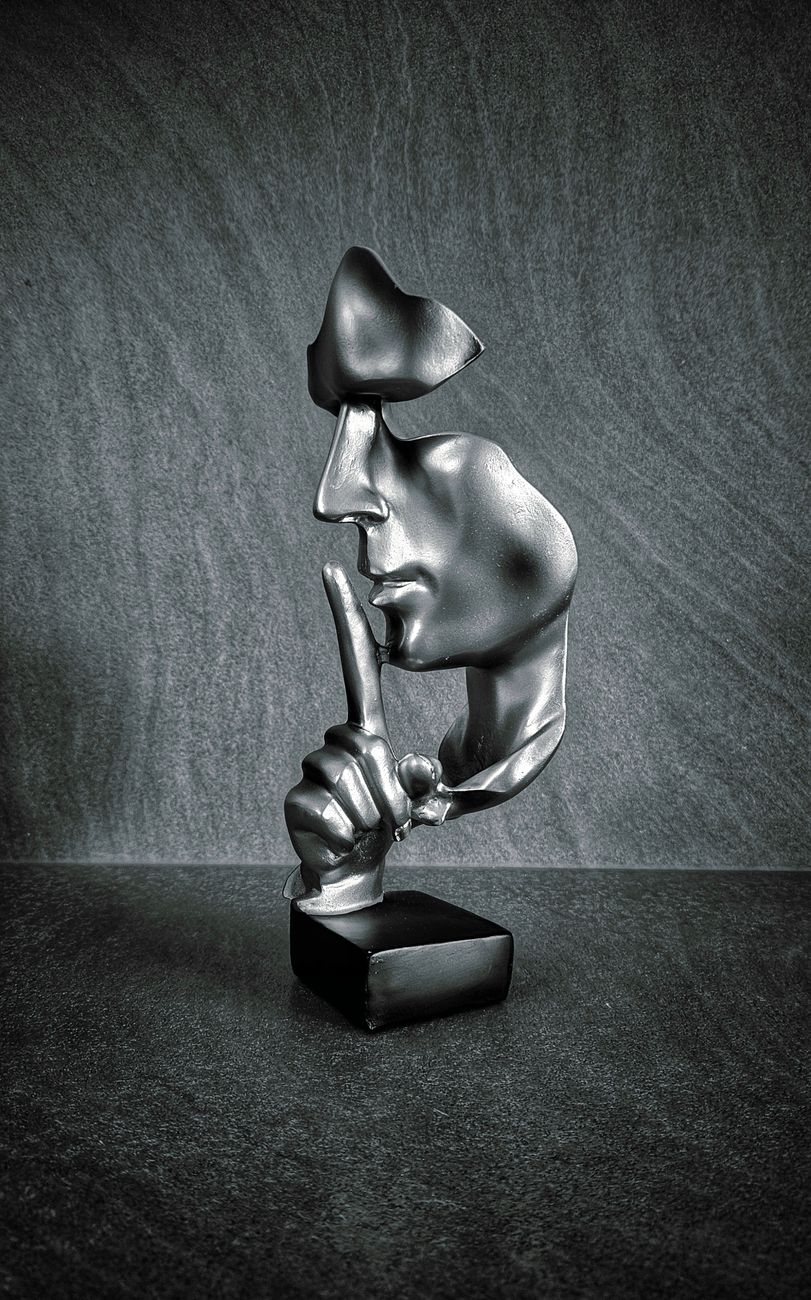
Lao Tzu: “Those who know do not speak; those who speak do not know”
Part I: What Can and Can’tBe Said?
Q: Would you agree with Lao Tzu’s statement that “those who know do not speak and those who speak do not know”? And if so, how come you keep speaking?
Fool: I would never disagree with Lao Tzu. And yet, Lao Tzu spoke those words! He used speech to point out the limits of speech. So, a certain kind of speech is still helpful.
Q: Would you say he contradicted himself?
F: No. Lao Tzu spoke in the spirit of reversal or negation. What he said was a quieting insight into the limits of language, but a limit is not a full deletion of language.
Q: What can and can’t words do?
F: We can fully sense any object in front of us without the need for words. All the qualities of the object are palpable, but “go without saying.” I don’t need to know a word for the color of the object in order to see it. I don’t need to know a word for its smell or shape. It’s only when there’s a practical need to distinguish utilitarian qualities of an object that words become helpful as positive identifications.
People used to claim that ancient people couldn’t see the color blue. But the experience of blueness was always a vivid human experience. Nevertheless, for a long time there was an absence of any practical need to distinguish blue from dark green. This didn’t mean they were less observant or narrower in perception…
Q: … but perhaps less intelligent? A capacity to notice distinctions and make use of them is a sign of greater intelligence. And having a larger vocabulary surely equates to more intelligence?…
F: …More intelligence in a positive direction, carrying more knowledge or memory, which is helpful in a rational, manipulative or focused direction – I would call this “brain athleticism”, which our culture favors. But this intelligence has overshadowed and weakened a negative form, that penetrates certainty, exposes limitations in knowledge, and receives wisdom from a wider perspective than any particular focus.
In fact, by developing a larger vocabulary for different shades of color, we are not necessarily becoming more sensitive to color itself. We are becoming more attuned to artificial categories of color, to names and words, instead of allowing color to remain a direct and ultimately unnamable experience, with its own shifting qualities, depending on light, shade, angle of sun, and contrasting environment.
And the name of a color will both sharpen our focus on that shading and prejudice us into seeing a generalized categorical “type” of color, rather than seeing the actual shifting qualities that morph and run from every defined boundary of knowledge.
The same is true of seeing anything, including human beings. We see “who” a person is based on the categorization we’ve created. Not just “white” or “black” or “Asian”, but “Tom” or “Dick” or “Sally”. We see the stories of one another.
So, this knowledge – this intelligence we gather about the world – can easily become a stupefying prejudice that holds our thinking within biased expectations and dulls our sensitivity to nuances that stray from these expectations.
Q: Are you implying that the more we “know” another person, the less sensitive to them we become?
My feeling is that nothing is going to change this repetitive history of mass murder, or nation against nation, until the illusions of “who we are” dissolve. Not that identity itself would disappear. But identity ceases to be an illusion when it’s held more lightly, as passing reflections on our behavior. But when they become stuck in idolized forms, illusions multiply.
Rather than constantly relighting these fuses of Us against Them, we need to allow that fuse itself to dissolve in a broader vision than us and them. Because every political or social movement starts from the same rotten assumption – namely, a belief in the reality (not mere fictional reality) of a separate Self (whether national, political, religious or racial self, and so on). It’s this belief that is the fuse. And it’s a delusional belief. We are not who we think we are.
And the dissolution of these illusions of identity would snuff out the various fuses before any of them can lead to war.
But almost everybody finds this level of criticism absurd or far-fetched or unrealistic, or even offensive, and so on. Because people primarily look at nations, tribes and other group entities as if they were real. It’s the psychology underlying this illusion that attracts my interest; not the geopolitical dramas carried out by these fictional entities.
So, I’m going to keep talking about these illusions, without proposing any additional solutions (which are inevitably political or social solutions). Because the solution in this case is the problem. The solution of politics is the problem because it always reinforces the illusion of separate identities; and these solutions are never any better than mere truces.
“A bitter wind blows through the country A hard rain falls on the sea If terror comes without a warning There must be something we don’t see What fire begets this fire? Like torches thrown into the straw If no one asks, then no one answers That’s how every empire falls” — John Prine (“That’s How Every Empire Falls”)
Maybe the scientific revolution (for all its magnificent insights and newfound capacities) re-imagined the human being as a kind of inanimate billiard ball bouncing mechanically along a chain of meaningless cause and effect.
This was the only Grand Narrative that science could offer the individual. A brief, inexplicable eruption from total non-animacy, which ends in non-animacy yet again.
This revolution freed the individual from the biting dogmas of religion, but left the individual feeling like a surplus ball bearing bouncing around in some inexplicable clockwork; which had the effect of leaving the non-scientist (the new lay person) desperate to find purchase in the open-ended abyss of an isolated “me,” which was all that remained in the absence of religion and monarchy (and NO, this is not a lament). But as a result, perhaps the 18th and 19th century citizen (or at least European or American citizen) colonized the world in its need to distract itself from the absence of meaningful identity that the sudden withdrawal of old certainties provoked.
I mean, the 19th century “American” mind was optimistic, because it was experiencing the “singularity” of a logarithmic upswing in personal and national power in the rising tide of colonialism, thanks to genocide and slavery.
As the empire collapses, the urge to regress towards that “old time” faith in kings and gods and tribes grows more desperate, and less euphoric. Hence, there’s a desire to return to the familiar hellscape of genocide and enslavement so as to give those who feel this way a boost of self-esteem.
So, perhaps the “rugged individual”, and the “self-made man” of an eager 19th century America became the resume-building, careerist, self-branding, cynical and self-obsessed tweeting global consumer of today. We’ve all been colonized.
1) Self-knowledge as a positive list of characteristics
How do I know myself?
I begin by knowing myself as an objective list of characteristics: Likes, dislikes, opinions, habits, values, skills, professions, political orientations, and every other quality imaginable.
I also know myself reluctantly as a list of shadow characteristics, which others often perceive first: impatience, clumsiness, self-obsessions, talking to myself even when others are in the room, a hypocritical love of boxing, etc.
There’s a necessity for these differently sourced lists of self-knowledge. If I don’t notice a tendency to be selfish, lazy, thoughtless, you name it, then self-knowledge is distorted in the preservation of an illusion.
In fact, I hear in my own brain (and from what I derive from others’ brains) something similar to government propaganda in the way it defends and justifies itself by referencing selectively edited memories (or fake news), in order to preserve the illusion of a stable and presidential “me” who does no wrong.
If I’m rolling an issue over and over again in my mind (as I tend to do), then some image of myself must have been made to wobble from its pedestal. Even if I’m self-righteously convinced of my own innocence, the emotional and mental energy dedicated to preserving this image indicates a wobble.
The voice is like a press-secretary and press corps rolled into one. And I hardly notice the exhaustion this causes, because it’s standard practice in this culture: conversing with non-existent people in order to convince imaginary people that this list of qualities remains accurate and impeccable.
Or, call it an effective air-defense system that shoots down any speck of honest evidence undermining the falsely idealized Self it claims to be.
But now and then some honest revelation hits home despite this diligence. And the accidental surrender to reality generates a soft breeze of sanity, which cleanses the air momentarily from the fumes of bullshit that the brain produced during the course of the day.
But almost immediately I’ll start downplaying the impact of this moment of truth, trying to steady the wobble or clean up the damage to the fallen icon. And I’ll employ a clever tactic to do this — acknowledging a portion of the exposed corruption by saying something like, “I wasn’t being myself” or “that’s not who I really am”.
Seen from Mars, it’s as if human beings as a whole don’t care if they themselves survive (or if other species are allowed to live).
Is this mass suicide?
An indifference to our own collective fate is spreading, even among people who are still devoted to their families. The indifference is justified as a form of realism. If we’re heading towards destruction then realism, they say, is accepting our fate (knowing all living things eventually die anyways).
Indifference to life and death itself is being conflated with realism.
And death as a natural completion of a life-cycle is being conflated with a premature murder/suicide of one another and millions of other species.
This isn’t a realistic or mature regard for life and death, but the very attitude of a person who has resigned themselves to giving up on a complete life and committing suicide before maturation. This “realism” is the suicidal impulse itself.
After all, what are the direct means by which we are prematurely killing ourselves? We’re denying the effects of climate change, indulging in fascism and allowing AI to gain total possession of our minds, and suck the marrow out of life itself, to name just three.
These are the self-destructive behaviors of an immature species, an adolescent species, who has set fire to the house, locked itself in its virtual room, and then climbed into bed to watch a movie with the dog. And when a brother bursts into the room, shouting “fire!”, the adolescent mocks him for his overzealous concern, saying, “calm down and be realistic: we’re all going to die eventually anyways.”
Denial, indulgence and apathy are the justifications for what’s happening, not the mature acceptance of life and death. There is a reason why we make a distinction between murder and natural causes.
I believe it is realistic to say that we are killing ourselves and murdering one another.
But it’s not realistic to accept this situation as inevitable.
Therefore, I’d like to suggest that it’s this lack of self-knowledge, this refusal to self-reflect, learn, change and die naturally to who we are, which is the problem. Suicide and murder are not the acceptance of death, but its denial. We would rather be consumed in a fire we started than give up the illusions of ourselves and allow who we thought we were to die naturally.