Antisemitic Elements in the Modern State of Israel

I’m not interested so much in geopolitical solutions and analyses. My feeling is that nothing is going to change this repetitive history of mass murder, or nation against nation, until the illusions of “who we are” dissolve. Not that identity itself would disappear. But identity ceases to be an illusion when it’s held more lightly, as passing reflections on our behavior. But when they become stuck in idolized forms, illusions multiply.

This dissolution of the illusions of identity, in my opinion, would snuff out the various fuses before any of them can lead to war.

Rather than constantly relighting these fuses of Us against Them, we need to allow that fuse itself to dissolve in a broader vision than us and them. Because every political or social movement starts from the same rotten assumption – namely, a belief in the reality (not mere fictional reality) of a separate Self (whether national, political, religious or racial self, and so on). It’s this belief that is the fuse. And I feel it’s a delusional belief. We are not who we think we are.

But almost everybody finds this level of criticism absurd or far-fetched or unrealistic, or even offensive, and so on. Because people primarily look at nations, tribes and other group entities as if they were real. It’s the psychology underlying this illusion that attracts my interest; not the geopolitical dramas carried out by these fictional entities.

But, again, people are overwhelmingly drawn to the level of human drama – absorbed almost constantly from morning till night by the various Netflix or Hulu dramas involving egos in conflict, or nightly news dramas between nations or demographic groups. Sure, human beings are naturally interested in this level of life, because we’ve lived in complex group dynamics for millions of years.

But that wasn’t the only level of attention we had developed over those millions of years. We also used to be even more deeply attuned to the delicate balance of the natural world; which includes the immaterial mysteries of being alive.

People had to know their relationship to that broader world beyond their petty concerns. In healthy indigenous tribes, people tended to be broad-minded and philosophical. But that sensitivity has faded, as human drama has escalated. And now I believe we’ve reached a point where our political intelligence has made us blind, because now this focus no longer leaves space for a coherent relationship to the larger natural world; and to the even larger immaterial realms, in which our identities are as insignificant as passing dreams.

The nested hierarchy of order has been reversed to the point where we value only self-interest; which is a vantage point so benighted that it can’t recognize its own self-destructive destiny.

So, this is why I feel that we can’t find our sanity by focusing constantly on nations and other oppositional identities, as if they were real. And by focusing constantly on politics, we’re only reconfirming our belief in these images of ourselves and prolonging the foolish dramas.

So, I’m going to keep talking about these illusions, without proposing any additional solutions (which are inevitably political or social solutions). Because the solution in this case is the problem. The solution of politics is the problem because it always reinforces the illusion of separate identities; and these solutions are never any better than mere truces.

Read More »

Briefly Touching a Third Rail: Footnote 2 to “What Is Self-Knowledge?”

Photo by Brett Jordan on Pexels.com

Now, this is a third rail in society, so let me place my metrical feet carefully here.

I think everyone has a right to experiment and poke and prod themselves and change their genders and do whatever they want to their bodies. Every person is free to experiment in order to learn what is and isn’t possible. It’s nobody else’s business.

But the inquiry into Identity is my business, since I’m a human being in the stanchions of various constricting identities like everyone else. By “identity” I’m not referring to the true nature or substance of you and I. That true nature exists beyond the reach of both conceptual certainty or social constructs, and therefore also beyond the reach of negotiation. I am not a man because I identity with manliness in some culturally defined image, but simply because it’s a description of the body — of its actual forms and functions. Self-identification has nothing to do with the body’s actual gender. Gender identity is the social construct; the body’s actual gender is not a social construct.

Identification is a constructed imagination of a body (and the imagination of a “Self” viewing the body as if from above), which has been given cultural permission to supersede the importance of the actual body. Everywhere in this culture, the Self and its waking dreams have been given permission to supersede the reality of earthly life (biology and planet). It’s a general permission slip to discount reality in favor of a pretense of soul.

And this Self is not a soul but only the body’s imaginations of itself as if from the outside. It is a secular conception of soul, minus the traditional soul’s connection to a nested hierarchy. The soul was not conceived as the atomic essence of a separate self, but as an idiosyncratic expression of a universal being that can’t be identified in any positive sense, except through metaphor and myth. This humbling sense of a soul is lost when it’s converted into a separate Self, who doesn’t have to answer to anything, including the reality of its own biology.

Read More »

The Two-Edged Sword of Thought and Action; On the Nature of Humor and Sorrow

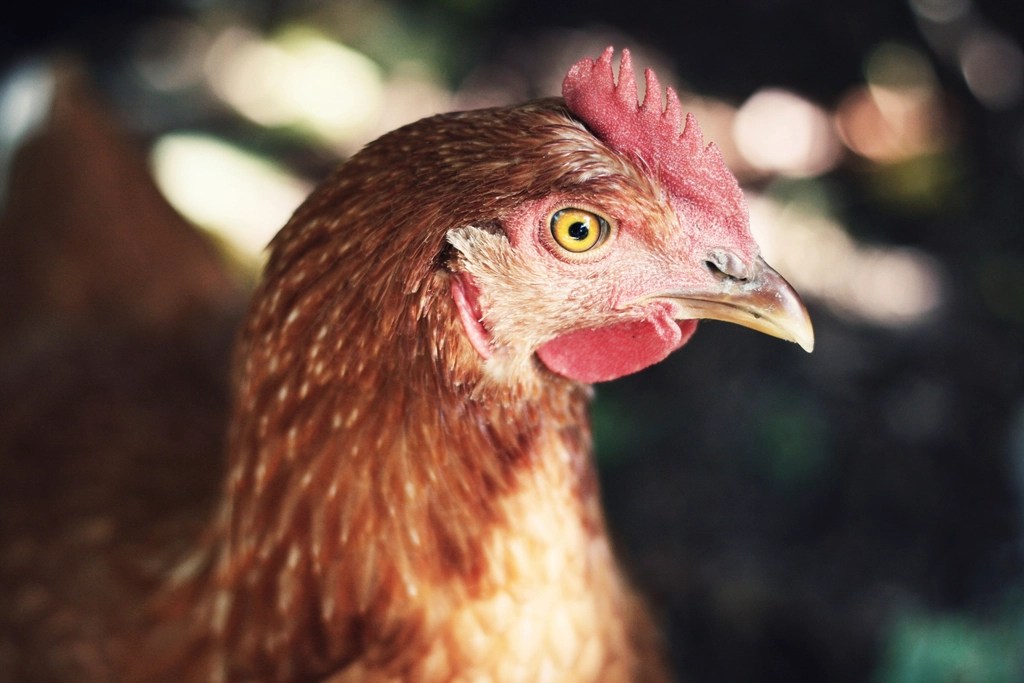
Recently, my wife and I drove past a house way out in the country, where 8 chickens were held in a cage that would be small for one. This was just after learning that the killings in Gaza were continuing under the radar; and Trump had just bombed another 20 fishermen for no reason. And Ms. Good had been murdered.

Our efforts to save the chickens became a surrogate attempt to put an end to all that pain and sorrow. In other words, it was futile. We could do nothing but contemplate a midnight raid, which would have caused the poor, ignorant woman in the shack to lose her mind. Because in some strange way she loved the chickens, or thought she did, and had raised them from eggs, she said. And there was nothing the sheriff or the animal welfare department could do under current laws; and we had no place to bring the chickens even if we stole them.

And after contemplating the possibility of losing my mind over an issue that was so small in comparison to what is happening in the broader world, I had to accept the pain. I had to admit that there is no possibility of separating the pain of life from the love of life. And that we live in a world that must always teeter between hell and heaven. And that we have to find a way to move through this border land without sinking into pits of despair or indulging in a transcendence too high for our tears to reach the earth.

Read More »

Time and Timelessness

Photo by Fritz Jaspers on Pexels.com

[This appeared in the May issue of Pari Perspectives]


6am: Long Shadows

The morning shadows are a memory of night. They seem to long for the dissipating darkness. Reluctantly, they retreat, until they are cowering under our feet by midday; and then by late afternoon, leaning once more towards the returning dark.

How can a timeless “now” squeeze between these ceaseless shadows?

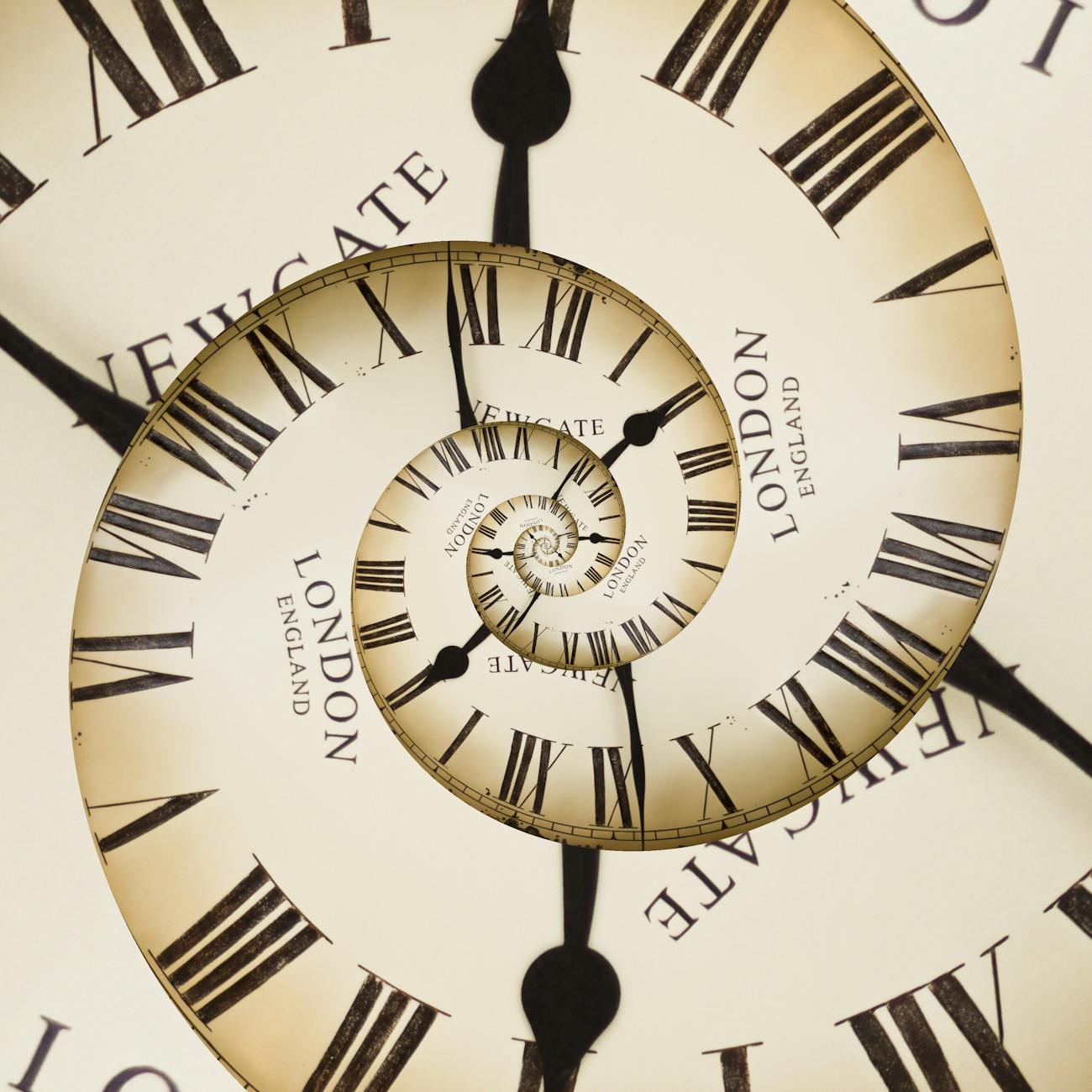
The clock, too, is ceaseless. There is no space on the clock face to mark a “now”.

Maybe the clock is only a map of a timeless territory.

Or, perhaps the clock is a spinning prism through which the mystery of time and timelessness can be seen in different slants of light and shadow.

But even a full circumference of 24 hours will not resolve this mystery. Because everywhere I look, I see only the limitations of human perception, not the limitations of reality itself. So, I can’t “know” time, only these slanted perceptions.

Perhaps time can’t be known because there’s no replication possible. Look, this golden-hued sunrise doesn’t hold quite the same golden hue as yesterday’s. Every morning, the clouds change, branches and leaves have fallen, breaking the light a little differently. And my sensitivities change also.

So far, the earth has experienced about 1,658,195,000,000 mornings, and every one of them was different. Maybe the clock never completes a perfect circle, but spirals beyond measure.

Maybe the techno-futurists are wrong, and we’ll never travel to a previous time, or live forever, because something always dies, no matter what. We will always leave someone behind, or some part of us. Or, we’d return knowing what we didn’t then; which would make it something new; not the past at all.

Our desire to escape the anxieties of time leads us unwittingly towards an inanimate repetition of a deathless world; a perfectly circular and repetitive mechanism; an escape from the spiral of renewal, which requires dying to the past and future, as Krishnamurti pointed out so clearly.

Look, already, the early morning hints of spring have vanished under a wintry sky. I have never known a morning like this.

Read More »

Charlie: Reflections on Death, Beauty and Love

“I think I could turn and live awhile with the animals… they are
so placid and self-contained,
I stand and look at them sometimes half the day long.
They do not sweat and whine about their condition….
… … not one is demented with the mania of owning things,
Not one kneels to another nor to his kind that lived thousands of years ago
Not one is respectable or industrious over the whole earth” (Whitman, Leaves of Grass)

charlie deep in garden

Love may be eternal, as the saying goes, but it’s also never more than a series of fleeting encounters. What we hold too long and too close becomes blurry, dissolves into fetish. The objects of our love slip our embraces sooner or later.

Or as the saying goes, what we love, we let go. Living things are constantly going. The animal body moves, it breathes, pumps, circulates and leaves only a trace that fades and disperses.

Even the atoms of our bodies are constantly being replaced.

The person we love is a dispersing form. Or, rather, a shape discernable in the gathering and dispersing of material.

I’m watching suspended motes of dust slowly circulating through the room. If this dust formed an intelligent pattern in passing, if the shape of a person could be discerned in the circulating motes, would this suggest a presence beyond the dust itself? Would we intuit the impression of a soul, because something more than matter alone is at work here? Something that gathers and disperses, an immaterial attractor revealed in the passing shape of matter?

But to attribute this “soul” to something utterly non-material and separate from the body does great harm to our understanding of earthly life. It devalues the biology as some “mere” candy wrapper that can be thrown away, almost disparagingly.

The beauty of these paradoxes lies in the cracks that suggest something more. For there is something soulful about an animal body, about the earth itself. And we are too quick to explain it all rationally, materially and mechanically, or leap into a transcendence that betrays our earthly mother.

Rather than inventing some compromise view, I prefer the suspended question, which sees the limits of both and offers no final answer, only a direction of learning. A vision of life that is more than material, and more than non-material. Nothing so black and white. Nor the compromise of gray.  Somehow an embrace of both — a soul that shines as a body, a body that burns with soul.  Read More »

The Rebellion Starts Here

Time to summarize where the series on freedom has gone up till now.

The only concern of these essays is the restoration of the earth’s health.

But how can something as pathetic as an essay contribute to the healing of the earth? The same way any other action performed whole-heartedly contributes, the same way any white blood cell encountering a virus contributes to the healing of the whole population: By realizing and metabolizing the world’s poisons as they circulate within this holograph of the whole, called me. By being an example of healing, by facing my diseased self honestly, allowing the old patterns of identification to die, as they should have died thousands of years ago, before the disease suppurated.

Honesty is the painful act of healing. It’s also the most rebellious act one can undertake in a deceitful world.

This isn’t about learning to play the violin while the world burns. None of these essays are about personal advancement or personal adjustments to a world in its death throes. Those concerns make me sick. I mean “sick” as an accurate metaphor, because the world’s sickness is rooted in a frame of mind that is selfish and short-sighted. We are heading towards extinction from too much personal concern.

Read More »

Extinction and Responsibility: Why Climate Disaster Might Heal Us Even As it Kills Us

earth

This appeared on Counterpunch.

Alice O’keeffe: “Even if we can’t escape its consequences, it is not too late to escape the mindset that brought us here.”

If climate disaster has left us with no future do we still feel responsible to the earth that outlives us? Or do we say “who cares?”

If we say “who cares?” then our sense of responsibility was never anything more than a moral rule, a business deal of sorts, where we agreed to behave honorably as long as we were allowed to project our egos into future generations. But I think real empathy for a world without us is still possible, and I think it matters in some way that can’t be calculated on a strictly transactional basis.

The possibility of near-term extinction is new, but the underlying dilemma this presents is as old as the Big Bang, or older. Death is death. It comes to the individual as surely as it comes to the species, the planet, and the exploding universe itself. What’s different now is only this onrushing inability to avoid facing this fact. And I think this is a good thing, because it forces a confrontation with the many reductive delusions that have limited our creative participation in the world, which is our responsibility to something more than ourselves. The chief among these limitations has been a strict and too literal image of who we are, an identity that keeps us trapped in a solipsistic circle.Read More »