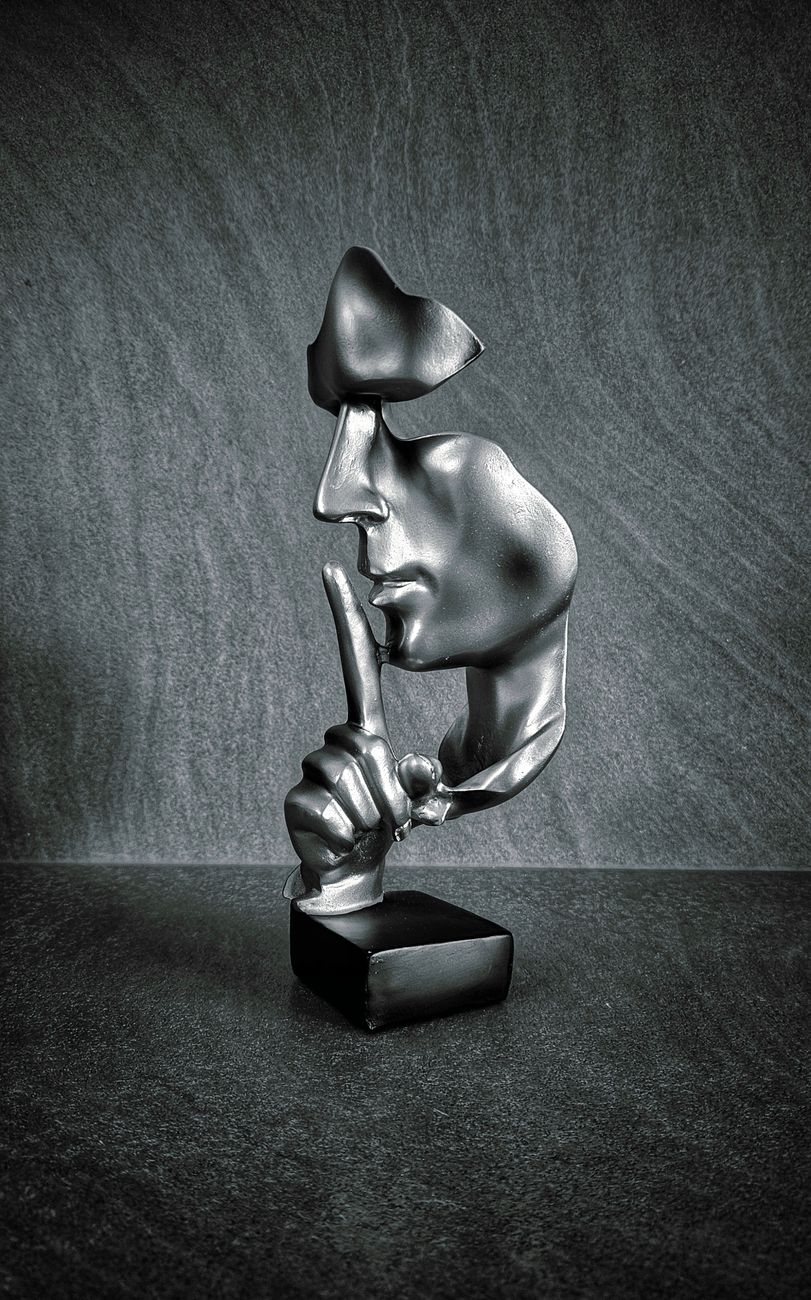
“I have a thousand brilliant lies
For the question:
How are you?I have a thousand brilliant lies
For the question:
What is God?If you think that the Truth can be known
From words,If you think that the Sun and the Ocean
Can pass through that tiny opening Called the mouth,
O someone should start laughing! Now” (Daniel Ladinsky, inspired by Hafiz)
Lao Tzu: “Those who know do not speak; those who speak do not know”
Part I: What Can and Can’t Be Said?
Q: Would you agree with Lao Tzu’s statement that “those who know do not speak and those who speak do not know”? And if so, how come you keep speaking?
Fool: I would never disagree with Lao Tzu. And yet, Lao Tzu spoke those words! He used speech to point out the limits of speech. So, a certain kind of speech is still helpful.
Q: Would you say he contradicted himself?
F: No. Lao Tzu spoke in the spirit of reversal or negation. What he said was a quieting insight into the limits of language, but a limit is not a full deletion of language.
Q: What can and can’t words do?
F: We can fully sense any object in front of us without the need for words. All the qualities of the object are palpable, but “go without saying.” I don’t need to know a word for the color of the object in order to see it. I don’t need to know a word for its smell or shape. It’s only when there’s a practical need to distinguish utilitarian qualities of an object that words become helpful as positive identifications.
People used to claim that ancient people couldn’t see the color blue. But the experience of blueness was always a vivid human experience. Nevertheless, for a long time there was an absence of any practical need to distinguish blue from dark green. This didn’t mean they were less observant or narrower in perception…
Q: … but perhaps less intelligent? A capacity to notice distinctions and make use of them is a sign of greater intelligence. And having a larger vocabulary surely equates to more intelligence?…
F: …More intelligence in a positive direction, carrying more knowledge or memory, which is helpful in a rational, manipulative or focused direction – I would call this “brain athleticism”, which our culture favors. But this intelligence has overshadowed and weakened a negative form, that penetrates certainty, exposes limitations in knowledge, and receives wisdom from a wider perspective than any particular focus.
In fact, by developing a larger vocabulary for different shades of color, we are not necessarily becoming more sensitive to color itself. We are becoming more attuned to artificial categories of color, to names and words, instead of allowing color to remain a direct and ultimately unnamable experience, with its own shifting qualities, depending on light, shade, angle of sun, and contrasting environment.
And the name of a color will both sharpen our focus on that shading and prejudice us into seeing a generalized categorical “type” of color, rather than seeing the actual shifting qualities that morph and run from every defined boundary of knowledge.
The same is true of seeing anything, including human beings. We see “who” a person is based on the categorization we’ve created. Not just “white” or “black” or “Asian”, but “Tom” or “Dick” or “Sally”. We see the stories of one another.
So, this knowledge – this intelligence we gather about the world – can easily become a stupefying prejudice that holds our thinking within biased expectations and dulls our sensitivity to nuances that stray from these expectations.
Q: Are you implying that the more we “know” another person, the less sensitive to them we become?
Read More »
 Negative Geography