… a way of liberation can have no positive definition. It has to be suggested by saying what it is not, somewhat as a sculptor reveals an image by the act of removing pieces of stone from a block. (Alan Watts, “The Way of Zen”
[A summary of each essay can be found at the bottom of this page]
Of all the things I’ve written, the “About” is the most elusive. It keeps changing shape and never seems to settle on a simple summary. This is because the more I learn, the more “what I do” changes.
I hesitate to describe the origins of this “necessity”. (I feel this project is a real necessity but hang quotes around the word to deflate this claim’s tendency towards too much self-importance. It’s not so much importance that fuels this necessity, as survival, or recovery from an early adolescent terror that caused me to doubt the reality of everything. Even if this still sounds a bit too inflated, I will stake my life on the fact that this isn’t a vanity project. The title alone is too unappealing to attract the kind of attention that vanity requires. However, I admit I’ve been obsessed with this “necessity” from the time I was 13 years old, and I’m now an old fart).
But I suppose I need to say something to help clarify the trajectory of what’s unfolding here, which can’t be obvious to a casual web passer-by.
This project could be said to have started at 10pm on May 17th, 1973. I was 13 years old and at that precise moment experienced the worst terror of my life. There were no clear “external” causes. The acute period of fear lasted about 3 months. And then it returned when I was 15 and 17. And in between these periods it was possible to live a normal life, although there was always the heavy sense of dread, because little fears could spontaneously combust into nothing short of horror at any moment.
It wasn’t a vague fear. It was a precise insight of sorts, half comprehended, which landed in jagged assumptions. As a genuine insight, it revealed the commonality of Being and abruptly exposed the illusion of a separate self. But this vision landed too abruptly to be processed without the distortions of fear. It landed like a schizophrenic hallucination. It left a lingering sense of a real “me” stranded within an unreal world. This produced the paranoid impression of a solipsistic and radically isolated consciousness, rather than a wholistic and expansive consciousness.
I have no incentive to make the fear more vivid, because I would be inviting a reader to suffer something I can’t want anyone to suffer.
But it immediately wrecked the tacit metaphysical structure of assumptions about what is real, which is necessary for any sense of confidence and growth, during adolescence.
As Karl Jung said, “Beware of unearned wisdom.”
The ladder I climbed (so to speak) in emerging from that trap consisted of solid rungs of negation. Belief and conjecture couldn’t be trusted. They were all forms of the imagination. Even sensation doesn’t prove a world beyond itself. All contact with the world was muffled behind this veil of illusion, this infinite array of mirroring thoughts. Only the solid rungs of what is Not True and False offered a way out of the abyss.
Now the trajectory has passed beyond its own fears and is more cultural, communal and cosmic. I’m standing on a kind of solid ground once again, and the sun is shining, and there’s no longer any fear. The isolated and all too literal sense of Self is something else now; something inventive and open-ended.
I think that 13-year-old was only a symptom of a cultural crisis. I was a canary of sorts. Everyone is a canary at times. And this particular cultural crisis is closely related to the emerging threat of virtual reality — of “deep fakes”, fake news, and the general post-modern loss of any possibility of providing a solid narrative ground to experience. With AI now in its logarithmic growth phase (a trajectory along an infinite limit that fools people into seeing a Singularity) we are reaching a point where the world as a whole will encounter the horror of not knowing if anything is real. Already, the panic is evident in the desperation of floundering souls grabbing the illusions of a life preserver in the form of fascist morons.
So, these essays are attempts to spring the trap of derealization/depersonalization over and over again in all its different forms. In fact, the essays themselves “fancy themselves” (if you will) as alchemical incantations specific to particular incarnations of the trapped perspective. Please imbibe these images as metaphors, not conclusive realities.
What does honesty mean in a world where facts are the products of our interpretations, not vice versa? Where necessary interpretations are almost indistinguishable from fiction itself?
In these essays I’m learning to be honest in a less positive or dogmatic sense. Here honesty isn’t merely “telling the truth”; language that attempts to rest in positive conclusions only reaches a certain shallow depth of honesty.
To resolve the problem of “virtuality”, honesty needs to become subtractive. It’s the recognition of dishonesty and fear-induced self-deception. Usually, we have to dislodge ourselves from dogmas and unconscious certainties that keep us from seeing a broader and more profound picture. It’s not a “total destruction” of the temples of old thought; but a fairly precise subtraction, like the subtraction of slivers of wood or shards of stone from a carving, which creates greater clarity and precision. However, in this case, the subtractions change the vision radically, not reductively, not towards some more and more perfect version of an older idea. But with each subtraction of certainty, entirely new vistas become possible. These vistas, however, are no longer positive and conclusive, but metaphoric and shifting.
Now I’m able to enjoy the negative fact that knowledge is a form of creative fiction, a way of honestly seeing through the prism of perspective to obtain insights, not answers. It’s a journey around the Medicine Wheel.
Jiddu Krishnamurti, David Bohm and Samuel Beckett (among others) are significant to me. But, I don’t make a study of anyone.
Contact me by commenting on any given essay.
I have another site called Subtle Mud (poems and stories mainly), and this is that site’s About.
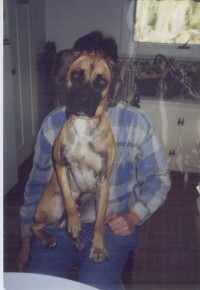
I’d like to be remembered as the man who mistook himself for his dog, whatever that might mean.
The essays (and stories) below are mainly from this site. Some are older. I kept the oldest merely as a historical record of the development of this inquiry, not because I like the earliest examples).
- Antisemitic Elements in the Modern State of Israel: Modern Israel and the Biblical Israel may have resulted in a “category confusion.”
- The Title of the Previous Essay: A mildly humorous examination of “Insight as the Deletion of Positive Knowledge.”
- Insight as the Deletion of Positive Knowledge: (This now appears as the most recent essay, because I redid it). Maybe what we’re experiencing is no more confusing than what a caterpillar experiences as its cocoon deteriorates.
- Original Negative Geography: Humorous and serious — revisiting the first completed version of Negative Geography, from the 1990s.
- Briefly Touching a Third Rail: We don’t trust our children to unfold as they will. The society wants consistent shapes that can serve as cogs in the inorganic machine. We are trained to serve the machine, not vice versa.
- Empire Falls: Our challenge is to find a form of civic unity that doesn’t depend on one-sided patriotic narratives and other indoctrinated illusions of difference and superiority.
- What Is Self-Knowledge? Tracing the saying “first there is a mountain; then there is no mountain; then there is.”
- A Ramble on How Too Much Identity and Too Little Self-Knowledge…: It’s a lack of self-knowledge, a refusal to self-reflect, learn, change and die naturally to who we are, which is the problem. Suicide and murder are not the acceptance of death, but its denial. We would rather be consumed in a fire we started than give up the illusions of ourselves and allow who we thought we were to die naturally.
- The Two-Edged Sword of Thought and Action: My cat tells me not to look for an end to pain. There is, however, an ending to cruelty. And in that difference, the trace of grace is found.
- The Real Revolution Hasn’t Started Yet: Fascism is only the oozing stage of a chronic sickness. Maybe an allergy to a “peace-time” diet of advertising jingles, too much self-esteem, patriotic humbug and religious hypocrisy. Therefore, it’s the broader diet that needs adjusting, not merely our methods of containing the puke.
- Time and Timelessness: This “trip” around the clock is mainly inspired by “The Ending of Time”, a conversation between Bohm and Krishnamurti, which I read about 35 years ago. But it’s been bouncing around like a pea all this time, gathering layers of dreamy contemplation, until it finally achieved just enough exit velocity to escape my pen as an orbiting essay on the nature of time and timelessness.
- The Whitewashed Corridors: People were shouting prophecies over the noise of fighting, “The promised land awaits us just around the bend!” And people started sharing feverish rumors of what awaited them – apparently some huge banquet hall even larger than Maro-Lago.
- Neither Materialism Nor Idealism: Western culture seems to be vacillating between these two extremes. An abstract Platonism that led to a Sky God divorced from earthly life, becoming a puritanical hatred of the body, which are all different forms of idealism. And then this strange scientific materialism, which also degrades matter and mines the earth as if it were inanimate. So, both viewpoints are limited.
- Charlie: Reflections on Death, Beauty and Love: There is something soulful about an animal body, about the earth itself. And we are too quick to explain it all rationally, materially and mechanically, or leap into a transcendence that betrays our earthly mother…I prefer the suspended question, which sees the limits of both and offers no final answer, only a direction of learning. A vision of life that is more than material, and more than non-material. Nothing so black and white. Nor the compromise of gray. Somehow an embrace of both — a soul that shines as a body, a body that burns with soul.
- Facing the Trump in All of Us: Trump is an ally to those desperate enough to Believe in something, which makes them “choose” to be gullible. (Nobody believes in Biden; he can’t deceive because we don’t believe him. He is merely the choiceless option, the only way to avoid immediate ruin). But Trump only exists by virtue of belief. He builds his own reality, as long as his admirers keep clapping. Call him Stinkerbell. If we believe in him strongly enough, then all these horrible realities descending on us can be scoffed away as if they weren’t real. It’s a way to keep dreaming. Keep clapping long enough and the newspapers clap back, because insanity sells.
- The Rebellion Starts Here: Part 6 of series on Freedom. In this culture we are encouraged to exchange love for loyalty, clinging to manipulative liars as our only teat of belonging, pretending to be above pain by inflicting it on others, mistaking brutality for bravery. Fascism keeps rearing its head because fascism is the only refuge of lifeless, sensation-seeking, self-hating zombies.
- Toxoplasma Mindii: Ideas As Zombie Parasites: Part 5 of series on Freedom. I don’t mean this as dramatic hyperbole, but as a realistic parallel. A similar effect occurs with what could be called “immaterial parasites.” So-called “earworms” (songs stuck in our heads) are harmless examples of thoughts running us. But there are far more serious examples. We think it’s odd that a mouse would be forced to run towards predators, doing the bidding of a fungal parasite, but what are we doing when we run towards guns and shoot people dead with whom we’ve never had an argument? Aren’t we also zombies of a sort when we do the bidding of unstoppable “earworms” of nationalistic fervor or ideas of honor and duty, that makes us blind and insensitive to our own bloody hypocrisies?
- Why “Everything Is Fiction” Is Both True and False: Part 4 of series on freedom. The historian, detective and reporter are still doing the same important work, uncovering the nature of reality. But rather than claiming that what we discover is the final word, they retain a theorist’s suspension of certainty, a capacity to see prismatically, and recognize the fictional distortions that are inseparable from language and cultural baggage itself. Then they know (by default) that there will always exist undiscovered assumptions, which, if suspended, dramatically change the color and shape of our understanding of reality, no matter how obvious the evidence at present might seem. This is the inevitable humility of realizing the limitations of thought and language.
- Lucid Waking: Part 3 of series on Freedom. This is a comic performance of a sort, a stage monologue that can’t be taken too literally, or else you’ll think I’m actually this nuts. Well, I am and am not. Yes, nuts, but I accept my own madness with strangely sane bemusement. Perhaps I’m on my way out, not into, the madhouse. But time will tell. In retrospect, I don’t really like this one too much, it’s confusing (even more than usual).
- Freedom As an Absence of Free Will: Part 2 of series on Freedom. I’m never free to select an option that lies beyond my comprehension. And the moment of comprehension or realization can’t be forced or chosen.
- Introducing the Ringmaster: Part 1 of a series on Freedom. Consider Me the ringmaster for what follows. I am part of the performance, just another circus freak, not the kind of Self you’d bring home to meet your mother.
- Integrating Mind and Matter: I’m suggesting that the brain and its constructs (ideas, beliefs, creeds, even language and thought) are not intelligent, are not quite animate. Intelligence and animation are rooted in a wider field that plays the brain the way a musician plays a flute. But don’t picture a separate musician either. It’s an alchemical merger of an immaterial ground and a material condensation from that ground which provokes a kind of aurora of individuality and intelligence that lives and dies, and by dying seeds the universe with its discoveries. This is the way the universe expands, by twisting itself into material shapes that realize new potentials for the whole. At least that’s the playful hypothesis I present for the moment, not a creed, not a conclusion, just a way of looking at the world from a non-conventional perspective. Try on the lens of this perspective for the fun of it, because it’s not “the truth,” but like any fiction, merely insightful.
- Why the Restoration of the Prism Is Not a Matter of Will: Part 6 of series. When we’re honest we See the Ego in operation, we don’t try to stop it. We ENJOY the ego when we’re honest. It doesn’t bother us. Intelligence needs to see the Ego in order to recognize over-reach and imbalance. Honesty has no intention of eliminating the Ego. If we’re responding dishonestly, we’ll do anything we can to avoid revealing the Ego in operation. This vigilance is Ego itself, motivated by the desire to look good, to act good, to be almost Saintly if possible. This “good intentioned” vigilance means we never notice our over-reach. We deceive ourselves with good deeds.
- Why Honesty Is Not a Moral Value: Part 5 of series. This discovery of a prismatic capacity to see everything as honest fictions erases the need for conflict. And this relationship to fiction shows us how it’s possible to move through the world as blindly as Helen Keller, knowing nothing in a positive sense, with no intention of finding conclusion, except perhaps in limited fields of inquiry, and even these may alter radically as more dots of data emerge, and this underlying uncertainty allows us to “keep going” deeper and deeper into this weird, miraculous and unfathomable world.
- What Is Radically New: Part 4 of series. This perspective changes our entire orientation to the world (changes our “nature”) from one that tries to pin the world down, argumentative, covering the cosmic void with rugs of competing conclusive certainties, which puts an end to learning, to one that is always listening to “something more,” probing the bountiful unknown with these canes of thought and language, like Helen Keller, feeling her way into larger and larger consolidations of perception, which will never be wide enough to reduce this cosmic dimension to a known entity.
- What We Retain: Part 3 of series. The plans will manifest in the same way a forest manifests its intricate relationships. We just have to see how blindly narrow and self-destructive everything has become, and this flow of nutritious honesty begins to grow broader ideas and a cooperative spirit from the ground up. Call this anarchism if you wish, but it’s what happens when we stop relying on “special people” to lead us, or special machines to guide us, and relearn how to trust our own mysterious roots in the common, creative mud of life itself.
- What We Lost (or How We Got Stuck): Part 2 of series. Rites of passage were how older cultures taught their children to see from a wider perspective (this is my guess, I didn’t take it from the book, so don’t blame them). But I think this is another element of what we’ve lost – a proper rite of passage for men and women.
- Life, Death and Extinction: Part 1 of a series inspired by the book, “The Dawn of Everything.” Evolution is generally defined by a change in genetics. But our genetic heritage is a kind of magical seed bag of infinite potential — dormant seeds waiting for their epigenetic moment. No, it’s even more open-ended than that. Our genetics are recapitulated holograms of the primordial soup, which can germinate in any form when the immaterial lightning of insight alchemically strikes the fertile ground of biology. Every shift in shape from Tetrapod to whale could be described as earthly insights, leaps in orders of being. Describing it alchemically rather than strictly chemically could account for the strange consolidations of order that exceed the capacities of random selection.
- A Hidden Optimism: But we know a negative thing that make us optimistic by default: we know that we’re not who we think we are. We are larger than any thought or depiction, because a thought can’t contain our full potential. Knowing this, the cartoon laughs at itself without feeling ridiculed.
- Giving Up and Going On: So these self-defensive dramas have the potential to be transformed into psychic mitochondria if a more probing frequency is found. They can’t be transcended and left behind so much as metabolized into a new potential. The potential is not an ideal, it doesn’t contain finished forms waiting to be unveiled (as the “Long-termists” assume). It’s an open-ended potential that requires the unprecedented sparks of creative insight, the immaterial lightning bolts that alchemically transmutate inanimate thought into a living (and dying) intelligence. [This was fun to write].
- Problem and Resolution: Positive nets or cages can be used less “positively”, less literally. They can squeeze the universe into peculiar shapes from which we can derive insights, but only if negation reminds us to release these shapes, to make sure no cages remain, so that our perspective doesn’t get permanently stuck.
- “That’s the Show, Waiting for the Show”: This “subject” is precisely what the “system of thought” (Bohm) is currently designed (you might say) to avoid. The subject lies behind our field of attention, which means it requires a different kind of perception to notice what we’re hiding from ourselves.
- Practicing a Prismatic Approach on the Mind/Matter Dilemma: Every spin of the prism reveals different spectrums of reality. It’s not “wrong” to see things as scientific materialism does, merely impoverished. The spectrums of reality that materialism reveals are helpful, but not enough. There are other spins of the prism that reveal more about reality.
- The Limits of Post-Modernism: Professional thinkers (academia) hit a dead end with regards to Meaning and Big Questions. Here’s how I “keep going” through this impasse and find meaning in the absence of certainty.
- The Immaterial Origins of Life and Intelligence: We can spin the prism and see things the other way around far more coherently. Higher forms of intelligence encompass and precede the material and mechanical world, preceding and encompassing the intelligence of thought and language, too, just as water vapor encompasses and precedes the more material form of rain. We may only notice the rain of matter first, or the rain of semi-material thoughts and images, and assume that the material plain is the originating source. But there are nested hierarchies which go unnoticed, out of which the more material worlds of matter, biology, imagery and language condense, like rain condensing from invisible air. [I enjoy writing dialogue].
- Coils and Spirals (story): This is a surreal comedy that touches on the difference between life’s expansive spirals and the narrowing forms of rational and machine-driven thinking that end in inanimacy. But I say this in retrospect. In writing I didn’t think about any of this, it was just a humorous way to express something vaguely felt. And it was based on a real dream of an ash-caked, colorless, uninhabited center of a town, which the residents had forgotten about.
- The Stupidity of Greatness and the Absurdity of Conflict: Even the resolution of this simple question depends on finding a view wider than the widest view of the question – not merely a wider interpretation, but an awareness that encompasses the limits (and therefore valid extent) of every interpretation that is encountered. [Long, but happy with it].
- Notes on the Difference Between Open and Closed Views of Evolution: A fissure is forming between visions of evolution as a destiny, an almost perfectly formed human potential, predictable as a linear or logarithmic change; and visions of evolution as a creative field without precedence, a chance to respond in a new way, an utterly empty field, groundless, horrifying too. A fissure between the story of humanity merging with technology, and the mythic story of technology as Temptation, a temptation to tie our fate to a singular power or conclusive ground. [a little strange, maybe, but felt right, half poem, half essay, half three/quarters of something else].
- Conversation with the Devil: The fictional devil says, “I knew a woman who lost her fear of truth completely for a while. She would sit quietly at the end of a work day and see through every trick I tried to play on her mind. She looked right through me. I was dead to her for a while. But I waited until the moment she made a mistake. It was not a mistake that most humans would notice. She didn’t think it was a mistake. She tried to describe her way of looking at the world, in hopes of helping other people she knew who were suffering from mistakes she no longer made. She could see perfectly rightly that she had stumbled into a frame of mind that did not require protections from evil. She was out of it. So the only thing I could think of was to feed her unusually clear insights, help her as much as I could to do good, yes, do good! I had to betray myself a little to get her back.”
- A Non-Dogmatic Structure of Thinking: I’m identifying this essay as the last in line, having completed its 35 year task, which was to ride language to the limits of language, not in some superlative sense, but to the dropping off point, where territory begins and map stops. A clear recognition of this limit is what I was driving at on a rational level. And I wanted the chance to explore how thought and language change after fully realizing this limit — change into a suspended balance of negative awareness of limits and sparks of metaphor. I’m still going to write here, but I think I’ve done as well at alluding to a different orientation to thought as I’m going to manage. The last few essays have begun to balloon in size again, because I’m not editing things very carefully anymore. And this indicates to me that I need to put an end to this attempt and switch gears somehow or quit entirely. Doubt I’ll quit, but it’s possible. Nevertheless, this essay describes the structure I was trying to find. Less clearly maybe than Neg Knowledge & Eruption of Metaphoric Mentality, but from a better overview perspective I think).
- Story: The Problem with Guardian Angels
- The Greatest Paradox:
- Yes, we can change, because the problem is a mirage of thought. Nothing serious hinders us. But No, we can’t change ourselves intentionally. We can’t organize or pursue this or teach this, or provoke this change, because intention is the excitation of an imaginary exit from the problem itself. (This and “optimistic despair” get to something I couldn’t reach in the past, but both feel a little bloated and the voice isn’t authentic enough here. Signs of coming to the end maybe).
- An Optimistic Despair
- So many academics wrote about Beckett as if he were heavy-footed and somber. To do this they had to ignore or diminish the relentless, light-footed humor gymnastically tripping over every page, especially in the trilogy. That humor came from seeing the situation prismatically, as both a recognition of despair and a recognition of the simple resolution we kept tripping over and never recognizing. The laughter is as deep as the sorrow, because they are inseparable. (But all in all this essay is too wordy and too hastily written, live and learn).
- A New World Is Only a New Mind
- What is the nature of a real break in the momentum of thinking? It’s not only a break in the chain reaction of resistance, and a release of the tension wasted in trying to maintain a monument of Self. It’s also the birth of a true individuality, where there is never (never) any established path in learning, where a person sees through their own habits and prejudices as they form, freeing perception from any positive certainty that begins to take root. (This doesn’t, however, imply that cultural traditions are worthless. The unprecedented occurs in that zone of learning where we leap from one solid ledge to another. A leap has to occur which can never be tied to the bedrock of tradition (but it pushes off from there).
- Abrupt or Gradual Change
- But it also left me alert to the potential for drastic shifts in awareness; to realize that there is a possibility of leaping like an electron from one orbit of consciousness to another discontinuously, without any gradual transition.
- Cliff Diving
- I feel the reality of our larger life now in this utter uncertainty, like wings that beat the empty air but are beginning to feel the pull of the air’s hidden fullness.
- And Now I Don’t
- Thought covers the world in a transparency, which is not reality. And as a kid nobody wanted to look at this problem and why it was bothering me, because it was too outlandish to understand. (Only in March, 2022, did I learn that this particular fear I experienced as a kid is called “depersonalization/derealization”, and I might talk about that some day from that perspective).
- Technical Note on Why the Last Essay Wasn’t Really About Writing
- The same interplay between a “You”, “I” and “Me” is constantly happening in our heads the way it happens on the page (where the footprints of thought can be pursued more easily).
- I See You Now
- Maybe I could summarize all this by saying it’s the imagination of a sympathetic ear that creates sympathy; and the imagination of honesty that lures an honest mentality into existence.
- The Need for Comedy and Illusion
- The damn voice is always chattering, saying, “oh the sky is beautiful today!”, and the very statement helps to create the impression (of myself and for myself) that I’m enjoying life, when in fact, at this moment at least, I’m straining to merely be quiet enough to notice something other than this constantly chattering Self, that hydra-headed pain in the ass.
- Everyday Schizophrenia
- I suspect that this world is an endless onion of parallel realities, and that a change in the way we connect the dots opens up the possibility of walking into those worlds. The danger lies only in being wholly submerged into any of them without maintaining a negative awareness of the limits of each one.
- Truth and Distortion
- It’s impossible to comprehend anything without some distortion of actuality. Because in order to understand anything, I have to ignore and lose my comprehension of something else.
- A Minor Pop of Sound and Fury
- Like some great wrestler, the human species is flipped 180 degrees on its back, where it submits to justifying the repression of its own young as a way of maintaining the inorganic life of the system itself.
- Story: Kingswit
- We Are Like Squid
- A prismatic perspective changes the nature of a conversation. When we realize that thought is not actual, but fictional, then answers, and the deceptions necessary to defend those answers, both go extinct. They become archaeological artefacts of a world that has ceased to exist.
- The Predator Is Real:
- But the point is, a real predator has coalesced around these qualities. But our description of it is only metaphoric.
- Defeating the Predator:
- Beware Inorganic Beings of all shapes and sizes! Should the human being perceive the trap in a burst of lightning, you’re toast. We are on the threshold of life even as we approach the edge of suicide. The time has come to be honest like never before. This is one of my best efforts.
- Why Am I Writing:
- I’m addressing that wider, peripheral mind that knows a deeper, non-verbal form of honesty, and which belongs to everyone. It’s everyone’s potential I’m addressing. I’m talking to that impersonal (non-defensive) honesty, which is the seedling of a truer life in me and you. It grows from a shared ground; although each person becomes an idiosyncratic expression of that ground.
- Story: When I was Seven Years Old I Was Abducted by Aliens
- The size of the world seemed to pull from me a deep breath after years of imprisonment, as if I were not merely 7, but ancient, and I laughed in a way that cleansed me of every ancient worry, which I could also describe as tears of joy, as if some secret fear had been demolished by the mere encounter with a world so gigantic.
- The Schizophrenic Crisis:
- I’m not looking at schizophrenia for the moment as a sickness, but as a more or less inevitable development or consequence of a species that refines thought to such an extent that it becomes confused by its own images and beliefs and mistakes them for reality itself.
- Might Makes Right:
- Interestingly, these drowning people desperate for certainty almost seem to act as agents of necessary destruction, choosing saviors who can magnify their own fearful anger, multiplying the self-destructive violence that hastens the empire’s fall.
- The Limits of Ken Wilber:
- To me, Wilber’s emphasis on inclusion and transcendence betrays an overly “positive” focus; almost as if he were inviting the ego to imagine its own infinite expansion, and to ignore the discontinuity of extinction that is inevitable and necessary in any real change of heart and mind.
- Starving the Tree of Racism:
- On the limits of “guilt prde”. It’s helpful to distinguish covert and overt forms of racism, and how an unconscious Literalism lies at the root of all problems, including racism.
- Story: A Fly Fable
- And the Amoral of the story is that we see the world and everyone we know through the old and distorting plate glass of language and thought, rarely meeting actuality in the flesh, contending primarily with only these tinted reflections of reality, stuck for millennia now between the frames of fight and flight. But lo and behold
- Why this Shit Matters
- Till now, there was an implicit hypocrisy in talking about problems from the writer’s high horse, and then immediately falling off the horse in a pile of horseshit when the writing was done. But here is a way to write actively, by dissolving reductive visions and changing your mind. In a sense, constantly falling into the shit and enjoying it.
- Negative Knowledge and the Eruption of a Metaphoric Mentality
- 2nd in a series on the relation between story and reality. This takes me very close to the edge of a radically new way of relating to reality.
- An Honest Fairy Tale Retold:
- My sister’s life as a fairy tale.
- An Honest Fairy Tale
- 1st in a series of essays taking a deeper dive into the relationship between story and reality.
- Story (comedy): The Oven Mitt
- These are psychopathic times. Empathy is falling. Guilt is fake empathy.
- The Delusions of Me, Myself and AI: On the Origins of Our Crises:
- An attempt at writing a two-voiced essay. To survive the age of AI we’ll be forced to change the nature of thinking and learning.
- Funnel Vision
- One way to describe meditation. And perhaps trigger it.
- Extinction and Responsibility
- Even if it becomes clear that extinction is unavoidable, we can still have a meaningful relationship to everything.
- The Radical Derelict
- I could have held up the Dude in The Big Lewbowsky, or Hobbits, as examples of lives well lived. But I discussed the bums in Cannery Row. Same thing.
- “And I said, with rapture, Here is something I can study all my life and never understand!”
- A coherent relationship to reality is never knowing anything for sure.
- What Is Real?
- Tough to read probably, but a big consolidation of my own loose ends. This is the question that is chasing me, or perhaps the question I’m chasing. Never to be answered, only to be asked in ever more profound ways. Took me a godawful 14 months to write.
- Death Is the Mother of Beauty
- Do I dare not only look into the heart of darkness, and finally face what is monstrous in me, but do I dare face what is beautiful?
- You Say You Want a Revolution?
- A focus on systemic solutions presumes the need to organize human relationships from the top down. Old fragmentations are then built into every new system. There’s another kind of revolution that sidesteps this problem.
- Alchemical Writing
- I want to delve into the hard bones of our certainties and feel them transform into a fluid of shifting perspectives. I want writing to become an alchemical action.
- A Revolution on the Periphery
- We are going through a revolution, but it’s not grounded in politics and it’s not something we can champion. It’s something we have to stop obstructing in so many small ways.
- The Meaning of Confidence: A Brief Appendix to Direct and Indirect Meaning
- When nothing that I know about myself is real, when everything is only a story, whose narrative lines are always being bent by ferocious headwinds of fight and flight, by a desire for admiration, where do I find a foundation upon which to live a confident and humane life?
- Direct and Indirect Meaning (Being and Constructing)
- Is there an unmediated intelligence — that is, a direct intelligence of the things around us that does not require language whatsoever? An intelligence that is not judgement, conclusion, idea, thought, story, theory, any of it?
- Limited Infinities
- Within the frame of a painting, a book, a movie (maybe), a garden, something infinite can emerge. But if these disciplines become the method by which we find meaning in living, then they become limited infinities.
- Four Elements of a Kaleidoscopic (or Ritualized) Perspective
- If we could appreciate the beauty of theory then we might recognize when it’s in play, and not confuse thought with actuality. Not get stuck on dogmas.
- Matter and Meaning
- Meaning is not an abstract realm, not something separate from the material world. It’s not a heaven or a hell floating free of base matter. Matter itself is the beloved body of meaning.
- Ritual, Part II: Bewitching, Initiating and Ritualized Languages
- A proposal to look at thought as having negative, neutral and positive modes.
- Ritual: Part 1
- Beyond the rocks of dichotomy there are no final answers. Something better. A kaleidoscope of ever-more far-reaching questions. They restore movement, a new beginning. A long delayed initiation. A new sense of ritual.
- Conversation with Pat Styer About the Role of Words, August, 2009
- What is a fact? It’s a slippery fish.
- The Epiphany of No Purpose
- In a moment of comic bathos we simply relent to the bald fact that we know almost nothing but second-hand knowledge (i.e., bullshit). Then the whole slip-knot of self-induced, low-burn misery which passes for thinking softens into a forgiving and innocent laugh.
- Death’s Good Intentions
- One of the most beautifully balanced pieces of negative knowledge is this one by David Bohm: “A change in meaning is a change in being.” This can initiate a collapse or a leap or whatever we wish to call it. A discontinuity, a death. When fundamental meanings change, we live fundamentally differently.
- Leaping into the Deep End
- I’ve been groping towards the idea that we need a different kind of knowledge, one that doesn’t leave us stranded back on the bank next to dreamy Narcissus.
- A Proprioceptive Mirror
- It takes an elaborate system of metaphoric mirrors to show us the missing “half” of our vision of the world. And in the end the reader has to make the intellectually short, but disconcerting, leap through the looking glass. Where we end up is Nowhere — in a place that language and even the imagination can’t reach.
- Imagine the Limits of the Imagination
- This and part Two are some of my best efforts. A long time coming: “I think this offers a clue to what imagination can and can’t do. It can imagine the limits of its own domain, but it can’t imagine what lies “beyond.” It’s customary to raise imagination on a pedestal, projecting unlimited powers to this dimension of existence. And I think this glorification of imagination actually does it disservice and can quickly devolve to sloppy, new age thinking. And by failing to appreciate the limits of imagination, we also accidentally fail to appreciate its real potential.”
- A Moment to Drift
- I don’t think we can positively aim at being unself-conscious or free of fragmentation. I think it happens in an almost slapstick manner, by running headlong into fragmented habits of thinking without recoiling in a fragmented manner.
- Manifesto
- Why I feel the need to write.
- Identität in einer Landschaft des Widerspruchs
- (Identity in a Landscape of Contradictions)
- Der Knoten der Identität (The Knot of Identity)
- kampf-flucht-und-verwandlung: : Eine Choreografie der Entfremdung
- (Fight, Flight and Metamorphosis: A Choreography of Alienation (in Kafka’s Metamorphosis))
- The Title Goes Here (satirical philosophical essay/story/nonsense about the double-bind)
- Beam Me Up Scotty (humorous fictionalized biography dealing with the Self)
- Intro and part I Negative Geography (2000)
- What is the sound of one entity yapping: or the Thermodynamics of Thought (1995) — I don’t like this, but including it as part of the trace NG inquiry has taken. “Is there a sound addressed not wholly to the ear” wrongly attributed by me in the essay to Eliot. It’s William Carlos Williams.
- Madness-Sin-and-Boredom: Life as a Wraith
- College paper that was precursor to Negative Geography (1983):
 Negative Geography