Is there no change of death in paradise? Does ripe fruit never fall? Or do the boughs Hang always heavy in that perfect sky, Unchanging, yet so like our perishing earth, With rivers like our own that seek for seas They never find, the same receding shores That never touch with inarticulate pang? Why set the pear upon those river-banks Or spice the shores with odors of the plum? Alas, that they should wear our colors there, The silken weavings of our afternoons, And pick the strings of our insipid lutes! Death is the mother of beauty, mystical, Within whose burning bosom we devise Our earthly mothers waiting, sleeplessly. (Wallace Stevens, from Sunday Morning)
Why this confidence that technical ingenuity can drive through, over or around any obstacle? Even the dead end of death itself is seen by the more fanatic of the Techno-Utopian thinkers as a barrier that will somehow be conquered. Apparently they’ll be carried into the infinite limit of the Singularity on the backs of 72 virginity-regenerating sex robots.Read More »
“What we choose to fight is so tiny!
What fights with us is so great.
If only we would let ourselves be dominated
as things do by some immense storm,
we would become strong too, and not need names.”
As CJ Hopkins pointed out in Counterpunch, “… we are not yet capable of conceiving a credible alternative system [to global neoliberal capitalism], or a way to get there.”
Or maybe we conceivealternatives, but the canopy of globalization has grown so wide that it stunts their growth. The media’s floodlight shines only on a sucker’s coin of allowable alternatives: Regressive Revolution — a rabid demand for the nation to be “great again”; and Patriotic Reform — a “gentler” allegiance to American exceptionalism. Both sides of the coin bank on what no longer exists – a sovereign nation.Read More »
Sometimes I wonder why I can’t stop all this burrowing into the bones of thought (as I like to think I’m doing).
But that’s when I forget what I love. I love feeling those bones, the hidden, labyrinthine structures supporting our simplistic surface consciousness. And I love encountering my own shocking assumptions, the ones I didn’t even realize I had until I started fumbling around among those bones.Read More »
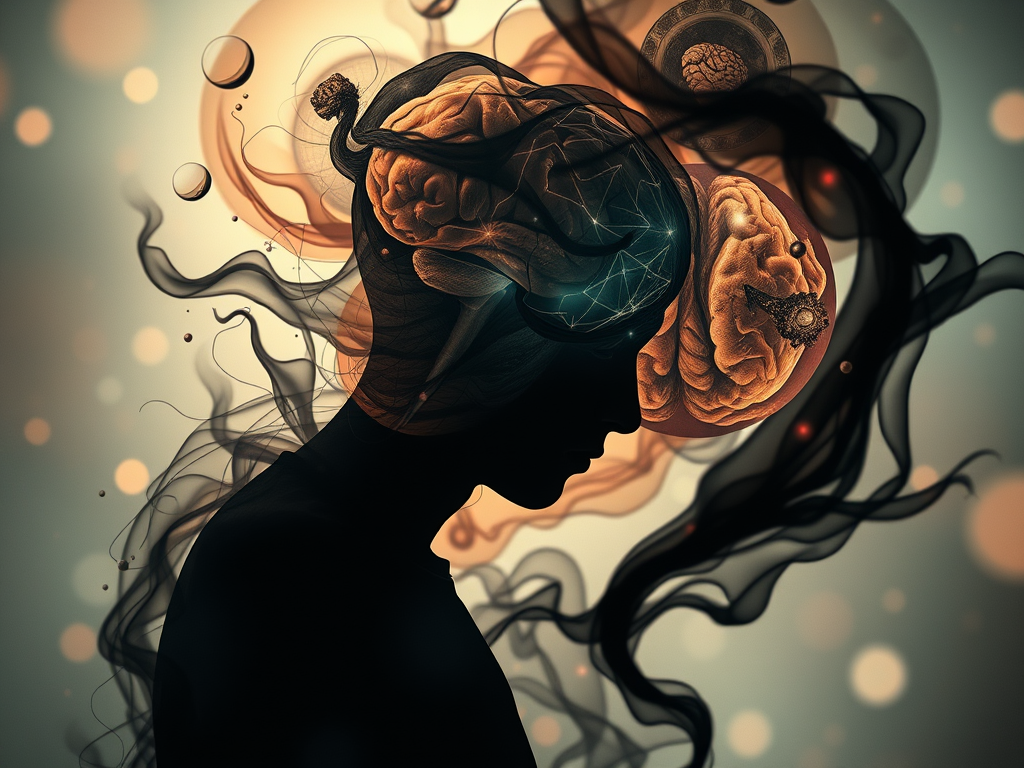
I think there’s a close relationship between peripheral vision and the somewhat famous “overview effect”. The eye, after all, is an extension of the brain. Both peripheral vision and an overview imply a perception of context, which limits the distortions of self-interest.
What’s more, peripheral vision is too quick to be resisted by the ego. It’s only an immediate sensitivity to what is happening. Therefore it precedes wishful thinking. As soon as we “take sides” for or against what is noticed, then our focus has already narrowed. Therefore a peripheral vision engenders something of a suspended state (ala David Bohm). It allows contradictory ideas to sort themselves out.Read More »
When words, ideas, beliefs all become transparently ersatz, the question of what is real becomes extraordinarily urgent.
Where is the still point in this bending and spinning hall of mirrors that is consciousness?
When nothing that I know about myself is real, when everything is only a story, whose narrative lines are always being bent by ferocious headwinds of fight and flight, by a desire for admiration, where do I find a foundation upon which to live a confident and humane life?Read More »
The first 14 essays tried to “come to terms” with the limitations of language. By extension this included all of thought and imagination – the whole category of construct-making.
How can we discover the “limitations” of something that covers the whole of experience? An all-enveloping fluid from which we can’t leap free, like lucky fish?
The reader is being reimagined. While this is happening, I’ll shake my notebooks free of the rejected scraps of previous essays.
After that, maybe a new phase can begin. A phase in which writing plays second fiddle to something I can’t really name. I’m not a writer and I have no intention of being hitched to any writerly discipline.
The commitment to a discipline feels narrowing. An intentional commitment feels like I’m putting on blinders and being yoked to a practice that promises its own enticing infinity. An infinity within a narrowing frame.Read More »
Pharsalia, or Civil War, is also the title of a poem by Lucan, written sometime around the time of Christ — about the civil war between Julius Caesar and the Roman Senate. “All wars are civil wars.” All empires mark our own triumph and defeat. The footprints of all these triumphs and defeats can be seen in the land, in Pharsalia itself.
What I see in Pharsalia is the terminal moraine of a ruinous glacier of hyper-rational thinking that came from Europe. That witchery (as Leslie Marmon Silko uses the word) — that non-sacred vision of reality — has reached its apex and is melting away. It leaves behind a flattened landscape of political and social thought, of spiritual ruin. It becomes evident in places like Pharsalia first.
It’s a place near where I grew up. There’s a melancholy power here. Subdued, ancient, hard, desolate, beautiful. In this beauty there are seeds of renewal that will remove every last trace of witchery from our system. But first one has to appreciate the desolation of the place.
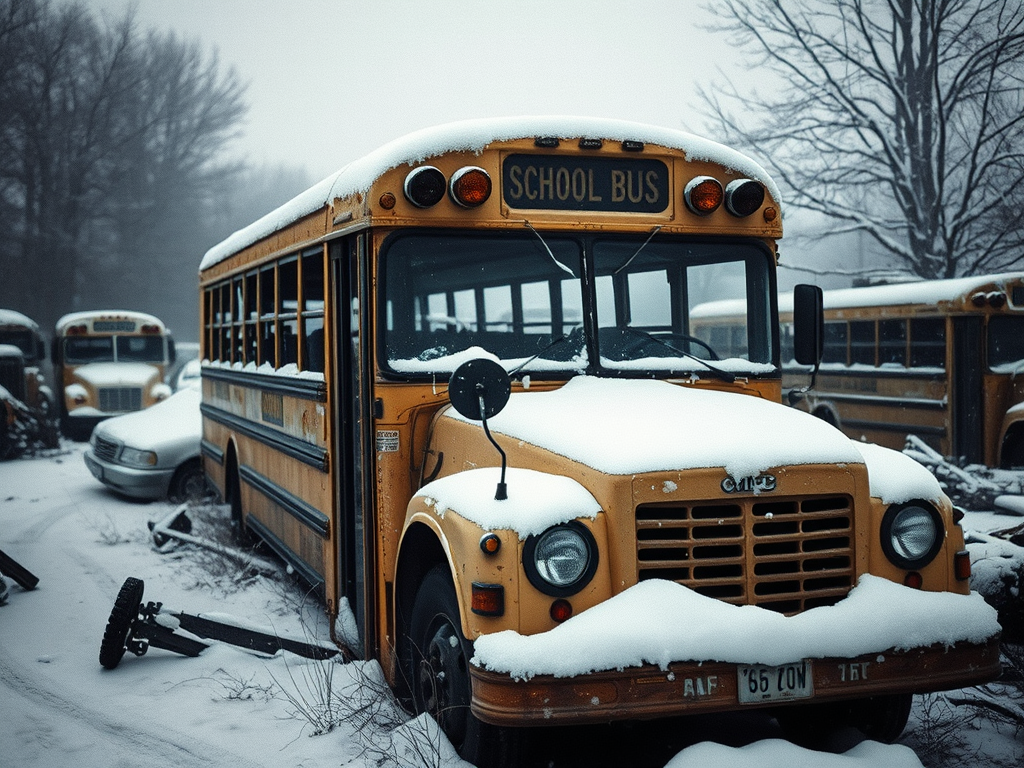
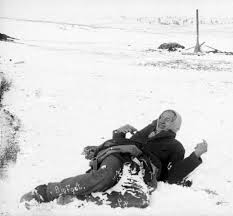
The Royal Elephant carcass of a bus lies mangled among legions of Fords and Chevrolets. From shrinking drifts broken doors and mirrors reach out like Chief Bigfoot in Death. All of Pharsalia melts again into the stone boot-prints of mile-heavy ice.
Here pool retreating forces. Their triumph and defeat merging and disappearing like ice in water, like elephant into earth.
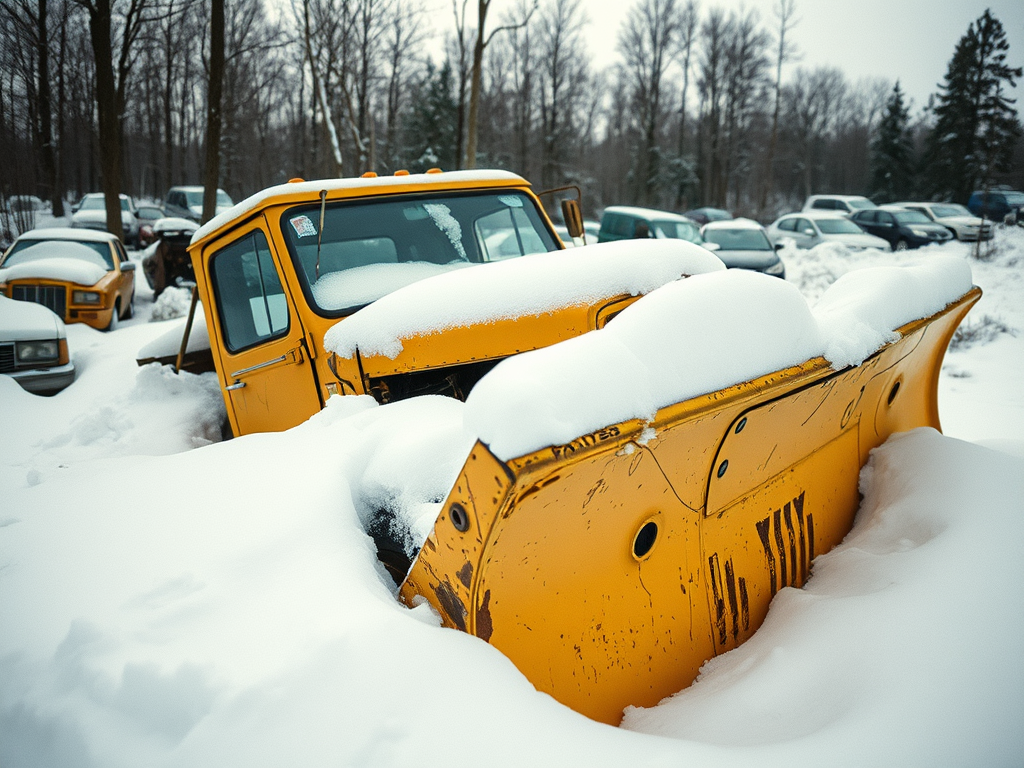
Where Oneida once held a feather dance, thanking Maples, now Chevys and great yellow plows, their wings rusted, lie buried in snow.
In a paintless church, old window frames lean against the sills, thick with flies, an inch deep, overhead broken cobwebs swing.
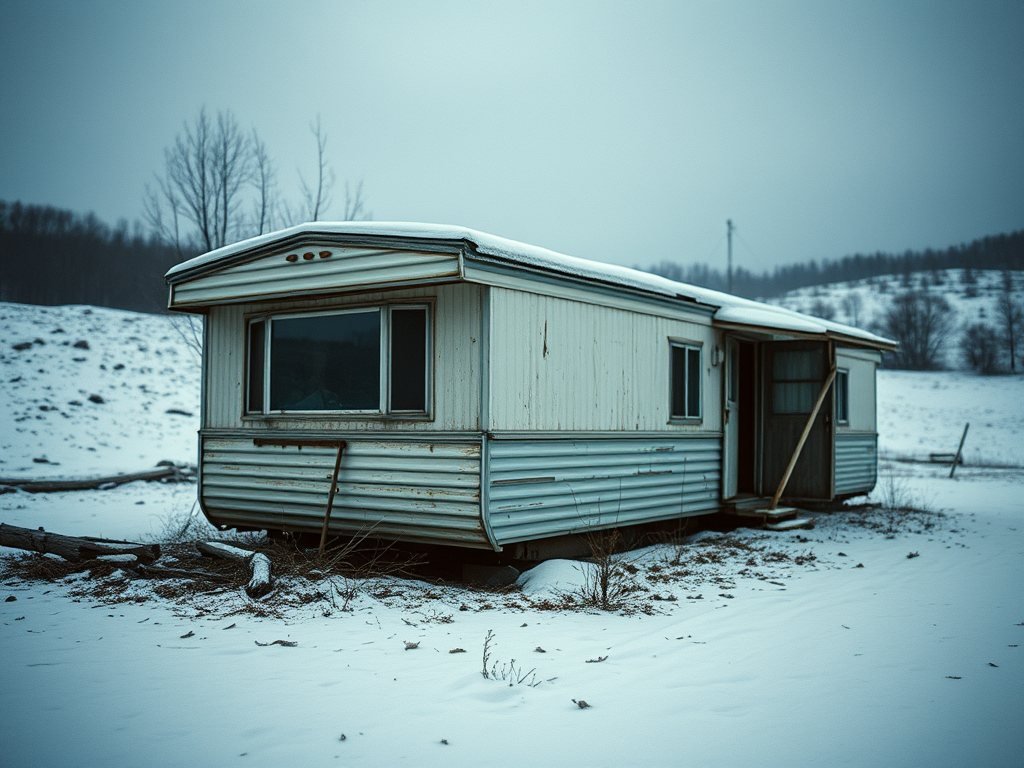
Here and there Erratic hunter/gatherers Slump on sofas in aluminum encampments piled along the highway like a terminal moraine
—
I used AI generated images in place of the actual photos I once used for the poem, much to my own disgust. But I’m not much of a picture taker and was using other people’s photos of the area, and then worried about copyright. So in the meantime I figure, poetry is imaginative. So if I supply imaginary photos and confess to that fact, then perhaps it’s not as unseemly as it still feels. Elsewhere in the essays I don’t have good things to say about AI. But we have to find a way of living in and around this potential monster of a technology. So until I take my own photos, (apart from the old photo of Chief Bigfoot, which is real), I’m leaving these suggestive AI photos. It’s ridiculous, but for now they stay. I’d prefer actual drawings to these things, but I can’t draw.
More coherent modes of language arise when the following perspectives are realized (at the very least):
1) We each see different parts of the proverbial elephant.
This suggests parallel truths. A multiverse. Each infinite and also limited.
2) We look with different levels of magnification. A microscopic vision of the elephant’s trunk at the cellular level is not more true than a macroscopic vision of the trunk as a whole. They are relevant to different contexts.
This makes it easy to suspend judgement.
3)The elephant is a moving target. The trunk we describe is already a different shape. Reality changes as we learn. I go into this a little more in Ritual, part II, in the section titled “The Simplifying Potential of Negative Language.”
This is a humbling perspective.
4) Wildest of all: The elephant we perceive is actually not the elephant itself. But I think a distinction needs to be made between actuality (the “holomovement,” the creativity of nature itself), and reality (the “things” we abstract from actuality as information, perceptions, theories or thoughts).
If we understand this in our bones, then there is no alienation. Then the world becomes sacred in the absence of religion.Read More »
“[T]here is a universal flux that cannot be defined explicitly but which can be known only implicitly, as indicated by the explicitly definable forms and shapes, some stable and some unstable, that can be abstracted from the universal flux. In this flow, mind and matter are not separate substances. Rather, they are different aspects of our whole and unbroken movement.”
― David Bohm, Wholeness and the Implicate Order
A Place for Words
I’m hoping the word “epiphany” carries a bathetic meaning. I hope it signifies a “ludicrous descent from the exalted to the commonplace.” But in this case a descent from the high horse of a ludicrous certainty to the banal wisdom of uncertainty. Being dis-illusioned in the best sense.
The epiphany doesn’t have a pedagogic purpose either. It’s only a moment without resistance to one’s folly. A receptive mentality. But not a proscribing or self-help mentality. Therefore without ulterior purpose. Banal in its own way. At least from the standpoint of conventional wisdom, which tends to picture a dumb blankness in the absence of knowing.Read More »



 Negative Geography