Pharsalia, NY

Photo by Strange Happenings on Pexels.com

Pharsalia, or Civil War, is also the title of a poem by Lucan, written sometime around the time of Christ — about the civil war between Julius Caesar and the Roman Senate. “All wars are civil wars.” All empires mark our own triumph and defeat. The footprints of all these triumphs and defeats can be seen in the land, in Pharsalia itself.

What I see in Pharsalia is the terminal moraine of a ruinous glacier of hyper-rational thinking that came from Europe. That witchery (as Leslie Marmon Silko uses the word) — that non-sacred vision of reality — has reached its apex and is melting away. It leaves behind a flattened landscape of political and social thought, of spiritual ruin. It becomes evident in places like Pharsalia first.

It’s a place near where I grew up. There’s a melancholy power here. Subdued, ancient, hard, desolate, beautiful. In this beauty there are seeds of renewal that will remove every last trace of witchery from our system.  But first one has to appreciate the desolation of the place.

The Royal Elephant carcass of a bus lies mangled
among legions of Fords
and Chevrolets. From shrinking drifts
broken doors and mirrors reach out
like Chief Bigfoot in Death. All of Pharsalia
melts again into the stone boot-prints
of mile-heavy ice.

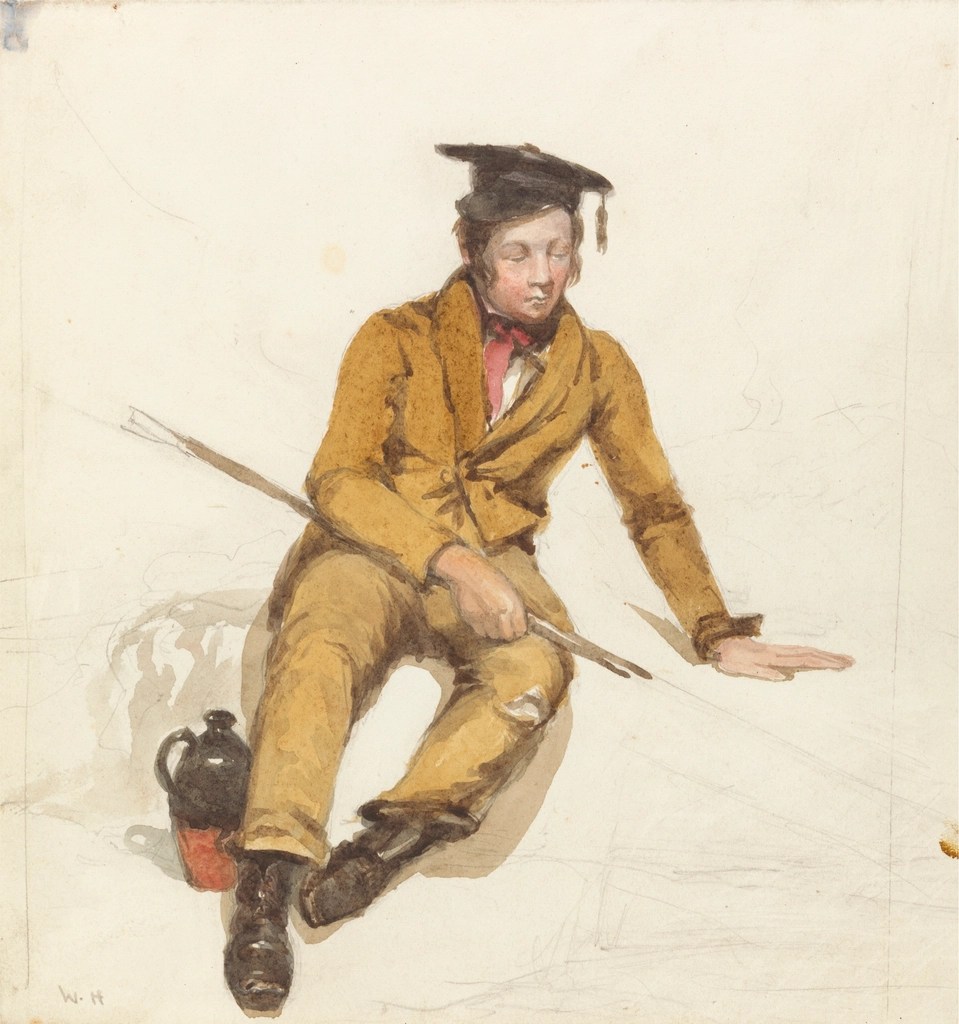
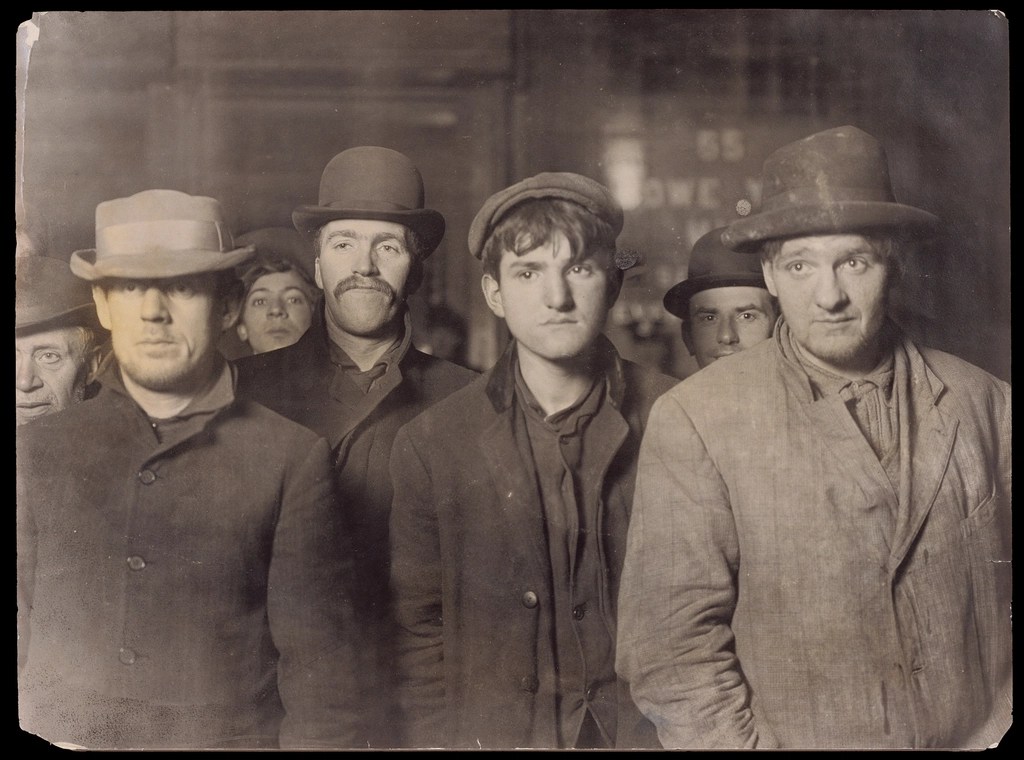
chief bigfoot

Here pool retreating forces.
Their triumph and defeat
merging and disappearing
like ice
in water, like elephant
into earth.

Where Oneida once held
a feather dance, thanking Maples, now
Chevys and great yellow plows,
their wings rusted,
lie buried in snow.

yellow-wrecked-snowplow-buried-in-deep-snow-in-junkyard-in

In a paintless church, old
window frames lean
against the sills, thick
with flies, an inch deep, overhead
broken cobwebs swing.

Here and there
Erratic hunter/gatherers
Slump on sofas
in aluminum encampments
piled along the highway
like a terminal moraine

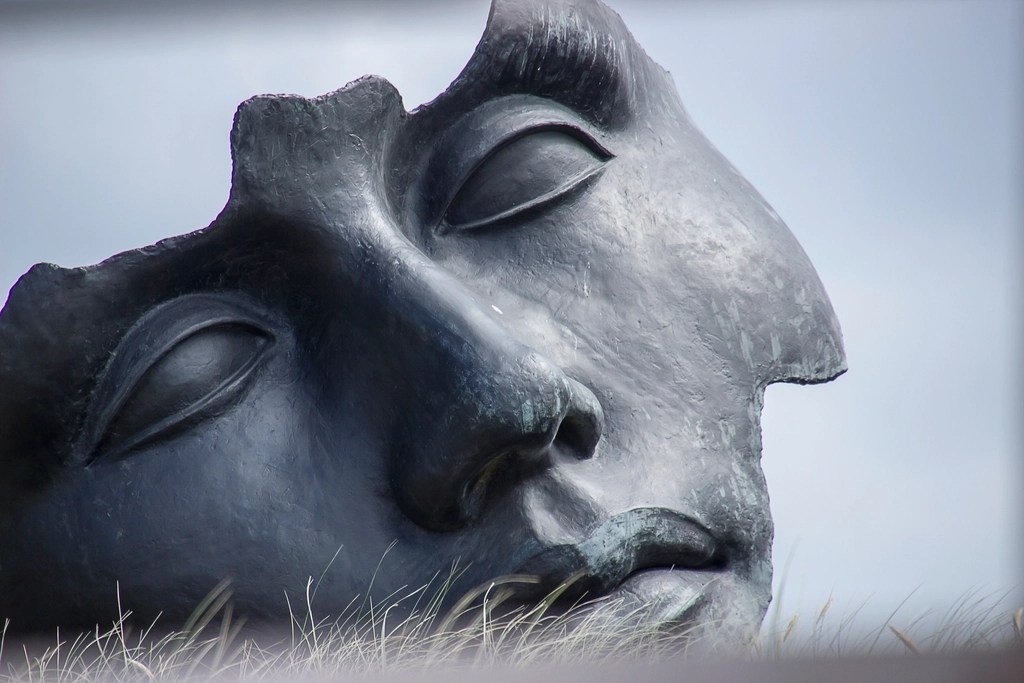
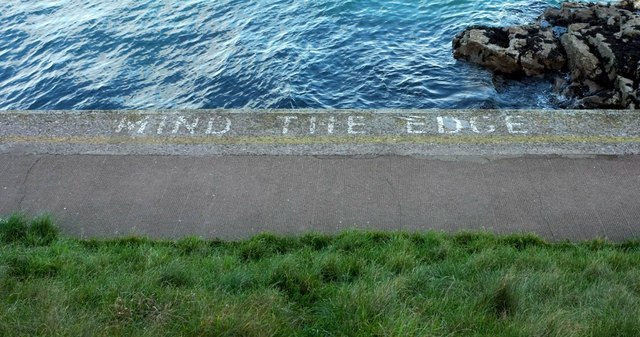
I used AI generated images in place of the actual photos I once used for the poem, much to my own disgust. But I’m not much of a picture taker and was using other people’s photos of the area, and then worried about copyright. So in the meantime I figure, poetry is imaginative. So if I supply imaginary photos and confess to that fact, then perhaps it’s not as unseemly as it still feels. Elsewhere in the essays I don’t have good things to say about AI. But we have to find a way of living in and around this potential monster of a technology. So until I take my own photos, (apart from the old photo of Chief Bigfoot, which is real), I’m leaving these suggestive AI photos. It’s ridiculous, but for now they stay. I’d prefer actual drawings to these things, but I can’t draw.

Footnote to “Ritual”: Four Elements of a Kaleidoscopic (or Ritualized) Perspective

elephant in nature

Pexels.com

This is a footnote to Ritual.

More coherent modes of language arise when the following perspectives are realized (at the very least):

1) We each see different parts of the proverbial elephant.

This suggests parallel truths. A multiverse. Each infinite and also limited.

2) We look with different levels of magnification. A microscopic vision of the elephant’s trunk at the cellular level is not more true than a macroscopic vision of the trunk as a whole. They are relevant to different contexts.

This makes it easy to suspend judgement.

3) The elephant is a moving target. The trunk we describe is already a different shape. Reality changes as we learn. I go into this a little more in Ritual, part II, in the section titled “The Simplifying Potential of Negative Language.”

This is a humbling perspective.

4) Wildest of all: The elephant we perceive is actually not the elephant itself. But I think a distinction needs to be made between actuality (the “holomovement,” the creativity of nature itself), and reality (the “things” we abstract from actuality as information, perceptions, theories or thoughts).

If we understand this in our bones, then there is no alienation. Then the world becomes sacred in the absence of religion.Read More »

Footnote to “Ritual”: Matter and Meaning

brown and black animal shape artwork painting

Pexels.com

This is a footnote to The Epiphany of No Purpose and to Ritual.

“[T]here is a universal flux that cannot be defined explicitly but which can be known only implicitly, as indicated by the explicitly definable forms and shapes, some stable and some unstable, that can be abstracted from the universal flux. In this flow, mind and matter are not separate substances. Rather, they are different aspects of our whole and unbroken movement.”
― David BohmWholeness and the Implicate Order

A Place for Words

I’m hoping the word “epiphany” carries a bathetic meaning. I hope it signifies a “ludicrous descent from the exalted to the commonplace.” But in this case a descent from the high horse of a ludicrous certainty to the banal wisdom of uncertainty. Being dis-illusioned in the best sense.

The epiphany doesn’t have a pedagogic purpose either. It’s only a moment without resistance to one’s folly. A receptive mentality. But not a proscribing or self-help mentality. Therefore without ulterior purpose. Banal in its own way. At least from the standpoint of conventional wisdom, which tends to picture a dumb blankness in the absence of knowing.Read More »

Ritual, Part II: Bewitching, Initiating and Ritualized Languages

This continues from where Ritual, Part I, left off:

“The illusion that the self and the world are broken into fragments originates in the kind of thought that goes beyond its proper measure and confuses its own product with the same independent reality. To end this illusion requires insight, not only into the world as a whole, but also into how the instrument of thought is working. Such insight implies an original and creative act of perception into all aspects of life, mental and physical, both through the senses and through the mind, and this is perhaps the true meaning of meditation.”
― David BohmWholeness and the Implicate Order

The Reductive Bewitchment of a Literal Language

The literal mood of language is necessary for carrying out almost any practical work. It’s dominant in following a blueprint (a legitimate authority), or in honing a craft. And it plays a subordinate role in art, teaching techniques for working in any medium.

In its “proper” context this language could be described as “positive”, “practical” or “technical.” In a utilitarian context the connection between the useful thing one describes (such as the word “hammer”) and the hammer itself is so close that almost all awareness of the meta-level functionality of words recedes (or never develops).

The witchery begins when a literal language spills over into conventional life; when it’s used to talk about ideas – about opinions, goals, and identities. Then opinion posits itself as a literal description of material reality. Fixed. Truth. Not mere opinion.Read More »

Ritual: Part 1

“His sickness was only part of something larger, and his cure would be found only in something great and inclusive of everything” (from Ceremony, Leslie Marmon Silko)

I enjoyed moving-up ceremonies in elementary school at the end of each school year. Every grade stood in a separate line in the gym. And then the principal commanded everyone in each grade to step forward. There was some magic in that step. It instantly made us older and wiser.

But after a few years ceremonies all began to feel like empty gestures. Stepping forward and serving Communion and so on felt too superstitious.

Then in college I read the book Ceremony, by Leslie Marmon Silko. It was about a Laguna Pueblo man named Tayo, returning home from World War II, unable to cope, heading for ruin. Read More »

Conversation with Pat Styer About the Role of Words, August, 2009

Conversation (1929) Ernst Ludwig Kirchner by nationalgalleryofart is licensed under CC-CC0 1.0

I recently had the pleasure (along with my brother Brian) of meeting Tony Dias at the train station in Old Saybrook, CT. 

It was a good talk. And at first I thought we’d walked into a Beckett play.

My brother and I thought we’d arrived early. There was a sign at the intersection that seemed to proclaim the correct address, 355 Boston Post Road, but the name of the cafe was wrong. I told the bartender I was looking for the “Old Saybrook Cafe” at 355 Boston Post Road. He’d never heard of it.

So we kept waiting next to the misleading sign. I was reluctant to call Tony on my brother’s cell phone because I didn’t want to seem impatient. I have some inhibitions of that sort that I claim to find amusing.Read More »

The Epiphany of No Purpose

A minor epiphany hit me about three weeks ago.

An unobtrusive assumption came tumbling from the apex of a small inverted pyramid of beliefs and hit solidly enough in passing that I took notice. What came loose was the belief that doing things – even writing this rambling note — requires a purpose; purposes which are ulterior to the enjoyment one takes in the activity itself; as if it isn’t enough to do something for its own sake.Read More »

Death’s Good Intentions

Friendships are Parallel Universes

Almost a year ago, one of my truest friends died. Pat Styer. I never met her in person. It didn’t matter. We spoke the same fundamental language. It wasn’t about agreeing or disagreeing. It was about playing catch with a perspective that few in my circle at that time seemed to find worth picking up. What she said broadened my own vocabulary. And whatever I said, she received without distortion. It was as if we were learning something that could only be discovered between us.

I think every relationship (whether with a human or a dog or a cat) gives rise to someone new between us, creates a context of understanding that will never be duplicated with another. We move between parallel worlds. Each infinite, but limited to our mutual contexts.Read More »

Leaping into the Deep End

Duke at the Saw Mill swimming hole

“The sense of danger must not disappear:
The way is certainly both short and steep,
However gradual it looks from here;
Look if you like, but you will have to leap.” – W.H. Auden (Leap Before You Look)

Narcissus is the “Dreamer”

I’m privileged to be a dreamer. I live in a cloud, which rises from the smoke of guns and bombs. My world is made possible by war. We are all here. Our collective voice is the Web and the media. The voice is growing harsher. It’s Narcissus reacting to his suddenly uglier image. He squirms in discomfort. What does he do when he comes face-to-face with his own vainglories of racism, war and hyper-rational control of nature? How will he peer through the dream, and turn away from his beloved?Read More »

Part 2 of Imagine the Limits of the Imagination: A Proprioceptive Mirror

The Man Who Mistook Himself for His Dog

The Three Oddest Words

When I pronounce the word Future,
the first syllable already belongs to the past.

When I pronounce the word Silence,
I destroy it.

When I pronounce the word Nothing,
I make something no nonbeing can hold.
— Wislawa Szymborska

This is a continuation of part 1.

There are two very different ways of reading the phrase “imagine the limits of the imagination.”

One way is to assume that we’re trying to imagine what lies “beyond” imagination. This sets up a double-bind: trying to think beyond thinking; trying to speak about silence. It’s like asking that creature from part 1 (who can only hear) to describe a world of sight. It can’t be done.Read More »