“I think I could turn and live awhile with the animals… they are
so placid and self-contained,
I stand and look at them sometimes half the day long.
They do not sweat and whine about their condition….
… … not one is demented with the mania of owning things,
Not one kneels to another nor to his kind that lived thousands of years ago
Not one is respectable or industrious over the whole earth” (Whitman, Leaves of Grass)

Love may be eternal, as the saying goes, but it’s also never more than a series of fleeting encounters. What we hold too long and too close becomes blurry, dissolves into fetish. The objects of our love slip our embraces sooner or later.
Or as the saying goes, what we love, we let go. Living things are constantly going. The animal body moves, it breathes, pumps, circulates and leaves only a trace that fades and disperses.
Even the atoms of our bodies are constantly being replaced.
The person we love is a dispersing form. Or, rather, a shape discernable in the gathering and dispersing of material.
I’m watching suspended motes of dust slowly circulating through the room. If this dust formed an intelligent pattern in passing, if the shape of a person could be discerned in the circulating motes, would this suggest a presence beyond the dust itself? Would we intuit the impression of a soul, because something more than matter alone is at work here? Something that gathers and disperses, an immaterial attractor revealed in the passing shape of matter?
But to attribute this “soul” to something utterly non-material and separate from the body does great harm to our understanding of earthly life. It devalues the biology as some “mere” candy wrapper that can be thrown away, almost disparagingly.
The beauty of these paradoxes lies in the cracks that suggest something more. For there is something soulful about an animal body, about the earth itself. And we are too quick to explain it all rationally, materially and mechanically, or leap into a transcendence that betrays our earthly mother.
Rather than inventing some compromise view, I prefer the suspended question, which sees the limits of both and offers no final answer, only a direction of learning. A vision of life that is more than material, and more than non-material. Nothing so black and white. Nor the compromise of gray. Somehow an embrace of both — a soul that shines as a body, a body that burns with soul.

The Materiality of Immateriality
Personality is often contrasted with “good looks.” As in “I want to be loved for my personality, not my looks.” As if who we “really” are was divorced from the physical frame.
In a competitive cultural context, most of us fight our way through a form of body dysmorphia, as if we were “trapped” in a body that does not meet our social needs.
In cultures where this self-consciousness, this outsider “within us”, has been wisely sidestepped, among some indigenous tribes, the graceful way the women move, for instance, with vessels on their heads, the lack of artifice in their laughing faces as they notice the objectifying absurdity of the camera, there is no such dysmorphia. They are beautiful, but this declaration isn’t the judgment of a culture’s prejudiced and strictly material standards of beauty, but maybe a confession of love, a healing remembrance of our own animal grace, free from bodily shame, undivided in matter and spirit.
Love stops the chaos of a debilitating disregard and gawky self-doubt. We become graceful in the presence of love.
By and large our culture has relegated this way of being to limited fields. We have specialists in dance, sports, arts in general, who have spent years negating that cultural heritage — relearning how to move without that sense of a divorced physicality.
Or sex becomes an escape from this intolerable divide.
The Immateriality of Materiality

But mainly we escape into a false transcendence of semi-material thoughts and images, a perpetual monologue of self-preservation that is not human nature, but only a reactive recoil from that intolerable divorce. So our movements reveal this implicit posturing and pretense in stiffness and clumsiness, not because we are phonies or bad people, but because we’ve been subjected to a vision of reality that is isolating and loveless. That is, we become uncomfortable in our own skins, forever trying to fake it until we make it, therefore relying on a divisive artifice to heal an artifice of division. Hence, we’re stuck between ourselves as an idea and ourselves as a body.
This is why it’s often more enjoyable to be with non-human animals. There is no artifice in them, their movements reveal what they mean. For instance, the way a horse bends and shakes its head with anticipation when she sees you coming, or the way my dog would light up in tongue-tied brilliance, knowing I was reaching for the leash, trying hard to be that “good boy”, sitting rigid as a soldier, but vibrating with joy along the kitchen floor.
I think our enormous brains have caused some complications in life. They expanded the animal’s necessary semi-material images of itself into something that became conflated with an immaterial soul. Therefore it doesn’t want to die. It doesn’t want to be mere vapor of the perishing body. It has stranded itself accidentally in a virtual existence apart from the embodied soul and can’t seem to unravel itself from this inanimate illusion of a deathless self.
But what is lively and lovely only exists in passing. The soulful being is disappearing. The beautiful moment is a moment already ending. This is the unity of death and life, darkness and light. We only love what must die.
We die along with our loved ones. Dying is the painful ache of realizing that none of the material relics we dredge from the depths of memory is them. We can talk a good game – they live on in memory, and so forth. But our memory is a home movie that never becomes more real than the surface of a screen. And the brutal fact returns when the film ends, they are gone.
Even when they’re alive, this feels true. We’re never palpably here in a material sense. We are constantly evaporating into fragments of memory, and mirages of return.
Untranslatable Charlie

I too am not a bit tamed… I too am untranslatable,
I sound my barbaric yawp over the roofs of the world. (Whitman)
There was something particularly amorphous, for instance, about our cat Charlie. Even when I caressed his fur it was too soft to seem real, like trying to touch fog. And symbolically, he was constantly escaping from the two-acre enclosure.
All the other cats who’ve shared our home over the years couldn’t escape this fenced garden, or maybe they saw no need to leave. But Charlie wasn’t content to be cooped up in an earthly paradise of cat-sized tunnels and towers, a place large enough to remain hidden, deep within the branches of an overgrown forsythia, or under the leaves of mayapple, or in a jungle of ostrich ferns or under rows of peonies. There were stone walls from which he watched the deer watching him. There were ambushes from his brother, and MMA fights through the trees and down the paths.

But it was not enough to contain his relentless need to find a way over the difficult fence and hunt the fields of foxes, fisher, bobcat and coy-wolf (or the occasional bear). I nearly drove myself mad redesigning the fencing to keep him contained. But he enjoyed the challenge and always found a way to overcome the obstacles that no other cat overcame.
He beat us and we had to agree to his rules. He’d remain free within a compromised limit, free to hop the fence during particular portions of the daylight hours, but he’d always come back without too much effort (we did, after all, learn the subtle art of herding cats). Well, it might take a little time to locate him in the fields – he wouldn’t voluntarily show himself — but if we made eye contact, he’d “flop” on his side and wait for us to carry him back.
“Failing to fetch me at first keep encouraged,
Missing me one place search another,
I stop some where waiting for you” (Whitman)

His brother Rumo seemed to marvel at his bigger twin’s magical capacity to disappear from the yard. And sometimes Charlie acted a little aloof upon his return, as if life within the compound was something too childish to enjoy any more. But then they’d be off fighting or sleeping in each other’s arms on the table of the greenhouse, enjoying the sun. And then everything in our little kingdom was peaceful, no worries about cars or coyotes. A tribal unity was felt, a diversity of personalities roaming independently together the small wilderness of flowers, fruits and vegetables, until the distinction between human and “animal” personalities disappeared in a community of idiosyncratic equals. Equal in our worth and dignity.
But death always seemed to hover around Charlie and his sibling Rumo. When they were two years old, each one on different occasions, with different but equally unusual illnesses, were rushed to Vet hospitals minutes before death, and then stabilized enough to bring home to what we were told was an unlikely recovery. But after months of care and untold damage to our modest retirement they came back from the dead and thrived for a whole new summer.
We weren’t trying to preserve them against death. Sharing our place with short-lived beings for decades has made us very alert to necessary endings. But this was not one of them. Our own inconvenience or financial hardship feels too selfish a concern in weighing what to do. The real test is whether we betray Love or not. It is our life that is put to the test in such cases and the decision to end a life has to be whole-hearted, not selfishly calculating, or our souls are damaged.
Then in their fourth year (this year), both became sick again. And this time Charlie got diagnosed with FIP a week before the US patent on the miracle drug (90 percent effective) was due to be released. We got the drug on the first day of availability, but it was too late. His brother continued the pills on the correct presumption of FIP and escaped death a second time by a whisker.
A Free-Thinking Charlie
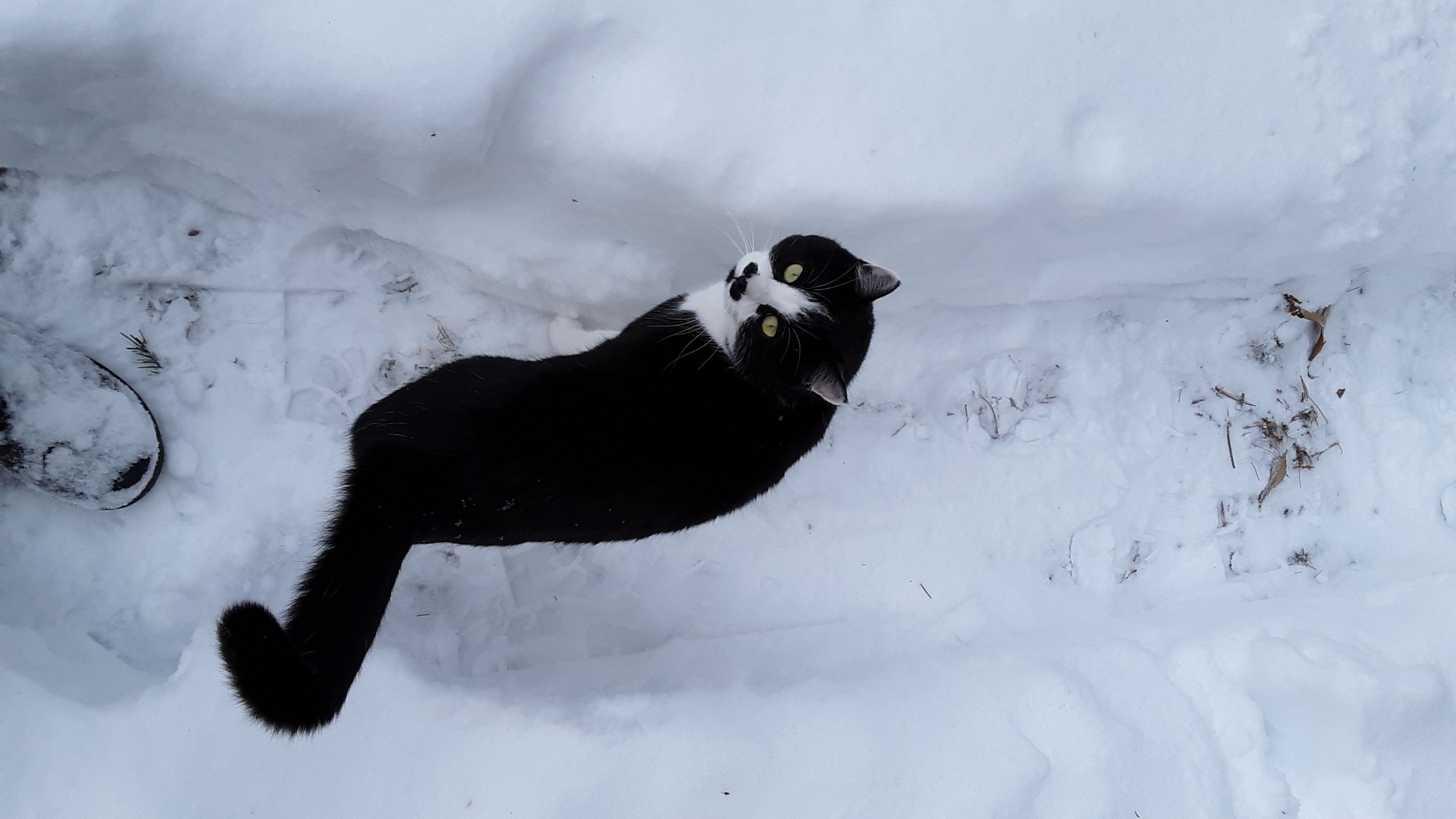
Any being who lives without pretense, whether human or cat, is not only aware of themselves but to the same extent aware of others. Any falsehood we notice in ourselves we notice in others. The more subtle our self-recognition, the more profoundly we feel the presence of another.
Of the ten cats we’ve known, only two of them displayed an uncanny empathy. Even as a wild kitten, Charlie withdrew his claws when he marched from fabric to skin. That was a moment akin to Helen Keller’s discovery of “water”, in my opinion (for me and for him). In that simple withdrawal of claws, Charlie revealed a capacity to know how I’d feel without ever having been conditioned by previous encounters with human beings (or the difference between clothing and skin).
I had seen Charlie from the time he was only a couple weeks old, living with his siblings and mother in an abandoned woodchuck hole (hence their love of tunnels, even man-made ones).
But the first time I actually met Charlie he was still a wild cat of about 6 months of age. It was the manner in which he lay down in front of me which seemed odd. It was unusually deliberate. It was an audacious invitation, an interview, a chance he was taking. So I laid in a similar manner, remaining about 5 feet apart. (I learned to parrot some of their behaviors, but when I sharpened “my claws” on trees they turned away in disgust).
He wasn’t desperate for help, he was studying these strange inhabitants. His eyes were soft, and held my gaze longer than most people. Everything about him evoked a profound sense of presence. This was a person, a soul, complex and beautiful.
There was something rational and deliberate in his look, too, as if I might prove to be a valuable ally after all. But there was also something open-ended and vulnerable, a boldness that was self-aware.
He probed rather than believed. Other animals don’t come to conclusions, they never stop reading the changing circumstances. Regardless of “size”, his mind wasn’t caged by conclusions. A large mind caught in conclusions is smaller than a cat’s. We don’t tend to probe, we long to land in the cages of certainties, not him. He was an insatiable learner.
And this freedom to learn is contagious. Suddenly I could see that I was being seen for what I am, beyond pretense, at a far greater depth than when I’m talking to most of my friends (may they forgive me, but it’s true in reverse as well).
Inter-Species Communion, Not Anthropomorphism
Generally, now, I make no distinction between the dignity of personhood in humans and animals. While there are important distinctions, and different potentials, the basic dignity of the person is the same. We are human animals, and everything we feel our dogs, ducks and cats felt in a different color spectrum, with more or less subtlety. Pretending that this isn’t true only allows us to eat them more easily.
The absurd restraint against “anthropomorphism” among some scientists makes me picture a fanatic gouging out an eye to become like Odin. Except Odin gouged out his one eye in order to see Beyond the material frame, whereas the scientist gouges out their eye in order to focus on the surface of life.
This is a lost capacity to commune with other animals. The human/animal divide is a distinction we’ve invented to give us insight into certain subtle differences that DO exist, but which are merely magnified powers that they too hold in seed form. (And it goes the other way as well – they display powers of perception that we know only in milder forms). But it is animal intelligence that we have the gall to call a strictly human capacity. (Plant intelligence too, discussed elsewhere). It’s not anthropomorphism to read the eyes of another creature, but animal insight. For all human history we’ve had that capacity to wear the bear. Only recently has this capacity degraded.
All animals read minds, otherwise they wouldn’t survive. The alert bird knows the cat is hunting. The bear knows the gun-toting man is approaching. We may have the potential to raise these sensitivities in some directions to something that seems to cats almost godlike (there were many times when I saw astonishment in Charlie’s eyes, when I could second guess his subtle desires, and he seemed to love us with a peculiar admiration).
I am flattered to note that he recognized something special about us, holding a mysterious power to cause light to appear when we entered a room, or food to appear at the moment when they were hungry. This is why he flopped. He flat out loved us, just as we loved him.
But at the same time, we displayed an astonishing dullness in comparison to his hunting expertise. We’d burst blindly into the middle of an orchestrated stalk, and I’d watch him retreat from his crouch, sitting back on his haunches with a mildly annoyed look, as he regards the clumsy human who seems to have no sense of what is transpiring.
In many similar ways I discovered how dull I really am, lost in perpetual rehearsals and rehashings we call being conscious. I would drift and not notice what they did.
This is neither hyperbole nor an insult to human intelligence, but a sign of how severely we have gouged out our own perceptive powers. And how much disdain we show towards anyone outside our particular clique, whether racial, national or species-specific.
We Won’t Be Rescued by Human Genius Alone

More and more people on the Internet seem to be bragging about being empaths. But the culture as a whole is regressing towards a spoiled (neglected) child’s somewhat justified complaints about not being loved enough. Nobody loves anyone enough.
But when we’re finally audacious or desperate enough to throw off these blinders of self-concern and re-discover animal empathy and explore the profound depths of sensitive awareness with which these material brains seem capable of resonating, then this new intelligence probably won’t appear as some form of superpower, but as humility. Because the first empathic perception we obtain is noticing how subtle this capacity already is in other people. Our genius doesn’t appear as a superiority so much as an appreciation of the subtle nuances of everyone else. Our genius is the capacity to recognize our stupidities and adopt the special talents and frames of mind of other persons, furred or unfurred — a capacity to shape-shift, piercing the fictional boundaries we’ve established between our perceptual worlds. Empathy is a category of insight similar to Newton’s boundary-piercing insight, “as above, so below.”
I’m referring to Genius and Insight here not as special talents and raw capability, but as a “humanizing” recognition of our limits and weaknesses. This is what allows us to walk out of the prolonged misery we call “human nature” and love one another. Otherwise, too much genius is insufferable.
What matters more than established standards of beauty, talent and intelligence, is the presence or absence of pretense in our relationship to the world. We deceive ourselves in deceiving another; and we are deceived by others only when we’re deceiving ourselves. The so-called geniuses of our present world are too stupid to see this. They can’t see the dangers of technologies that seek an arrogant perfection, or the self-defeating harm implied in anything done for “our side” only. Shrunken geniuses desiccating in their own cleverness.
Beauty Is Imperfection
To us, Charlie was a great soul. A Mahatma of sorts.
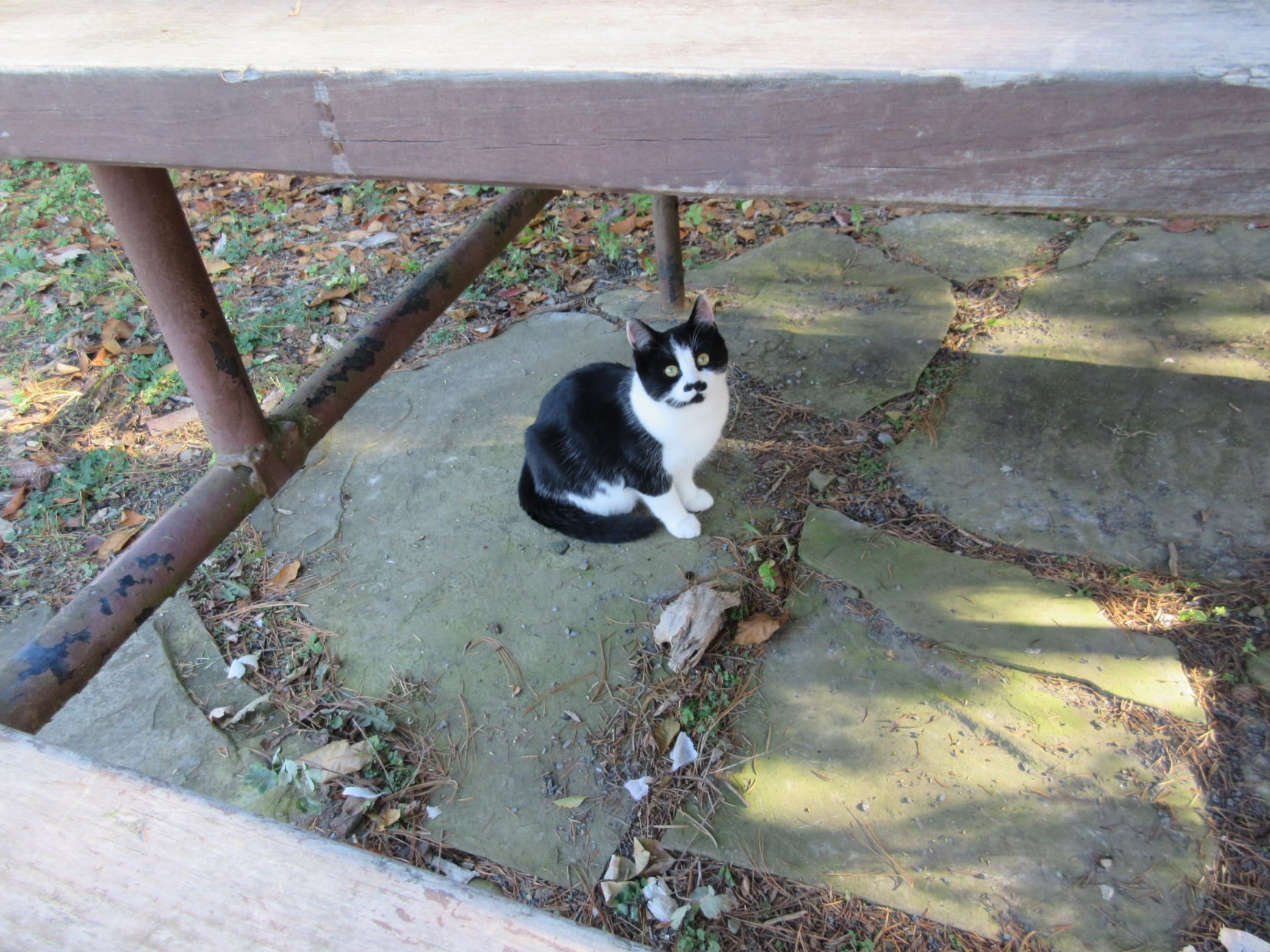
Once I saw him watch a flight of high-flying geese make their way across the sky, as if he were pondering how this was possible. Sometimes you could see the shadows of melancholy thoughts darken his face as he walked slowly down a garden path. His crooked mustache would be twitching in pensive thought. You couldn’t quite decipher the questions his soul was asking but the soul was obvious.
But I think his beauty and genius were tied somehow to his limitations. Look, he had a handsome mustache, but it was handsome because it was crooked. He was a true “empath” but had no words to tell us he was dying. He loved the paradise we built for him, but he had an irrepressible appetite for a more dangerous life. His imperfections delineated his perfection. This had nothing to do with the size of the body or brain. It had to do with the size of his vigorous and unpretentious life, a life lived whole-heartedly, a heart beating with all its audacious might until it gave out.
In other words, he had blind spots, the edges of explorations, we all do, and always will, because the perfections of a machine would be an endless misery of caged and inanimate knowledge.
Look, I could fool him, for instance, by scooping up the caught mouse in a bucket and carrying it away. He would search the ground, returning to where he last saw the mouse, confused by its sudden disappearance and never suspect my dirty trick. Not that I was out to save all the animals he caught (the contradiction, hypocrisy or paradox of feeding animals other animals is another inconclusive charm of life – I mean, the occasional chipmunk being eaten is better than what happens to most animals that end up in cans). But if I happen to see a mouse standing on its hind legs looking at the cat and then me and then boldly punching the cat with its puny paws, I’m saving the mouse.
What we love is the humble imperfection of a paradoxically perfect being. The absence of pretense is itself a kind of perfection. That’s what he taught us, the beauty of being perfectly imperfect, the crooked mustachioed Charlie with his Chaplinesque combination of brilliance and ignorance, the strangely pensive being who loved life with the carefree vigor of a falling star.

Appendix:
Thank you to Doctor Regis Hagen of Sleep Sweet for convincing us that our cat Rumo also had FIP, when other vets claimed it was not possible. He recovered.
A note about Rumo. During that long week waiting for the medicine, Charlie had lost his appetite, but would still eat wild-caught chipmunks in particular, which were supplied by his brother Rumo. We asked him to keep catching them for Charlie, and every morning that week, with only one or two exceptions, we found a dead chipmunk by the main gate, a gift for Charlie. Sometimes I placed it in the freezer till he was ready to eat.
After he died, Rumo stopped leaving them.
While I’m on cats, I should note the death of Little Bear in May. She lived at least 21 years and a novel could be written about her life. A feral cat we saw for at least 9 years but couldn’t approach. One night at 20 below zero she crawled under our front porch and wouldn’t come out. Finally she came to the door and I carried her inside, and she lived her retirement years with us. Her tail had been shot off, so she had surgery to remove the painful stump. And boy she appreciated that wood stove. She eventually lost a leg to cancer but not her happy spirit.
The other surviving cat is Tiny Voice, my right-hand man, who always sleeps between my wife and I, but is also slowing down and may not last the year.
All truths wait in all things,
They neither hasten their own delivery nor resist it,
They do not need the obstetric forceps of the surgeon,
The insignificant is as big to me as any,
What is less or more than a touch? (Whitman)
 Negative Geography