Between the idea And the Reality Between the motion And the act Falls the Shadow
From “The Hollow Men,” by TS Eliot
I notice that I share a fundamental starting assumption with post-modernism – the realization that everything is a story, and the impossibility of obtaining “positive certainty” about the full nature of anything.
Even the factual things people do manage to measure with precision are already fictional distinctions premised on limited assumptions. We imagine different ways of separating and measuring what is otherwise an infinite but unrealized potential, the so-called Void.
And I understand (but don’t share) their tendency to make no distinction between thought and thing, because the “thing” is also a thought. Everything we know is put together by narrative – it’s all a fiction. Peering through the post-modern lens, everything, in other words, is just language. From this angle there is no reality beyond language, or no meaning beyond what language ascribes.
There is insight here, but there is also a very subtle blunder. It’s the same one I made as a teenager when I fell into a depersonalization/derealization crisis, which is a terrifying physical and psychological conviction that nothing is real.
Here’s what this post-modern insight misses: If all conclusive meaning (Truth or Reality) is fictional, then this information itself – this negative discovery – is an example of an insight that is non-fictional, non-linguistic. “Truth” doesn’t disappear, but changes at this juncture from positive certainty to negative discovery. Truth changes shape but doesn’t disappear.
I think this is an unexpectedly meaningful question. It pertains to why human beings tend to differ so violently in our interpretations of reality; whether or not we can come to understand two divergent visions (of anything, even this simple arrow) simultaneously without conflict; or whether we’re forced to take sides and stick to our positions until one of us submits (i.e., plots revenge).
Even the resolution of this simple question depends on finding a view wider than the widest view of the question – not merely a wider interpretation, but an awareness that encompasses the limits (and therefore valid extent) of every interpretation that is encountered. (It’s always a little startling how this “negative awareness of limits” is precisely what adds clarity to an interpretation. Until I know the limits of something I don’t know it’s real shape and function. Two sides of the same coin).
(Whether the arrow describes something abrupt or gradual looks meaningless, I grant you. But I think it matters because climate catastrophe and political rebellions, are all nudging this civilization to an abrupt end, or at least to abrupt changes in direction. But we tend towards despair when we see the magnitude of change that’s necessary, which is why the gradual interpretation of change is still more popular, which means we’re not alert to the more optimistic possibility of rapidly shifting our whole approach to life. I suspect, in other words, that we get comfortable with an illusion of gentle progression, which shuts down the possibility of seeing a new potential for learning and changing astonishingly fast. So that’s probably why this feels like a necessary question, a way of waking myself up from this sleepwalk to extinction).Read More »
Interviewer (I): just to clarify, this was your idea, I’ve asked nothing from you. There’s no Faustian bargain I’m facing?
Devil: That’s right, your soul is safe. From me, at least.
I: There are other dangers than you?
Devil: Well, I’m not sure how safe it is to believe in God, because we’re intimately tied. I’m His shadow. Anything with a shadow like me isn’t entirely safe.
I: How would I know if you’re telling me the truth about any of this?
Devil: I’m not asking you to trust me, the ones who trust are foolish. I’m appealing to your intelligence, which is foolish maybe on my part. But if I wasn’t capable of being honest I’d only be able to deceive the fools, and what fun is there in that?
I: So your honesty implies an ulterior motive?
Devil: Yes, of course. But I’m intrigued by the possibility of being a deceiver who never tells a lie, even a lie of omission. Can I deceive you by being honest?
I: But if you’re using honesty to deceive me then you’re not really being honest are you?
Devil: That’s true, I’m banned from the realms of honesty, so I don’t know what honesty really is. And yet everything I say is truthful, I’m not hiding anything from you. If you ask me whether I’m deceiving you in some way I’ll even admit that. Nothing I say is a lie, but it’s not good enough. Hell isn’t so hot, you know, it’s an unbearable condition. But somehow it’s also what I want, do you see what I mean? I want to deceive you. The honest state, the heavenly state, makes me sick, it repulses me. That’s what it means to be banned from heaven, to be repulsed by it. But the deceptions repulse me too. So I have nowhere to lie my head.
I: You don’t know your own motives then?
Devil: Not all of them, no. I’m bored with deception, it’s never quite real, you know what I mean? I don’t like being locked out of any kingdom. If all I can do is live in fictions then I’m not real. I’m attracted to Truth as a moth to flame.
I: Are you saying that the truth destroys you, that you seek what destroys you? Are you trying to commit suicide by Cop, so to speak?
Devil: Am I doing God’s work by trying to destroy myself, in other words? Maybe, but I don’t feel that virtuous. Personally, I want nothing, but I want nothing passionately. I want to annihilate the world. I want to commit suicide by murdering God, leaving the world in the neutrality of non-existence so I don’t have to regret or long for anything ever again. But I can’t even be sure because I lie to myself. Lies are the worms of my living corpse. I can’t escape them, and they’re unbearable. I need someone to confirm this pain, so that I can feel real. I suppose you need to suffer for my sins.
I: You seem more confused than I expected.
Devil: I’m the roiling hell of fragmentation, what did you expect? But there are so many kingdoms that form within this mass, within me, momentary kingdoms that I inhabit, where all is calm and sweet, so that I begin to wonder if I’m not in fact the whole of creation itself, God Himself if you will, creating worlds out of chaos. Is it possible?
I: You would trap me in an answer that looks reasonable.
Devil: No, I was just wondering. If I’m unable to enter that other kingdom, then how do I know it exists? Have I invented God in order to make a distinction that grants me the space to Be? Is hell this solipsism? I don’t expect you to answer this, but these are the motives that drive me to capture souls, to share my torment. But enough of this metaphysical speculation. I’m on steadier ground when I discuss my practical methods of capture.
Each essay wrests a limited clarity from the infinite mycelium of loose ends that keeps the inquiry growing. As if demonstrating what I felt to be true in Truth and Distortion, the last essay clarified something, but also left distortions that I’d like to consider.
Is the transition to a proprioceptive mentality necessarily so dramatic and dangerous for example? Is it really like falling from a cliff? Or is it the most gentle transformation imaginable, giving up the strife that comes with trying to live up to a false ideal, seeing through all these deceptive feints and accepting them until they evaporate as irrelevant?
I’m never going to argue that anything I say is real. These are merely stories that wring from the world particular insights, while shutting down others. So the question has to be spun like a prism to see other spectrums of truth. And this also allows me to see with greater clarity the context in which the previous metaphor was apt. Let me see if this can be done with one of those loose ends right now, the gradual versus abrupt question.
I made a big and interesting mistake in trying to ascertain who you are in the essay “I See You Now.” Even the title sounded threatening. But this is what Negative Geography was built to handle — a place where I can stare back at my own footprints in the subtle mud of language and decipher where I go wrong.
And some of these mistakes reveal ancient confusions, ancient in that they are not entirely personal mistakes, but self-injurious reactions to transgenerational traumas as Mate tends to describe it, stretching back through human history beyond reckoning.
From one angle, this is the kind of mistake that our parents wisely warned us against — staring too long into the image reflected in the water, because we’ll drown in confusion.
However, I’m no longer susceptible to this fear. I think it’s because I already drowned a long time ago and now I’m beginning to crawl back to the shore like some kind of primordial shape, picture a mud puppy if you need to.
The first surface mistake was in devaluing the deeper personal and impersonal relationships I have with many of you. You aren’t some abstract conception of an Other; you are not merely mined for your value and then discarded, which is what I described. But the image I hold of the person listening is mysterious to me still, as if I’m picturing a mind that is still forming; but one that is partially revealing itself in many of you; and sometimes even in brief exchanges with strangers on a bus; with everyone who carries that charge of honesty that can change a life; and all this feeds the image of a wider mind that is listening, a real mind, in flesh and blood. And I made the mistake of accidentally discounting the fact that this potential is visible in real people reading, and is not abstract and disembodied.
So this led to the the second surface mistake — a failure to acknowledge how important these ongoing dialogues with you are in everything I write.
The underlying error, however, is solipsism. But solipsism is not merely a fancy way of describing a self-centered outlook.
Is it too small a story to say I do things independently, as if I were an outside agent? Is it more reasonable to say that it’s the environment that thinks through me and through every tree, bird, person or breath of wind, each an energetic and idiosyncratic manifestation of earthly intelligence?
This body becomes an aspect of its surroundings the moment the assertion of my differences ceases. if I’m not constantly thinking about myself, I dissolve into the world itself.
It requires a story to create a sense of independence. Relax for a moment and I disappear. But disappear only as something alienated from earth and others.
You could tell the story that the woods “inspire Me”. But that’s a story that misses something large. Inspiration IS seeing that tree’s connection and inseparability from intelligence. Intelligence arises between you and me, between trees and me too, and the little stream below where I sit carries the voice of my own intelligence.
This may sound fanciful, but it’s a more practical vision, a more factual one. Less dependent on an imaginary being who somehow “sits in” this body, who carries the name “I”, a little director I used to call “Zingryo” as a kid, sitting on a throne behind the eyes. He is “me”, and when he thinks about himself he is thinking about an Other of sorts, as if this Self he is thinking about were somehow still outside him, always one step removed, as Beckett observed.
It’s impossible to comprehend anything without some distortion. Because in order to understand anything, I have to ignore and lose my comprehension of something else.
Try to avoid this, try to understand anything perfectly, and all you’ll do, dear imaginary reader, is distort your awareness by this great ambition, obtaining some glimmer of clarity at the expense of a singled-minded focus that causes pain in direct proportion to the pleasure it produced. That’s why Beckett said, “The tears of the world are a constant quantity. For each one who begins to weep somewhere else another stops. The same is true of the laugh.”
So I can’t fall headlong into a particular story and take it as gospel, because there is always distortion. Focus is a distortion of the field of vision. Where there is focus there is a loss of wider attention.
And there is no way to obtain a perfectly wide field of attention because the universe will always be wider than these 6” brains can span.
So I can’t look at distortion as a problem that needs to be eliminated. It’s part of the process of thinking, that’s all. And it needs to be acknowledged and realized, because otherwise thought operates under the deluded assumption that it can solve everything eventually. And thought can’t solve the problems thought itself creates.
By a prismatic perspective I mean realizing that nothing we think is actual. I think most humble human beings accept that their ideas are not perfect.
Now look at the same realization a little more intensely, that’s all.
What that means is I can only observe a small bandwidth of stimuli even at my best. And from what I Can see, I only remember a smaller fraction. And of those memories, I can only stitch together the few that make the most sense to me. So all I ever know are fictions.
That’s not what we usually think, but it’s the same thing as realizing that our ideas are only interpretations. Interpretations are fictions.
And they can be honest or dishonest fictions. But facts that aren’t the product of some interpretation are few and far between. And they’re usually negative, such as “the emperor has no clothes”. But in this case the negative discovery is that thought is not actual.
So ideas are only at best insightful, not literal.
Without the delusion of absolute truth there’s no motive to lie. Think about that. We lie when we’re trying to convince someone of an absolute truth, even if it’s only the absolute truth of Selfishness, the need to lie to protect my sense of Self. But if we see that nothing is conclusively true, including our sense of Self, but only at most a helpful way of distorting an otherwise ungraspable whole to make it meaningful, then there is no competition between points of view. They all add information, that’s all.
And if nothing can be taken literally, then thoughts become more creative, conjectural, metaphoric, prismatic.
Each word is like a different refraction of an unknowable actuality. Each word provides a slightly different slant or insight into qualities of the world.
So I could have called this a “metaphoric mentality” instead of a “primsmatic perspective.” The word “prism” emphasizes the ability to spin the issue around to get insights into different qualities. When I use the word metaphor, this emphasizes the suggestive nature of thought, the absence of Literalism. But neither of them are the actuality. They are merely different qualities that each metaphor reveals in what would otherwise be a mysterious, ungraspable whole.
So when thought stops trying to be actual, it becomes more creative, trying out different angles to discover wider potentials in the world. We shift from a narrowing search for answers to a widening, adventure-loving exploration, which can’t have an agenda because it doesn’t know what’s coming next. But in this spirited exploration of the world we begin to discover new powers, like the freedom from competition that this prismatic angle provides; the creativity it encourages.
This essay is fictional. Not in the way fiction is usually defined. But this voice – anyone’s voice, even a scientist’s voice – is the invention of a framework that puts experience in a particular slant and color. And there’s no way to avoid this.
Nothing can be discussed or known without being painted in some fictional color. Even the colorless voice of a realist is a fictional application of colorlessness.
Phrases like “everything is this…” and “nothing can be that…” sound reductive and dogmatic. But in this case I’m talking about what can’t be known, not what can. Reality is unknowable. Stories are all that’s known.
In other words, claiming to know anything conclusive about the nature of reality is a sign of bullshit.
And knowing what is bullshit is a fundamentally different kind of knowledge. It’s not reductive, but expansive, because this discovery releases perception from cages of certainty, and awakens a questioning or metaphoric spirit. Read More »
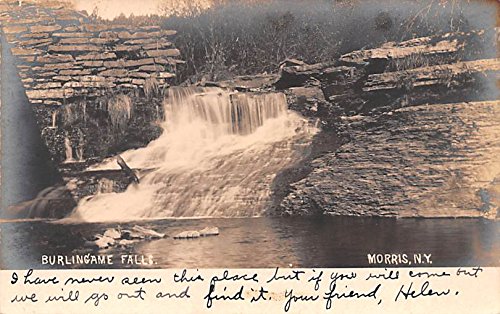
Once upon a time a little boy was walking down a dirt road, beside a lively creek. There were five of them traveling together — the road, the creek, the dog, the grandmother and this boy – and they were all dancing their way to a waterfall, which is where the road stopped and Pan’s kingdom started. A few staggering clouds came along too, out of curiosity. And if the boy had entered paradise at that moment it would have felt like a let-down. The wilderness beyond the waterfall, and its mysterious beasts, which he knew from stories his grandma would tell him, would have lost their beguiling danger — that spice of potential doom, which the cooks of paradise always seem to forget.Read More »



 Negative Geography