The Real Revolution Hasn’t Started Yet

Photo by William Warby on Pexels.com

“…something that wants to rise and shake itself free” (William Carlos Williams)


I had a fairly disconcerting experience when I was a 9th grade spectator at our school’s varsity basketball game. It was a rural school, Kindergarten through 12th in the same building. Maybe 30 kids per grade, so we knew pretty much everyone, or so I thought. But as I was watching the game, one of the players, maybe two years old than myself, a member of our church, our mothers were friends, became instantly unrecognizable.

I lost the flow of the game and became hypnotically focused on this one person. I tried to juggle the knowledge of his “familiarity” with his sudden alien strangeness. His bearing no longer conformed to anyone recognizable. But in a deeper sense, I was noticing him for the first time. Noticing the discrepancy between the mask of confidence he was trying to wear (the identity he was trying to present) and the unfamiliar reality of himself.

And the alien feeling spread to the entire gymnasium. My hometown crowd, all familiar faces, looked like they were all struggling with masks. It was as if the known character of each person was peeling from their bodies, revealing a routine pretense, which was their public persona, which also revealed something of the real human being struggling with fear and doubt.

I also seemed alien. I had never noticed how herky jerky I behaved. I tried to snap out of this alternate reality, but it stuck around for a long half-hour and then a milder version never fully dissipated the rest of my life. I became even more self-conscious, more herky-jerky, and felt more like a fraud who didn’t know how to stop being a fraud.

But at the same time – and this is far more important – the effect was not one of haughty disdain for myself or others, but an unprecedented feeling of sorrow for the real human beings I’d never noticed before. Beneath the smiles and cheers they looked sad or tired.

Sheer forgetfulness may have been the key accident opening this glimpse into more subtle realities simmering beneath the surface presentation; beneath the scripts that often trap us into being people we weren’t meant to be. Where familiarity once was, now bewildered human forms could be discerned. The vague outline of a soul writhing in a spider’s web or a cocoon, depending on whether they would emerge or not.

Read More »

Aphorisms, V.3

  • As the environmental situation shifts, the skills and intelligence we need also shift, forcing us to lose capacities in one direction while developing them in another. So, every new skill reaches a point of diminishing returns. Every medicine becomes a poison. *
  • There is no evolution without death. For those who change, the old form dies. *
  • Evolution isn’t impressed by big brains, if those brains aren’t capable of changing direction (which requires death). *
  • We like to think that we’re the ultimate generalists, able to adapt to any environment because of our technological gifts. But specialization is a sneaky tendency. The technologies that helped us become generalists reach a point of diminishing returns and begin to narrow our attention spans with too much passive absorption, and by corralling our intelligence (our awareness and behavior) along the predictable ruts of algorithms. *
  • Our genetics are recapitulated holograms of the primordial soup, which can germinate in any form when the immaterial lightning of insight alchemically strikes the fertile ground of matter. *
  • Every shift in shape from Tetrapod to whale could be described as earthly insights, leaps in orders of being.*
  • From a communal point of view, evolution is not competitive or comparative, but measured by whether the whole (or holon) is thriving or declining. *
  • We don’t see the relevance of earth and other species anymore, except as playthings or scenic backdrops to our diversions. We’ve become the only relevant thing, which is a loneliness that never existed in previous cultures. A meaninglessness too, because we have divorced ourselves from the undiscovered portions of who we are, which are rooted in the mystery of our surroundings. We slide along the empirical surface of the world, blind to the immaterial forces, which give shape to that empirical world. *
Read More »

Aphorisms (or Short Notes to Clear the Attic), Volume 1

  • I wonder if bad eyesight is caused by a disinclination to see the look on other people’s faces. We blur sight and retreat to senses which are less susceptible to duplicitous signals. So, the eyes atrophy or wear out with misuse.

  • When I take off my glasses, I end up listening more closely. Then the Other listens more closely too. And all they can see in my own blissfully blurred face is a good-natured ignoramus, which tends to awaken a spirit of charity, if not downright pity. Thus, we both become transfigured so long as at least one of us remains blurry.

  • The centrality of myself remains stubbornly pre-Galilean. *

  • What I “know” of another person is only my story of the story they tell about themselves.

  • Our personalities are merely characters in imaginary dramas. When the drama shifts, the personality shifts. If the drama ends, “we” end. Hence, we cling to dramas.

  • The imaginary voice is speaking to an imaginary person. The “I” and the “self” that are being addressed are both part of the imaginary performance.

  • Yes, it’s an inquiry into myself, but it’s not about “me”, as in my personal history or problems. It’s about the common momentum of thought that runs “me.”
  • If we make this conscious distinction between thought and being, then we are able to move in and out of the shapes imposed on perception by thought and language. This allows us to remain somewhat aloof from who we think we are.
  • Whatever we are, we’re not found in passing thoughts. They are merely the traces of our passing.

  • I learn from everything that goes wrong, and everything is always going wrong. *

  • I don’t write because I know something. I write because I don’t. *

  • But it’s not like I’m trying to do something. It’s more like something else is trying to do something and “I” keep getting in the way. And all this tripping over myself to avoid what it wants looks like “effort.” It’s a seductive pretense.

  • Writing happens when effort fails.

  • The only light the “I” produces is the light of its own combustive friction. This friction is produced by trying to avoid the revealing light of awareness. This friction is the cause of Hellfire. Hellfire is the light of heaven burning away.

  • Self-discovery is the discovery of nothing.

  • Self-discovery is the exploration of the cosmos, because the discovery of my absence is the discovery of everything else. But we turn our backs on this larger Being merely because it disturbs the small image of who we thought we were.

  • Writing is neither a means to an end, nor an end in itself. There is a third possibility. Writing is merely what happens when I’m learning. It’s a necessary corollary of the process, but neither a means nor an end.

  • If a necessary corollary to something larger is repressed, then the larger thing also can’t form. But we still can’t focus on the corollary as a means towards the larger thing.
  • I say things after I already know them. I know things silently prior to speaking. I speak in order to hold the surface image steady against a barrage of anomalous information.
Read More »

Time and Timelessness

Photo by Fritz Jaspers on Pexels.com

[This appeared in the May issue of Pari Perspectives]


6am: Long Shadows

The morning shadows are a memory of night. They seem to long for the dissipating darkness. Reluctantly, they retreat, until they are cowering under our feet by midday; and then by late afternoon, leaning once more towards the returning dark.

How can a timeless “now” squeeze between these ceaseless shadows?

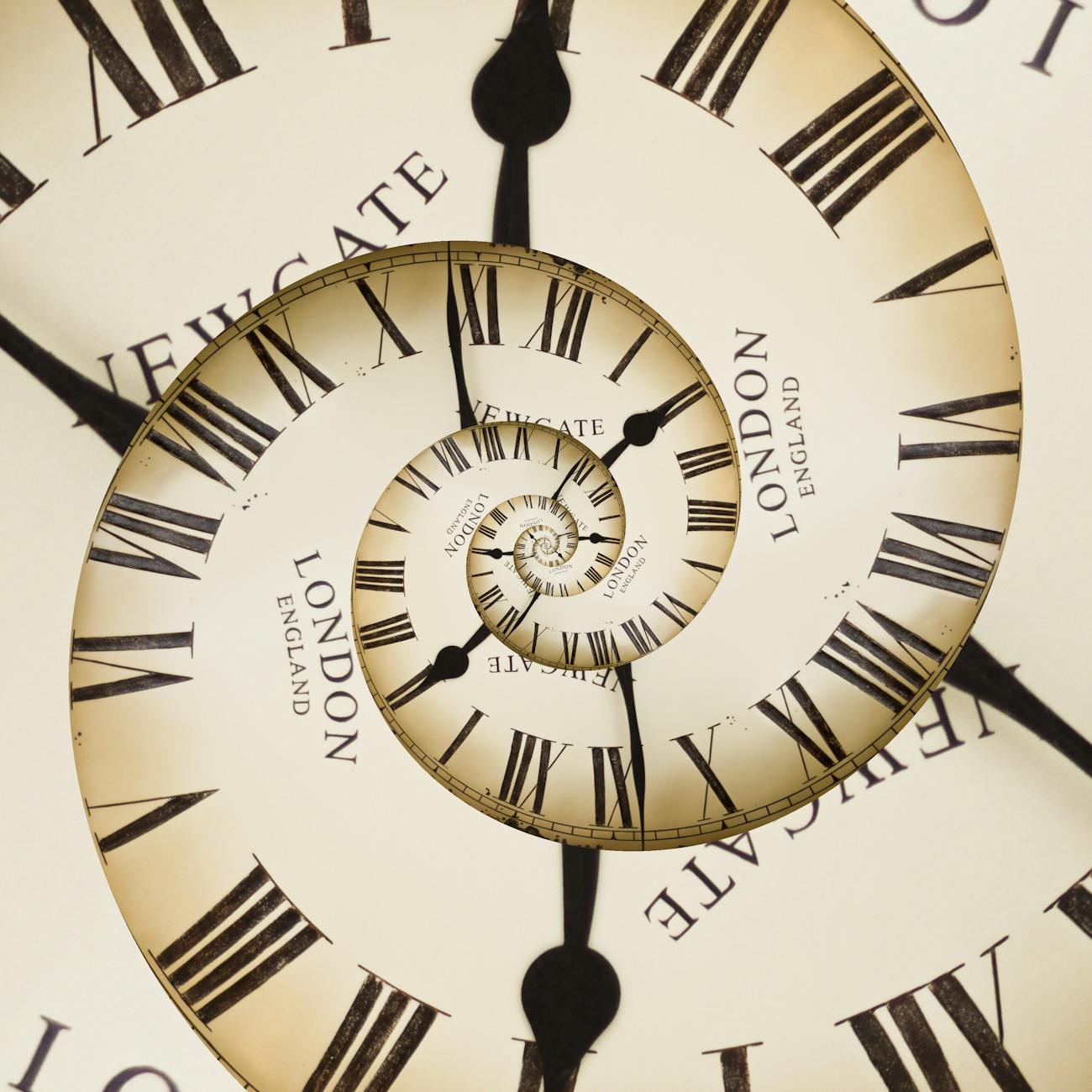
The clock, too, is ceaseless. There is no space on the clock face to mark a “now”.

Maybe the clock is only a map of a timeless territory.

Or, perhaps the clock is a spinning prism through which the mystery of time and timelessness can be seen in different slants of light and shadow.

But even a full circumference of 24 hours will not resolve this mystery. Because everywhere I look, I see only the limitations of human perception, not the limitations of reality itself. So, I can’t “know” time, only these slanted perceptions.

Perhaps time can’t be known because there’s no replication possible. Look, this golden-hued sunrise doesn’t hold quite the same golden hue as yesterday’s. Every morning, the clouds change, branches and leaves have fallen, breaking the light a little differently. And my sensitivities change also.

So far, the earth has experienced about 1,658,195,000,000 mornings, and every one of them was different. Maybe the clock never completes a perfect circle, but spirals beyond measure.

Maybe the techno-futurists are wrong, and we’ll never travel to a previous time, or live forever, because something always dies, no matter what. We will always leave someone behind, or some part of us. Or, we’d return knowing what we didn’t then; which would make it something new; not the past at all.

Our desire to escape the anxieties of time leads us unwittingly towards an inanimate repetition of a deathless world; a perfectly circular and repetitive mechanism; an escape from the spiral of renewal, which requires dying to the past and future, as Krishnamurti pointed out so clearly.

Look, already, the early morning hints of spring have vanished under a wintry sky. I have never known a morning like this.

Read More »

Neither Materialism Nor Idealism: The End of Dichotomy and the Evolution of Humanity


 Questioner (Q): Is there a material or immaterial basis to everything?

Imaginary Philosopher: I wouldn’t ask that. It creates a false dichotomy and presumes too much.


Q: You don’t think it’s an important question?

IP: I think we urgently need to question the small visions driving us towards a cliff. Materialism is a blindingly short-sighted vision that degrades our relationship to earthly life. But I wouldn’t focus on an answer.

Q: Why not?

IP:  Any answer to this question is a form of reductive materialism itself, creating dichotomy and conflict. Positive certainty is destructive. We end up thinking we’re absolutely right about something, and those who hold an opposing view become enemies.

Opposing views needn’t be in conflict. Materialism and Immaterialism are only what we see when facing different directions. It’s similar to microscopic  and macroscopic visions. The microscope and the telescope don’t argue with each other. Each has limitations, which are partially completed by the other.


Q: Are you saying it’s both?

IP: Yes, that, and more, they’re all limited.


Q: What are the limitations of both views?

IP: Imagine the absurdity of visiting a doctor because your face is stuck in a frown. The materialistic doctor examines the face, and concludes that the cause of the frozen frown is a combination of changed patterns in blood flow, muscular tension, and temperature, recommending muscle relaxants. Such a doctor would dismiss “sadness” as a cause, because the existence of an immaterial state of mind would be pure conjecture. There’s no material proof of a mind that feels sad.

This may seem absurd, but this is how a typical scientist approaches the study of the material world. We measure the physical attributes of the world and don’t even bother to wonder if these complex systems of order indicate an immaterial intelligence of the earth itself. Materialism limits our vision.

But if we adhere to an opposing viewpoint – that only mind or spirit is real – then the body and the earth itself fade in importance, appearing merely as discardable clothing obscuring the spirit, or as mere illusions, or inanimate shells.

Western culture seems to be vacillating between these two extremes. An abstract Platonism that led to a Sky God divorced from earthly life, becoming a puritanical hatred of the body, which are all different forms of idealism.

And then this strange scientific materialism, which also degrades matter and mines the earth as if it were inanimate.

So, both viewpoints are limited.

Earthly life has been demeaned by both extremes, because we lost a “vision” of sacred matter — a materiality unsevered from the immaterial.

Q: Isn’t this vision of “sacred matter” another competing belief?

IP: Yes, it could degrade into another material fetish of a belief. Do we necessarily move from a belief in materialism or a belief in some form of immaterialism to a belief in “sacred matter?” Many believe that we can only move from one positive belief to another, that it’s impossible to relate intelligently to the world without a symbolic structure that guides us. But this belief is also limiting.

Is it possible to not merely question each belief from a new position of belief, but to question the whole category of “belief”, so that one is not merely thinking about previous forms of thought, but relating to every belief with unvested interest, or ultimate uncertainty?  

Read More »

The Rebellion Starts Here

Picture by Walter Cybulski

Time to summarize where the series on freedom has gone up till now.

The only concern of these essays is the restoration of the earth’s health.

But how can something as pathetic as an essay contribute to the healing of the earth? The same way any other action performed whole-heartedly contributes, the same way any white blood cell encountering a virus contributes to the healing of the whole population: By realizing and metabolizing the world’s poisons as they circulate within this holograph of the whole, called me. By being an example of healing, by facing my diseased self honestly, allowing the old patterns of identification to die, as they should have died thousands of years ago, before the disease suppurated.

Honesty is the painful act of healing. It’s also the most rebellious act one can undertake in a deceitful world.

This isn’t about learning to play the violin while the world burns. None of these essays are about personal advancement or personal adjustments to a world in its death throes. Those concerns make me sick. I mean “sick” as an accurate metaphor, because the world’s sickness is rooted in a frame of mind that is selfish and short-sighted. We are heading towards extinction from too much personal concern.

Read More »

Why “Everything Is Fiction” is Both True and False

woman in white knitted sweater

Pexels.com

I can imagine that many of the claims I tend to make would annoy historians, among others.

I tend to say that knowledge isn’t a matter of fact or fiction, but of honest or dishonest fiction.

And I tend to say that a conclusion puts an end to learning.

Historians, reporters and police detectives (among others), however, are often diligent in sorting fact FROM fiction, and wouldn’t take kindly to any smudging of those distinctions. They also tend to work towards a conclusive determination of events. They might argue that the question, “did this happen or not?” demands a conclusive answer in order to learn anything substantial. So right away, both of my claims will seem outlandish from their perspectives.

I myself would argue that we need to retain a distinction between fact and fiction if the context (such as law) is premised on this distinction. We have to understand the definitions and frameworks of any foreign language. But I would argue that these linguistic distinctions are themselves fictional inventions. “Fact or fiction” ‘is a fictional way of sorting events.

After all, a fact (under microscopic examination) is by itself a meaningless dot of data in an infinite sea of data points. Facts only begin to make sense when they are strung together in a narrative. In other words, we can’t understand any fact without understanding the context, which is the story that defines the fact. I can’t think of a single fact that isn’t part of an explanatory narrative, like beads on a string.

Creativity is inseparable from the collection of facts. Read More »

Freedom As an Absence of Free Will and an Absence of Free Choice

Last night I dreamt I was a Germanic medicine man, warrior kicking Roman ass in the Teutoburger Wald (my tribe’s version of the Little Bighorn). Dying in agony I was annoyed to discover that my wife was not tending my wounds, but merely nudging me in the ribs so I’d stop moaning in my sleep.

Despite my battlefield injuries, despite lying face-down in the swampy woods screaming in pain, I was not relieved to find myself back in this cold, bureaucratic, technological culture, although word processing is a nice addition. [See footnote on racial identity and the development of eco-fascism].

We’re all born mid-highway, spewing gas out the tailpipe, decimating forests for school projects, eating animals penned in concentration camps, privileged or lacking privilege, praying to the local deity, before we have a moment to reflect, through no choice of our own.

I just appeared here as a newborn in this historical timeline like a Chomsky Martian, and was quickly covered in all these decals and rooting for the team I got saddled with, no matter how often they lose.Read More »

The Delusions of Me, Myself and AI: On the Origins of Our Crises

This appeared on Dissident Voice.

“Do I need to justify what most call philosophy? Aren’t all these social and political issues building into huge cumulonimbuses that demand a less solely reflective response? But look, a thunderstorm has its origins in the vibrations of individual atoms. And as an atom of this society, I need to examine myself, because whatever is driving me (and you) is driving that developing storm.”

“In other words, what is the role of individual perception in all these less abstract issues of immigration, governmental control, war, and the dangers of AI?”

“Well, I bristle at the word “abstract.” I’m saying that the storm has a concrete origin in the atom of my personality. There’s a dynamic there that translates into society. My personality is a twisted wreck of inauthenticity —  defensive denials, and bald declarations of pig-headed belief in anything and everything. I leap from one conclusion to another, rarely questioning any of them. Rarely learning.”

“Are you saying that society is a cumulative stupidity?”

“I think so. But on the “atomic” level it’s only me and you getting caught on what we think and usually staying that way the rest of our lives. It’s not just stupidity, but a stubbornly self-enforced stupidity, which is beguilingly odd. There’s a clarifying thrill in this, like being trapped in a small cell my whole life and suddenly discovering that there are doors everywhere in the cell that I’ve simply refused to open. Every resistance in myself is a door I refuse to open.”Read More »