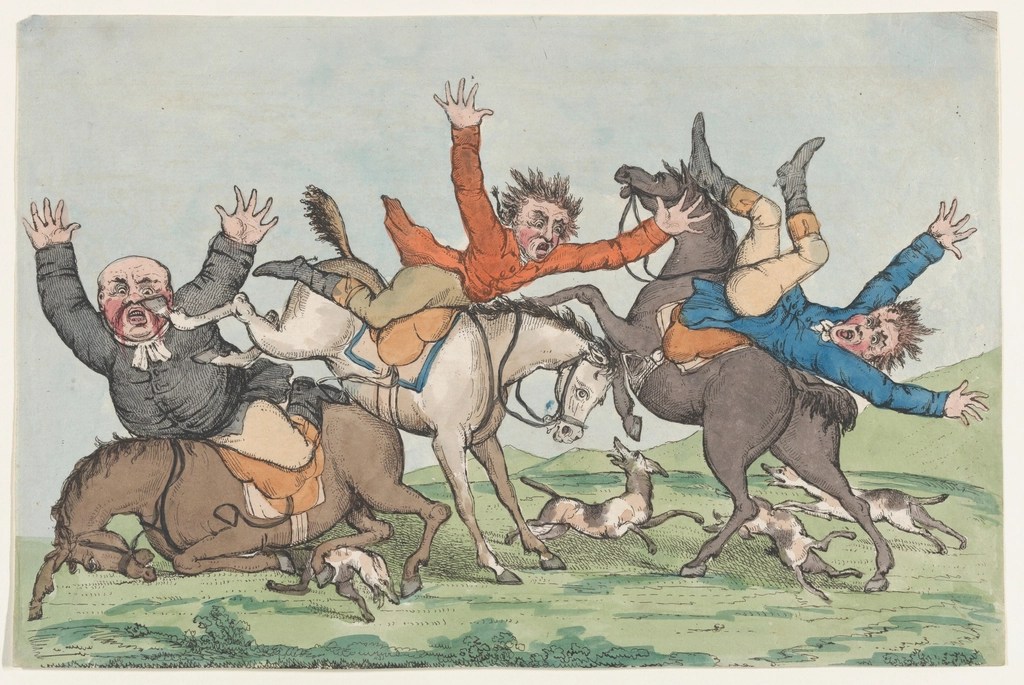
As the environmental situation shifts, the skills and intelligence we need also shift, forcing us to lose capacities in one direction while developing them in another. So, every new skill reaches a point of diminishing returns. Every medicine becomes a poison. *
There is no evolution without death. For those who change, the old form dies. *
Evolution isn’t impressed by big brains, if those brains aren’t capable of changing direction (which requires death). *
We like to think that we’re the ultimate generalists, able to adapt to any environment because of our technological gifts. But specialization is a sneaky tendency. The technologies that helped us become generalists reach a point of diminishing returns and begin to narrow our attention spans with too much passive absorption, and by corralling our intelligence (our awareness and behavior) along the predictable ruts of algorithms. *
Our genetics are recapitulated holograms of the primordial soup, which can germinate in any form when the immaterial lightning of insight alchemically strikes the fertile ground of matter. *
Every shift in shape from Tetrapod to whale could be described as earthly insights, leaps in orders of being.*
From a communal point of view, evolution is not competitive or comparative, but measured by whether the whole (or holon) is thriving or declining. *
We don’t see the relevance of earth and other species anymore, except as playthings or scenic backdrops to our diversions. We’ve become the only relevant thing, which is a loneliness that never existed in previous cultures. A meaninglessness too, because we have divorced ourselves from the undiscovered portions of who we are, which are rooted in the mystery of our surroundings. We slide along the empirical surface of the world, blind to the immaterial forces, which give shape to that empirical world. *
There was a spontaneous genius in the Big Bang, which reverberates in all the little bangs that open new worlds through “blown minds” or insight. *
The desire for a deathless state (an unending Heaven of one sort or another) is an unintentional desire for lifelessness, for a static and inanimate repetitiveness. *
Even if I can’t hear the deep bass of the elephant and the whale echoing across the Savannah or the ocean, I’ll hear their silence. And then I’ll know the real meaning of alienation and loneliness, guilt and sorrow. *
Panic is a dog chasing its tail. Funny if I can see the whole dog, and not so funny if I’m caught up in the chase.
The question, “what is real?” can only be answered with a sense of humor.
Most schools teach only a short-term open-mindedness in order to gain, in the end, conclusive confidence in what is “real.” But a conclusion closes the mind and ends learning. Few schools help students discover a more ineffable confidence in what always exceeds our conclusions.
Scientists might cringe, but electrical or nuclear power could be described as hidden forces charmed into being by the magical formulas of math. These invocations isolate attributes of an undifferentiated whole, giving these forces an independent existence and practical purpose they never had. *
The scientist can become bewitched into a materialist vision; the salesperson can end up thinking that everyone is selling something. We’re made gullible by any story conflated with fact. *
Error is how reality makes itself known. It’s a ceaseless trade wind of correction. Embracing this slant on error, theories no longer strain to be perfect. (A “perfect answer” would put an end to learning). Learning requires riding that current. So, stories flex and shift like sails, catching whispers of larger worlds. Now the wind exceeding the sail is beautiful. *
There’s no greater comic relief than recognizing one’s inner demons as fools on the level of Curly, Moe and Larry. *
What hasn’t changed is this phony sense of a divided consciousness, this feeling of being the better half of a Siamese twin; the other a dummy of a nincompoop dragging along beside me; a co-creation of my own desired destiny divided by the destiny friends and enemies consider more within my grasp. Probably this Siamese self is nothing more than my own recollected behavior sloughed off on an imaginary scapegoat.
Too often, the inner voice (the “I”) escapes into the delusion of being the better angel, who can look back at his dim-witted past from an improved distance. As if I were superior to my own immediate past. And these internal revolutions from dimwit to angel and back again occur in quick succession, like a dog chasing its tail. *
For no sooner do I act in the world then I become immediately annoyed by what I’ve done, rising in opposition to this now utterly deposed former incarnation who had been in his own day (of a moment or two ago) an equally enraged monster with regard to previous incarnations.
“When I get mad or frustrated with myself I notice that the voice (the “I”) feels distinctly superior to the lout I call myself. It’s a kind of voice-throwing trick, placing “me” perpetually outside the scene of my own error, gazing back at my failures like the lab-coated know-it-all, not like the dummy in the wreck. *
Hear me complain about my gaffs with the sternness of an English school-master, condemning what I’ve done from a morally superior third person’s perch (disguised under first person pronouns): “I’ll never forgive myself for what I’ve done!” Or listen as I express the frustrations of an injured party — “there I go again, spilling milk all over myself!” — in this way sidling over to gaze at my wrong-doing as the victim instead of the perpetrator. *
The key to learning is being edified and bemused by our own stupidity. *
Remember when I found you in that long, white hallway? There were no obvious lights anywhere, but somehow everything seemed brightly lit, without any shadows.
The majority of the crowd in the hall was drifting past us in small groups, linked arm-in-arm — probably families and friends, or communities, or economic associations, moving at a fairly steady clip. A few loners were running and bumping into people. Lots of “excuse me’s” and “hey, look out’s” could be heard.
I asked you to stand to the side, because that woman to the left just about ran you over, remember? Of course, I was joking.
I introduced myself as a janitor. Not really part of the crowd. But I’d been working in that complex for as long as I could remember.
Perhaps I’m a spirit, because nobody seemed to notice me. I pushed my invisible broom up and down the various corridors, without paying much attention to the hubbub or what this place was all about.
But after what seemed like several thousand years of sweeping floors, I got a little bored. And I got a little curious about the nature of this complex or whatever it is. You were the only ghost like me I’d ever met. You seemed familiar to me. I saw you on the margins of the page, not quite sure why you were here. I told you to join the club. I said, I think it’s time for me to lay down my broom and start exploring this place a little more. I asked you to join me.
So, we picked out somebody at random to see where he was going. Let’s not bother with describing him, other than to say, he walked alone (which was somewhat rare), early middle-aged, somewhat stooped and nervous, constantly checking his watch. Oh, and he was carrying a backpack that looked fairly heavy. That should suffice, we’re not building a character study. We only wanted to find out where everyone was heading.
Now and then we’d pass someone moving in the opposite direction, almost always mumbling feverishly to themselves. Everyone would try to get out of their way. They had bad hair, which seemed to make people nervous.
It was a non-descript hallway, as I said, except for signs that appeared at every turn, or T, or four corners. The first one we passed said, “just around the corner!” But usually, the signs were more specific.
For instance, sometimes the crowd would move slower. Especially if we came to a juncture. The first one I recall was a four corners – left, right or straight. Our man stopped to consider his options.
The sign to the left read, “This way to Profit”, and a portion of the crowd in business attire — using their briefcases as shields to push through the traffic jam — went scampering off in that direction, talking into their cell phones nonstop.
But we couldn’t see anything different in that direction. It looked like the same white, featureless hall. And we saw another sign at the end of the corridor, but it wasn’t possible to make it out clearly.
To the right, the sign said, “This way to Life Everlasting!” And a portion of the crowd started heading in that direction, walking arm in arm with their children. And others walked alone with their heads bent in solemn procession. And yet that corridor also looked exactly the same as the others. And the man we were following went straight. We thought, maybe we should have picked somebody more interesting. But that wasn’t the point of the trip.
I can imagine that many of the claims I tend to make would annoy historians, among others.
I tend to say that knowledge isn’t a matter of fact or fiction, but of honest or dishonest fiction.
And I tend to say that a conclusion puts an end to learning.
Historians, reporters and police detectives (among others), however, are often diligent in sorting fact FROM fiction, and wouldn’t take kindly to any smudging of those distinctions. They also tend to work towards a conclusive determination of events. They might argue that the question, “did this happen or not?” demands a conclusive answer in order to learn anything substantial. So right away, both of my claims will seem outlandish from their perspectives.
I myself would argue that we need to retain a distinction between fact and fiction if the context (such as law) is premised on this distinction. We have to understand the definitions and frameworks of any foreign language. But I would argue that these linguistic distinctions are themselves fictional inventions. “Fact or fiction” ‘is a fictional way of sorting events.
After all, a fact (under microscopic examination) is by itself a meaningless dot of data in an infinite sea of data points. Facts only begin to make sense when they are strung together in a narrative. In other words, we can’t understand any fact without understanding the context, which is the story that defines the fact. I can’t think of a single fact that isn’t part of an explanatory narrative, like beads on a string.
Creativity is inseparable from the collection of facts. Read More »
[Link to Part I, but you don’t need to read part I to understand this]
If I can look at my own history as a narrative with highs and lows, with periods of clarity and periods of confusion and frustration, then this also probably describes human history as well. Of course, this would contradict the typical historical narrative, which envisions nothing much happening in human development for almost all of our 200 or 300 thousand years, until the last few thousand years, when everything began to improve and become suddenly creative and “advanced”, thanks mostly to technology. This narrative ends up forcing us to look at earlier or less-technologically obsessed cultures as more primitive, and sometimes less intelligent or creative than we are now, as if our history was an escalator climb, and we’re standing quite a few floors above them now.
This picture of the past is a little too pat and conceited. It reminds me of the stages of human development envisioned by Ken Wilber and others (see “The Limits of Ken Wilber”). There’s insight in these stage development models, but the details seem to reflect patterns of development within a regressive culture. And this regression may tend to stretch individual development along lines of partial maturation. Slicing and dicing these stages of delay in our maturation is insightful, but when we begin to project these developmental patterns onto older cultures, I think we’re only repeating patterns of colonial conceit.
My inclination is to assume three fundamental stages of development, depicted in that old Zen saying – “first there is a mountain, then there is no mountain, then there is.” I understand this to mean, first we see the world without the lens of language, a pre-linguistic directness. Then language begins to form an interpretive gauze over the mental eye, which is insightful, practical, and necessary for functioning in the world. But the gauze also begins to obscure the “mountain”. It’s the elongation of this second stage that most of these stage development models are elaborating upon (insightfully, this is not a criticism, but a different angle to consider). At the furthest, stretched distortion of this stage, post-modern insights such as “everything is language” or “there is no ‘thing’, only ‘thought’” erupt. Here, reality itself begins to seem doubtful. A kind of derealization crisis takes place. They can see that there is no mountain without the idea of a “mountain”. But the eruption of a third stage, which is actually not so much a stage, as a gateway into a larger form of life, erupts when the post-modern insight is completed, and the insight that “everything is a story” no longer stops us from seeing the mountain again. Now we’re no longer blinkered by our necessary interpretations. We can cease interpreting the world from the outside (when interpretations are not needed), and no longer relate to the mountain like an alien visitor. Now we “know” the mountain, not merely as a practical idea (all the time), but as an unnamable portion of eternity, a portion of our own fathomless Being.Read More »
I can’t understand the relationship (if any) between progress, growth and evolution. They’re entangled, but not equivalent.
The importance of this question will become clear – it’s not an academic issue, but a matter of life, death and extinction.
Let’s just play with this a moment.
(By the way, I refuse to “get to the point”. That’s because everything we “know” only describes a particular spectrum or color or frequency of the issue. We discover as many meaningful angles as possible by spinning the prism of perception around the issue (and around and around). This form of learning doesn’t tend towards conclusion (or points), but is constantly shifting its orientation as we learn, without end. I do this in honor of the Haudenosaunee, on whose land I live. Talking around a subject until there is consensus by communion, not by force).
If pressed, most historians would probably agree that evolution is not equivalent to progress, improvement, advancement or any other comparative terms in any conclusive sense. We might say that a new species is better adapted to a particular niche, but outside that niche the species would no longer qualify as more advanced.
As the environmental situation shifts, the skills and intelligence we need also shift, forcing us to lose capacities in one direction while developing them in another. So every new skill reaches a point of diminishing returns. Every medicine becomes a poison.
This balanced lateral movement of development and decline is part of evolution. So evolution can’t be conflated with improvement or progress alone. Something needs to die in order for something new to emerge (See “Giving Up and Going On”). This is why we resist change, the half-felt realization that one way or another, if we change, we’ll stop being who we thought we were. Of course, we could also project our identity into the new form of humanity that might emerge and come away feeling optimistic. But the projection of personal identity may be the very quality that the new species drops in order to enter into a wider relationship with the world. So who we think we are ends here one way or another.
When notions of evolution tie themselves too closely to notions of continual advancement we forget to watch for signs of death and decline. Evolution isn’t impressed by big brains, if those brains aren’t capable of changing direction (which requires death). So let’s distinguish extinction from death. There is no evolution without death. For those who change, the old form dies. But extinction is when the old form is entirely eliminated, and no new form crawls out of the tarpit in its place. Extinction is the absence of life and death.Read More »
In the last essay I seemed to compare people to primordial mud. Of course, I wrote it as a comedy, which is to say, the entire essay is excessively optimistic about people, and is only making a generously indulged joke on behalf of a gifted species at the verge of developing into a new form of life and intelligence. But if people approach it pessimistically (I don’t see how they can, given the parameters of my essays in general), then it would be received as ridicule. But I was writing this in resonance with Beckett’s approach. He also tempts people to read him pessimistically. But everything he wrote was a double-entendre. A different kind of humor is revealed when you discover his hidden optimism.
These essays presume several optimistic things (and I don’t expect agreement and I’m not looking for debate, only the willingness to entertain the angle of vision as long as it lasts):
1) that human beings are troubled, but gifted animals; and
2) That human beings are at the verge of realizing a new form of intelligence, a new way of being.
Anything and everything, depending on how one sees it, is a marvel or a hindrance, an all or a nothing, a path or a problem (Fernando Pessoa)
Preface: I think the essay “Optimistic Despair” does a better job in this direction. But they do approach the same topic a little differently. It might be helpful to understand that I’m talking about problem solving in general, but also specifically how problem-solving relates to our entanglement in Thought, which is a problem that many people don’t even recognize as a problem.
————-
Why are problems sometimes interesting and sometimes frustrating?
I think if we’re too focused on obtaining a solution, a way past a problem, then the persistence of the problem can lead to despair and frustration. But if the problem itself is interesting, if its persistence is seen as the unfoldment of a mystery, then the problem is something we’re enjoying and we’re not merely trying to get rid of the problem.
When it comes to the “problem of Literalism” — which is the problem of thought, of being confused by our projections, as humanity has tended to be — the “solution” to the problem of Literalism is so rare that it either gets dismissed outright as an impossibility, or it tends to get labeled as “enlightenment” or “grace” or some other pedestaled conjecture, which are various forms of escape from the problem itself.
Most reasonable people will try to avoid tackling a problem that almost nobody in history has resolved, such as Literalism. From this personal angle, their hope of resolution is squashed immediately by realizing that almost nobody has ever solved this problem of thought, so why should they? Who are they to imagine that the solution is within reach? To avoid embarrassing delusions of grandeur and inevitable failure a seemingly humbler response would be to ignore the problem.
But this reaction is premised on the desire to get past the problem, rather than enjoy the problem.
But reasonable people don’t enjoy the problem. If they can’t get past it, they don’t want to consider it.
The problem is, we can’t enjoy a problem if we don’t recognize a possibility of resolution. But if we focus too much on resolving a problem, then we’re trying to get past the problem too ambitiously, which means we don’t enjoy the problem, which means the problem never resolves!
So most reasonable people get stuck between these two poles, hoisted on a double-bind that not only blocks any further interest but also wears them out.Read More »
On one level I’d say no, because the Self is merely the means by which the body refers to itself. So the Self isn’t delusional from that perspective, because the word and image are grounded in a real referent (the body). However, this projection of a bodily image quickly morphs into a sense of Self that controls the body, or is trapped within the body, as if it were a spirit or separate entity. This is where the illusion starts.
The brain tends to be imagined as a seat of consciousness (also semi-independent from the rest of the body) – wobbling up there like a big, fat turkey on a telephone pole. But this image of a body/brain dichotomy easily morphs into a projection of an even more independent-seeming “mind” drifting above the body like a balloon on a long string. And this “mind” tends to become a synonym for the Self, which sits at its desk behind the eyes and acts like a CEO of the in-corporation, or an overlord of sorts. The varieties of imagery are endless. And even among atheists, this Self tends to take on the qualities of a “soul” as well, a lively essence possessing or inhabiting the body.
But these are not minds, Selves or souls, but merely images — masks that have lured this bodily intelligence into dreams of an autonomous existence over and above the comparatively material level of biology. They are deceptive illusions of minds and souls, illusions of identity. Read More »
I think this is an unexpectedly meaningful question. It pertains to why human beings tend to differ so violently in our interpretations of reality; whether or not we can come to understand two divergent visions (of anything, even this simple arrow) simultaneously without conflict; or whether we’re forced to take sides and stick to our positions until one of us submits (i.e., plots revenge).
Even the resolution of this simple question depends on finding a view wider than the widest view of the question – not merely a wider interpretation, but an awareness that encompasses the limits (and therefore valid extent) of every interpretation that is encountered. (It’s always a little startling how this “negative awareness of limits” is precisely what adds clarity to an interpretation. Until I know the limits of something I don’t know it’s real shape and function. Two sides of the same coin).
(Whether the arrow describes something abrupt or gradual looks meaningless, I grant you. But I think it matters because climate catastrophe and political rebellions, are all nudging this civilization to an abrupt end, or at least to abrupt changes in direction. But we tend towards despair when we see the magnitude of change that’s necessary, which is why the gradual interpretation of change is still more popular, which means we’re not alert to the more optimistic possibility of rapidly shifting our whole approach to life. I suspect, in other words, that we get comfortable with an illusion of gentle progression, which shuts down the possibility of seeing a new potential for learning and changing astonishingly fast. So that’s probably why this feels like a necessary question, a way of waking myself up from this sleepwalk to extinction).Read More »