I’m providing a link to a tremendous video essay by Matthew Cooke — in fact, his entire channel is superb. And I’m going to add links to some other excellent channels at the bottom.
This video adds great informational and analytical heft to what I’ve been trying to say about nations and identity, and especially with regard to Israel.
Here is the foreword to the video provided by Mr. Cooke: “Does Israel have a right to exist? Does any nation state? The concept of nations, with standardized language, culture, identity is brand new — less than 250 years old. Einstein called nationalism a disease. The measles of mankind. Instead of providing human rights, protections, nationalism has locked the world into an escalation trap, at a time we need to cooperate more than ever.”
I would also like to recommend the following youtube channels:
Carefree Wandering: “Rambling without Destination. Hans-Georg Moeller is a professor at the Philosophy and Religious Studies Department at the University of Macau, and, with Paul D’Ambrosio, author of “You and Your Profile: Identity After Authenticity”.
Barry’s Economics: “I’m Barry. I went bankrupt after 17 years as a comedian, spent five years, squatting, sometimes homeless, paralysed, then built Angel Comedy – one of London’s most popular and sucessful comedy clubs. The breakthrough? Unlearning the lie that my poverty was my fault. Now I use behavioural science and neuroscience to show you the invisible systems that keep people stuck: how poverty traps your psychology & why the current system needs you to blame yourself. This channel, inspired by Gary’s Economics [also excellent], is an ongoing investigation into how power really works. We’re figuring it out together.
I’m not interested so much in geopolitical solutions and analyses. My feeling is that nothing is going to change this repetitive history of mass murder, or nation against nation, until the illusions of “who we are” dissolve. Not that identity itself would disappear. But identity ceases to be an illusion when it’s held more lightly, as passing reflections on our behavior. But when they become stuck in idolized forms, illusions multiply.
This dissolution of the illusions of identity, in my opinion, would snuff out the various fuses before any of them can lead to war.
Rather than constantly relighting these fuses of Us against Them, we need to allow that fuse itself to dissolve in a broader vision than us and them. Because every political or social movement starts from the same rotten assumption – namely, a belief in the reality (not mere fictional reality) of a separate Self (whether national, political, religious or racial self, and so on). It’s this belief that is the fuse. And I feel it’s a delusional belief. We are not who we think we are.
But almost everybody finds this level of criticism absurd or far-fetched or unrealistic, or even offensive, and so on. Because people primarily look at nations, tribes and other group entities as if they were real. It’s the psychology underlying this illusion that attracts my interest; not the geopolitical dramas carried out by these fictional entities.
But, again, people are overwhelmingly drawn to the level of human drama – absorbed almost constantly from morning till night by the various Netflix or Hulu dramas involving egos in conflict, or nightly news dramas between nations or demographic groups. Sure, human beings are naturally interested in this level of life, because we’ve lived in complex group dynamics for millions of years.
But that wasn’t the only level of attention we had developed over those millions of years. We also used to be even more deeply attuned to the delicate balance of the natural world; which includes the immaterial mysteries of being alive.
People had to know their relationship to that broader world beyond their petty concerns. In healthy indigenous tribes, people tended to be broad-minded and philosophical. But that sensitivity has faded, as human drama has escalated. And now I believe we’ve reached a point where our political intelligence has made us blind, because now this focus no longer leaves space for a coherent relationship to the larger natural world; and to the even larger immaterial realms, in which our identities are as insignificant as passing dreams.
The nested hierarchy of order has been reversed to the point where we value only self-interest; which is a vantage point so benighted that it can’t recognize its own self-destructive destiny.
So, this is why I feel that we can’t find our sanity by focusing constantly on nations and other oppositional identities, as if they were real. And by focusing constantly on politics, we’re only reconfirming our belief in these images of ourselves and prolonging the foolish dramas.
So, I’m going to keep talking about these illusions, without proposing any additional solutions (which are inevitably political or social solutions). Because the solution in this case is the problem. The solution of politics is the problem because it always reinforces the illusion of separate identities; and these solutions are never any better than mere truces.
Now, this is a third rail in society, so let me place my metrical feet carefully here.
I think everyone has a right to experiment and poke and prod themselves and change their genders and do whatever they want to their bodies. It’s nobody else’s business.
But the inquiry into Identity is my business, since I’m a human being in the stanchions of various constricting identities like everyone else. And I am also free to wonder about all this, because identity makes everyone a little crazy, as far as I can see. I’d say that a conviction of identity is the root of all war. And there are obsessions that develop, which can even lead to a psychosis where people insist on removing their own healthy arms and legs, because it doesn’t conform to an obsessive picture they hold of themselves. So even the most intense feeling of conviction isn’t proof of a necessity.
And there’s a lot of conflict in our unsettled relationship between mind and body. To me, it feels like a violence or hatred of myself, whenever I force this body to conform to an image or story of who I am; rather than allowing the disjointed image, story and body to accept their unique and contradictory realities and reunite as they are in genuine self-acceptance.
I think human fluidity in every direction is normal, creative and irrepressible. Hence, I claim we are like octopi or squid.
As I said in the main essay, the sense of Self is very convincing, but it’s not true individuality. The “I” is merely a rehearsal of how others should see me. It’s chained to others’ opinions. Whereas, true individuality can never be pinned down in any objective or conclusive sense by anyone else, including myself. This would be like trying to stuff a bear in a parakeet’s cage. We always exceed our own expectations if given half a chance.
But in trying to pin down our identities, all we end up doing is shifting from one combination of socially imposed definitions to another, and then calling that shift from the old prison to the new prison, freedom. I don’t see those shifts as fluidity, but as efforts to cage ourselves for the sake of a false security and fake, conditional love.
Maybe we’re all simply afraid of the loneliness of being truly unique.
If this culture loved its children, it wouldn’t make a problem out of natural human creativity and autonomy. Indigenous cultures have no problem with any of this — they don’t tell others how to live. But our supposedly advanced society prefers human beings made in the images of machines, forced to conform to the rigid 1’s and 0’s of an autocratic morality, with simple, categorical, machine-readable identities. We don’t trust our children to unfold as they will. The society wants consistent shapes that can serve as cogs in the inorganic machine. We are trained to serve the machine, not vice versa.
We don’t trust the unique human form we already are. But the honest human being is beautiful, rebellious and good, no matter how disjointed and out of place this unloving society makes us feel.
Now is the time for this powerful being to overthrow the machine.
“A bitter wind blows through the country A hard rain falls on the sea If terror comes without a warning There must be something we don’t see What fire begets this fire? Like torches thrown into the straw If no one asks, then no one answers That’s how every empire falls” — John Prine (“That’s How Every Empire Falls”)
Maybe the scientific revolution (for all its magnificent insights and newfound capacities) re-imagined the human being as a kind of inanimate billiard ball bouncing mechanically along a chain of meaningless cause and effect.
This was the only Grand Narrative that science could offer the individual. A brief, inexplicable eruption from total non-animacy, which ends in non-animacy yet again.
This revolution freed the individual from the biting dogmas of religion, but left the individual feeling like a surplus ball bearing bouncing around in some inexplicable clockwork; which had the effect of leaving the non-scientist (the new lay person) desperate to find purchase in the open-ended abyss of an isolated “me,” which was all that remained in the absence of religion and monarchy (and NO, this is not a lament). But as a result, perhaps the 18th and 19th century citizen (or at least European or American citizen) colonized the world in its need to distract itself from the absence of meaningful identity that the sudden withdrawal of old certainties provoked.
I mean, the 19th century “American” mind was optimistic, because it was experiencing the “singularity” of a logarithmic upswing in personal and national power in the rising tide of colonialism, thanks to genocide and slavery.
As the empire collapses, the urge to regress towards that “old time” faith in kings and gods and tribes grows more desperate, and less euphoric. Hence, there’s a desire to return to the familiar hellscape of genocide and enslavement so as to give those who feel this way a boost of self-esteem.
So, perhaps the “rugged individual”, and the “self-made man” of an eager 19th century America became the resume-building, careerist, self-branding, cynical and self-obsessed tweeting global consumer of today. We’ve all been colonized.
1) Self-knowledge as a positive list of characteristics
How do I know myself?
I begin by knowing myself as an objective list of characteristics: Likes, dislikes, opinions, habits, values, skills, professions, political orientations, and every other quality imaginable.
I also know myself reluctantly as a list of shadow characteristics, which others often perceive first: impatience, clumsiness, self-obsessions, talking to myself even when others are in the room, a hypocritical love of boxing, etc.
There’s a necessity for these differently sourced lists of self-knowledge. If I don’t notice a tendency to be selfish, lazy, thoughtless, you name it, then self-knowledge is distorted in the preservation of an illusion.
In fact, I hear in my own brain (and from what I derive from others’ brains) something similar to government propaganda in the way it defends and justifies itself by referencing selectively edited memories (or fake news), in order to preserve the illusion of a stable and presidential “me” who does no wrong.
If I’m rolling an issue over and over again in my mind (as I tend to do), then some image of myself must have been made to wobble from its pedestal. Even if I’m self-righteously convinced of my own innocence, the emotional and mental energy dedicated to preserving this image indicates a wobble.
The voice is like a press-secretary and press corps rolled into one. And I hardly notice the exhaustion this causes, because it’s standard practice in this culture: conversing with non-existent people in order to convince imaginary people that this list of qualities remains accurate and impeccable.
Or, call it an effective air-defense system that shoots down any speck of honest evidence undermining the falsely idealized Self it claims to be.
But now and then some honest revelation hits home despite this diligence. And the accidental surrender to reality generates a soft breeze of sanity, which cleanses the air momentarily from the fumes of bullshit that the brain produced during the course of the day.
But almost immediately I’ll start downplaying the impact of this moment of truth, trying to steady the wobble or clean up the damage to the fallen icon. And I’ll employ a clever tactic to do this — acknowledging a portion of the exposed corruption by saying something like, “I wasn’t being myself” or “that’s not who I really am”.
Seen from Mars, it’s as if human beings as a whole don’t care if they themselves survive (or if other species are allowed to live).
Is this mass suicide?
An indifference to our own collective fate is spreading, even among people who are still devoted to their families. The indifference is justified as a form of realism. If we’re heading towards destruction then realism, they say, is accepting our fate (knowing all living things eventually die anyways).
Indifference to life and death itself is being conflated with realism.
And death as a natural completion of a life-cycle is being conflated with a premature murder/suicide of one another and millions of other species.
This isn’t a realistic or mature regard for life and death, but the very attitude of a person who has resigned themselves to giving up on a complete life and committing suicide before maturation. This “realism” is the suicidal impulse itself.
After all, what are the direct means by which we are prematurely killing ourselves? We’re denying the effects of climate change, indulging in fascism and allowing AI to gain total possession of our minds, and suck the marrow out of life itself, to name just three.
These are the self-destructive behaviors of an immature species, an adolescent species, who has set fire to the house, locked itself in its virtual room, and then climbed into bed to watch a movie with the dog. And when a brother bursts into the room, shouting “fire!”, the adolescent mocks him for his overzealous concern, saying, “calm down and be realistic: we’re all going to die eventually anyways.”
Denial, indulgence and apathy are the justifications for what’s happening, not the mature acceptance of life and death. There is a reason why we make a distinction between murder and natural causes.
I believe it is realistic to say that we are killing ourselves and murdering one another.
But it’s not realistic to accept this situation as inevitable.
Therefore, I’d like to suggest that it’s this lack of self-knowledge, this refusal to self-reflect, learn, change and die naturally to who we are, which is the problem. Suicide and murder are not the acceptance of death, but its denial. We would rather be consumed in a fire we started than give up the illusions of ourselves and allow who we thought we were to die naturally.
“…something that wants to rise and shake itself free” (William Carlos Williams)
I had a fairly disconcerting experience when I was a 9th grade spectator at our school’s varsity basketball game. It was a rural school, Kindergarten through 12th in the same building. Maybe 30 kids per grade, so we knew pretty much everyone, or so I thought. But as I was watching the game, one of the players, maybe two years old than myself, a member of our church, our mothers were friends, became instantly unrecognizable.
I lost the flow of the game and became hypnotically focused on this one person. It’s probably a widespread phenomenon. It’s what some call “wordnesia.” Except in this case, it’s not the word that looks suddenly mispelled or inexplicable or weird, but a human being. Someone I knew on the periphery.
And even if it’s common, I want to magnify the moment, because there’s something almost pleasantly psychedelic about the experience, and also significant in some way that otherwise I ignore.
At any rate, I had this Wordnesia experience of a person when I was in 9th grade. I tried to juggle the knowledge of his “familiarity” with his sudden alien strangeness. His bearing no longer conformed to anyone recognizable. But I was also noticing him for the first time. Noticing the discrepancy between the mask of confidence he was trying to wear (the identity he was trying to present), my interpretation of his projected identity, and the unfamiliar reality of himself, which I’d never noticed until that moment.
And the alien feeling spread to the entire gymnasium. My hometown crowd, all familiar faces, looked like they were all struggling with masks. It was as if the known character of each person was peeling from their bodies, revealing a routine pretense, which was their public persona, which also revealed something of the real human being struggling with fear and doubt.
I don’t know if that’s how I would have interpreted at the time. But I’m doing so now, because I recollect a feeling of dislocation, and alien strangement in myself, when I looked around the gym. It was like a contagious form of wordnesia, or so I feared.
In the disjointed chaos of the moment (and I think it was a close game, so the energy of the crowd was high-strung, I started to notice the chaos of myself more than anything else, because the isolation turned me inwards, where I found nothing but a bundle of herky jerky movements that I vaguely but not gladly recognized as myself.
I tried to snap out of this alternate reality, but it stuck around for a long half-hour and then perhaps a milder version never fully dissipated the rest of my life. At any rate, thereafter I became even more self-conscious, more herky-jerky, and felt more like a fraud who didn’t know how to stop being a fraud.
But at the same time – and this is far more important – the effect was not one of haughty disdain for myself or others, but an unprecedented feeling of sorrow for the real human beings I’d never noticed before. Beneath the smiles and cheers they looked sad or tired.
This self-ennobling observation can’t be fully corroborated. But I do (I insist) feeling oddly sad in the midst of this somewhat pleasant natural high.
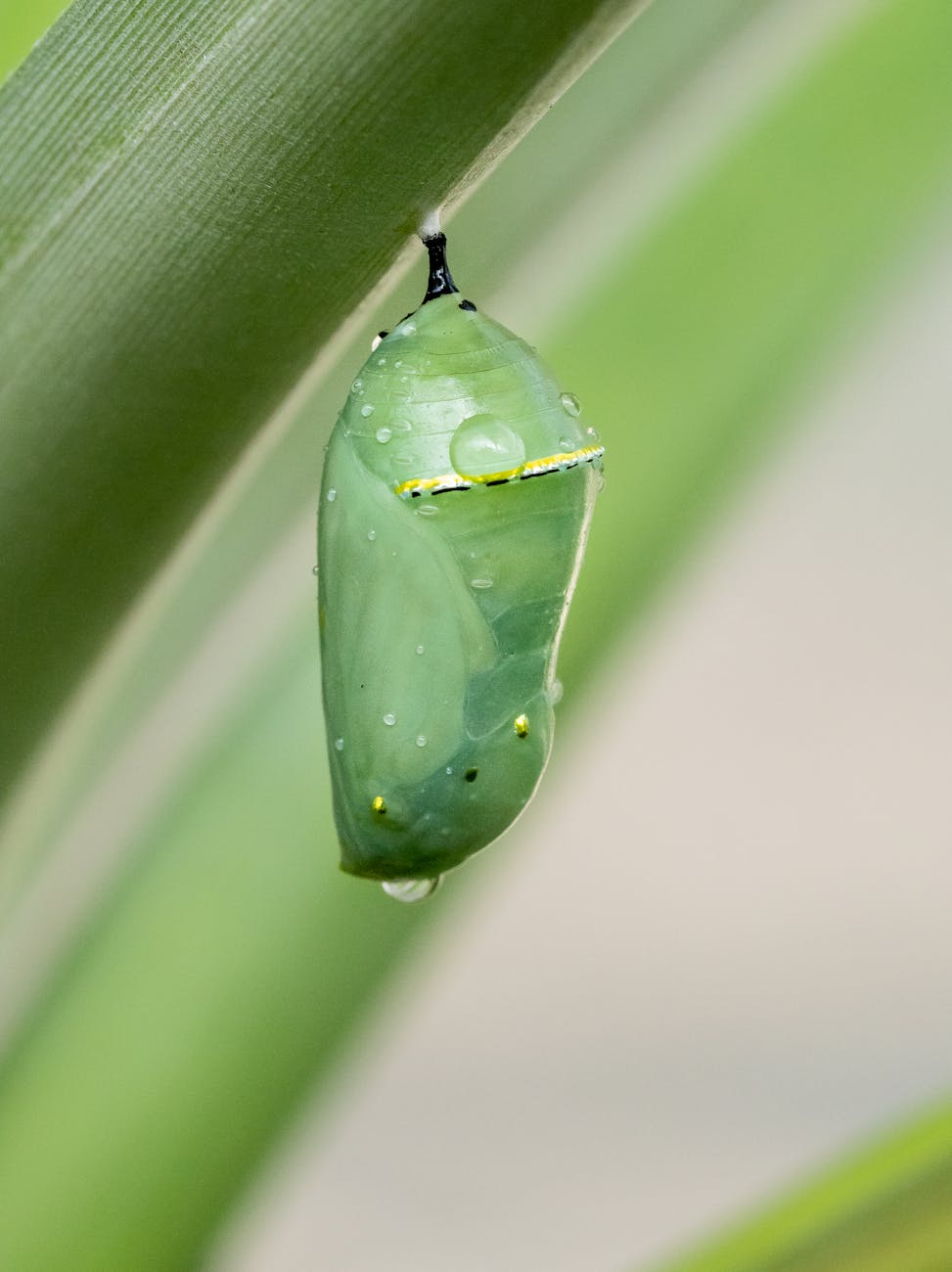
Sheer forgetfulness may have been the accidental drug, but it did seem to open a glimpse into more subtle realities simmering beneath the surface presentation; beneath the scripts that often trap us into being people we weren’t meant to be. Where familiarity once was, now bewildered human forms could be discerned. The vague outline of a soul writhing in a spider’s web or a cocoon, depending on whether they would emerge or not.
The morning shadows are a memory of night. They seem to long for the dissipating darkness. Reluctantly, they retreat, until they are cowering under our feet by midday; and then by late afternoon, leaning once more towards the returning dark.
How can a timeless “now” squeeze between these ceaseless shadows?
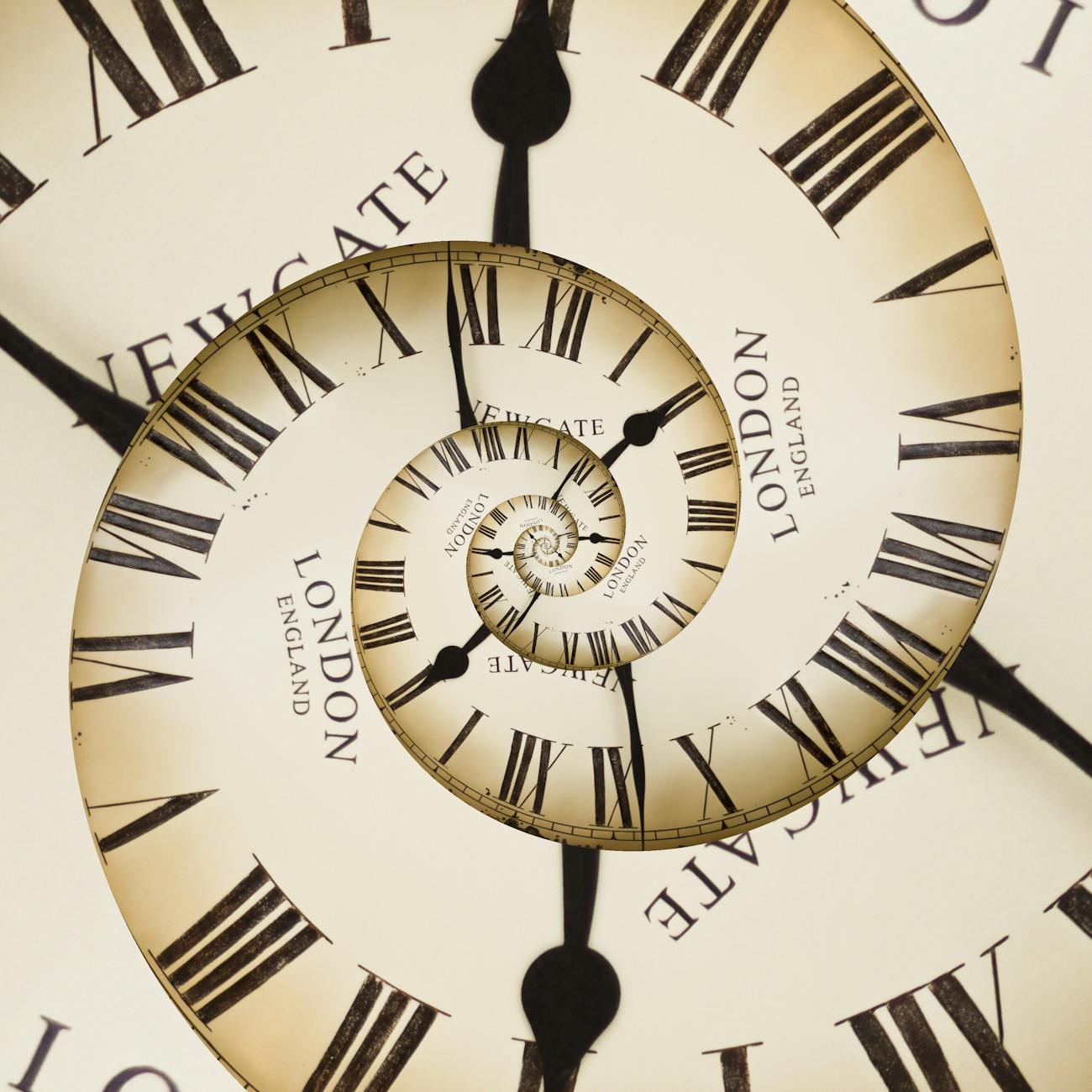
The clock, too, is ceaseless. There is no space on the clock face to mark a “now”.
Maybe the clock is only a map of a timeless territory.
Or, perhaps the clock is a spinning prism through which the mystery of time and timelessness can be seen in different slants of light and shadow.
But even a full circumference of 24 hours will not resolve this mystery. Because everywhere I look, I see only the limitations of human perception, not the limitations of reality itself. So, I can’t “know” time, only these slanted perceptions.
Perhaps time can’t be known because there’s no replication possible. Look, this golden-hued sunrise doesn’t hold quite the same golden hue as yesterday’s. Every morning, the clouds change, branches and leaves have fallen, breaking the light a little differently. And my sensitivities change also.
So far, the earth has experienced about 1,658,195,000,000 mornings, and every one of them was different. Maybe the clock never completes a perfect circle, but spirals beyond measure.
Maybe the techno-futurists are wrong, and we’ll never travel to a previous time, or live forever, because something always dies, no matter what. We will always leave someone behind, or some part of us. Or, we’d return knowing what we didn’t then; which would make it something new; not the past at all.
Our desire to escape the anxieties of time leads us unwittingly towards an inanimate repetition of a deathless world; a perfectly circular and repetitive mechanism; an escape from the spiral of renewal, which requires dying to the past and future, as Krishnamurti pointed out so clearly.
Look, already, the early morning hints of spring have vanished under a wintry sky. I have never known a morning like this.
I can’t remain too long in any consistent first person, otherwise you’ll end up believing that I’m really me, and then I’ll be pinned inanimately to the page and unable to shape-shift as any living creature must if it hopes to avoid the tarpits.
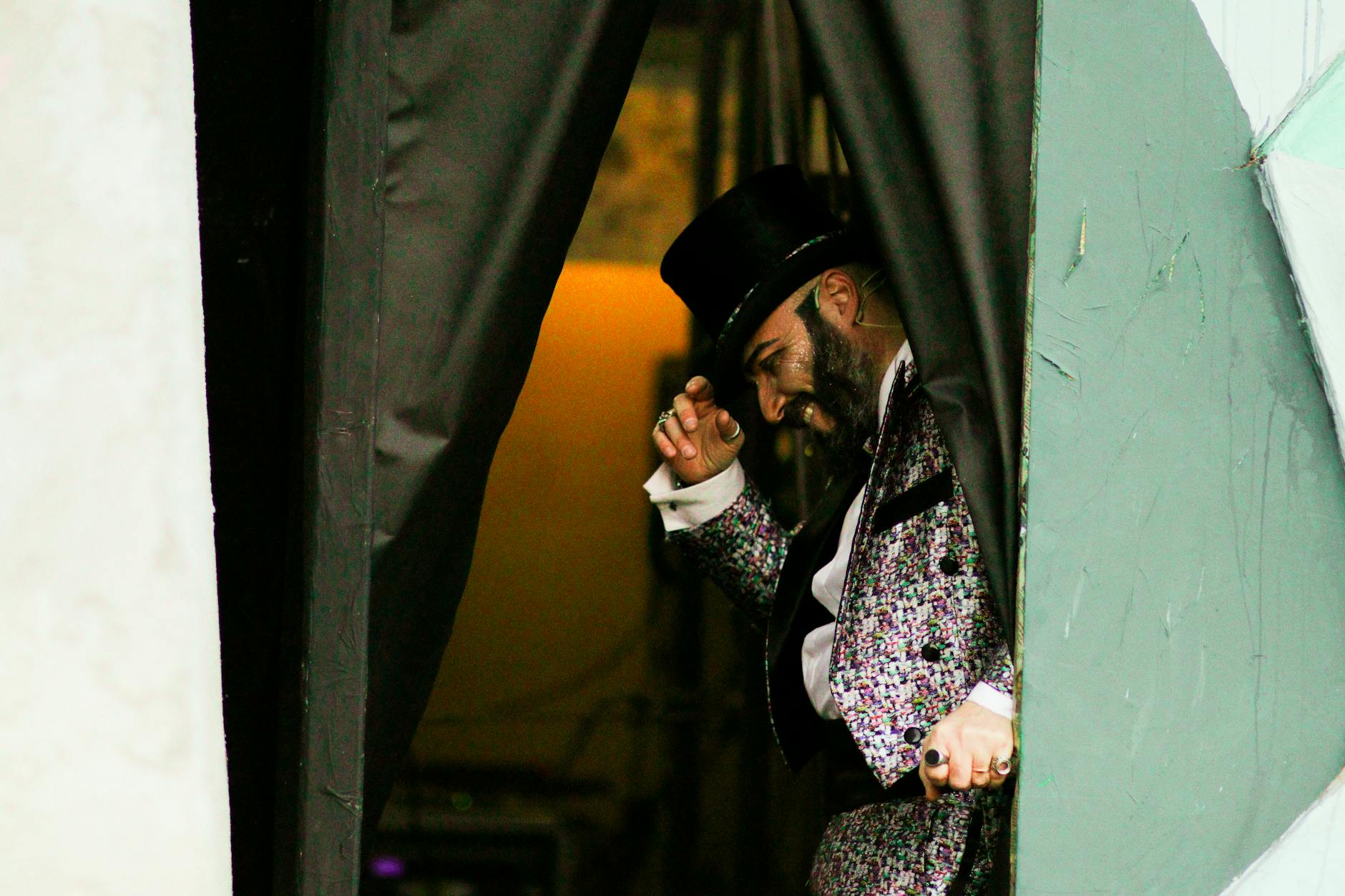
Consider Me the ringmaster for what follows. I am part of the performance, just another circus freak, not the kind of Self you’d bring home to meet your mother.
Let’s dare to suggest I’m not even a living thing so much as a material swelling of words, thoughts, ideas, pictures, emotions, the chaotic surface waves left by the spirit of life as it hovered over the keyboard for a moment before passing on to better things. After all, the screen or page you’re reading is not itself alive. Nor is this picture of “me” that hovers over the page momentarily.
Or say instead that this picture of “Me” is a mnemonic shell that formed where life once placed its fleeting and immaterial finger. I am the fossil of something more lively that passed this way.
Or maybe I’m the detritus of memory, a junk-encrusted tumbleweed of ideas of myself, a messy and clanging assemblage of cans and can’t-do’s, recoils, crossed-wires and lost marbles. This would explain why I’m such a noisy sonofabitch.Read More »
On one level I’d say no, because the Self is merely the means by which the body refers to itself. So the Self isn’t delusional from that perspective, because the word and image are grounded in a real referent (the body). However, this projection of a bodily image quickly morphs into a sense of Self that controls the body, or is trapped within the body, as if it were a spirit or separate entity. This is where the illusion starts.
The brain tends to be imagined as a seat of consciousness (also semi-independent from the rest of the body) – wobbling up there like a big, fat turkey on a telephone pole. But this image of a body/brain dichotomy easily morphs into a projection of an even more independent-seeming “mind” drifting above the body like a balloon on a long string. And this “mind” tends to become a synonym for the Self, which sits at its desk behind the eyes and acts like a CEO of the in-corporation, or an overlord of sorts. The varieties of imagery are endless. And even among atheists, this Self tends to take on the qualities of a “soul” as well, a lively essence possessing or inhabiting the body.
But these are not minds, Selves or souls, but merely images — masks that have lured this bodily intelligence into dreams of an autonomous existence over and above the comparatively material level of biology. They are deceptive illusions of minds and souls, illusions of identity. Read More »





 Negative Geography