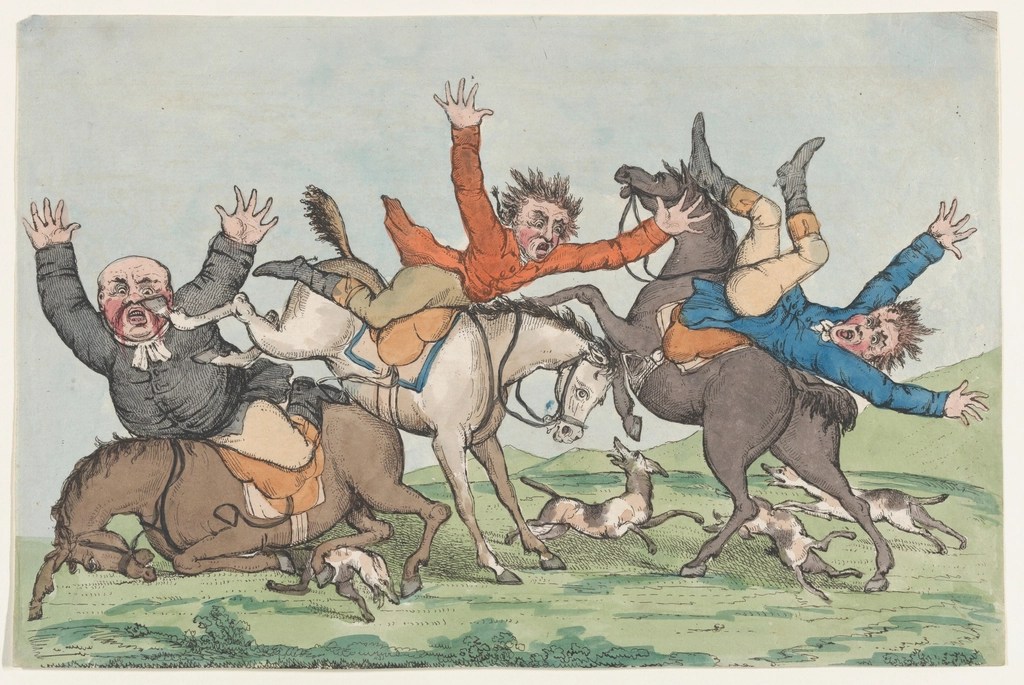
“…something that wants to rise and shake itself free” (William Carlos Williams)
I had a fairly disconcerting experience when I was a 9th grade spectator at our school’s varsity basketball game. It was a rural school, Kindergarten through 12th in the same building. Maybe 30 kids per grade, so we knew pretty much everyone, or so I thought. But as I was watching the game, one of the players, maybe two years old than myself, a member of our church, our mothers were friends, became instantly unrecognizable.
I lost the flow of the game and became hypnotically focused on this one person. I tried to juggle the knowledge of his “familiarity” with his sudden alien strangeness. His bearing no longer conformed to anyone recognizable. But in a deeper sense, I was noticing him for the first time. Noticing the discrepancy between the mask of confidence he was trying to wear (the identity he was trying to present) and the unfamiliar reality of himself.
And the alien feeling spread to the entire gymnasium. My hometown crowd, all familiar faces, looked like they were all struggling with masks. It was as if the known character of each person was peeling from their bodies, revealing a routine pretense, which was their public persona, which also revealed something of the real human being struggling with fear and doubt.
I also seemed alien. I had never noticed how herky jerky I behaved. I tried to snap out of this alternate reality, but it stuck around for a long half-hour and then a milder version never fully dissipated the rest of my life. I became even more self-conscious, more herky-jerky, and felt more like a fraud who didn’t know how to stop being a fraud.
But at the same time – and this is far more important – the effect was not one of haughty disdain for myself or others, but an unprecedented feeling of sorrow for the real human beings I’d never noticed before. Beneath the smiles and cheers they looked sad or tired.
Sheer forgetfulness may have been the key accident opening this glimpse into more subtle realities simmering beneath the surface presentation; beneath the scripts that often trap us into being people we weren’t meant to be. Where familiarity once was, now bewildered human forms could be discerned. The vague outline of a soul writhing in a spider’s web or a cocoon, depending on whether they would emerge or not.
As the environmental situation shifts, the skills and intelligence we need also shift, forcing us to lose capacities in one direction while developing them in another. So, every new skill reaches a point of diminishing returns. Every medicine becomes a poison. *
There is no evolution without death. For those who change, the old form dies. *
Evolution isn’t impressed by big brains, if those brains aren’t capable of changing direction (which requires death). *
We like to think that we’re the ultimate generalists, able to adapt to any environment because of our technological gifts. But specialization is a sneaky tendency. The technologies that helped us become generalists reach a point of diminishing returns and begin to narrow our attention spans with too much passive absorption, and by corralling our intelligence (our awareness and behavior) along the predictable ruts of algorithms. *
Our genetics are recapitulated holograms of the primordial soup, which can germinate in any form when the immaterial lightning of insight alchemically strikes the fertile ground of matter. *
Every shift in shape from Tetrapod to whale could be described as earthly insights, leaps in orders of being.*
From a communal point of view, evolution is not competitive or comparative, but measured by whether the whole (or holon) is thriving or declining. *
We don’t see the relevance of earth and other species anymore, except as playthings or scenic backdrops to our diversions. We’ve become the only relevant thing, which is a loneliness that never existed in previous cultures. A meaninglessness too, because we have divorced ourselves from the undiscovered portions of who we are, which are rooted in the mystery of our surroundings. We slide along the empirical surface of the world, blind to the immaterial forces, which give shape to that empirical world. *
There was a spontaneous genius in the Big Bang, which reverberates in all the little bangs that open new worlds through “blown minds” or insight. *
The desire for a deathless state (an unending Heaven of one sort or another) is an unintentional desire for lifelessness, for a static and inanimate repetitiveness. *
Even if I can’t hear the deep bass of the elephant and the whale echoing across the Savannah or the ocean, I’ll hear their silence. And then I’ll know the real meaning of alienation and loneliness, guilt and sorrow. *
Panic is a dog chasing its tail. Funny if I can see the whole dog, and not so funny if I’m caught up in the chase.
The question, “what is real?” can only be answered with a sense of humor.
Most schools teach only a short-term open-mindedness in order to gain, in the end, conclusive confidence in what is “real.” But a conclusion closes the mind and ends learning. Few schools help students discover a more ineffable confidence in what always exceeds our conclusions.
Scientists might cringe, but electrical or nuclear power could be described as hidden forces charmed into being by the magical formulas of math. These invocations isolate attributes of an undifferentiated whole, giving these forces an independent existence and practical purpose they never had. *
The scientist can become bewitched into a materialist vision; the salesperson can end up thinking that everyone is selling something. We’re made gullible by any story conflated with fact. *
Error is how reality makes itself known. It’s a ceaseless trade wind of correction. Embracing this slant on error, theories no longer strain to be perfect. (A “perfect answer” would put an end to learning). Learning requires riding that current. So, stories flex and shift like sails, catching whispers of larger worlds. Now the wind exceeding the sail is beautiful. *
There’s no greater comic relief than recognizing one’s inner demons as fools on the level of Curly, Moe and Larry. *
What hasn’t changed is this phony sense of a divided consciousness, this feeling of being the better half of a Siamese twin; the other a dummy of a nincompoop dragging along beside me; a co-creation of my own desired destiny divided by the destiny friends and enemies consider more within my grasp. Probably this Siamese self is nothing more than my own recollected behavior sloughed off on an imaginary scapegoat.
Too often, the inner voice (the “I”) escapes into the delusion of being the better angel, who can look back at his dim-witted past from an improved distance. As if I were superior to my own immediate past. And these internal revolutions from dimwit to angel and back again occur in quick succession, like a dog chasing its tail. *
For no sooner do I act in the world then I become immediately annoyed by what I’ve done, rising in opposition to this now utterly deposed former incarnation who had been in his own day (of a moment or two ago) an equally enraged monster with regard to previous incarnations.
“When I get mad or frustrated with myself I notice that the voice (the “I”) feels distinctly superior to the lout I call myself. It’s a kind of voice-throwing trick, placing “me” perpetually outside the scene of my own error, gazing back at my failures like the lab-coated know-it-all, not like the dummy in the wreck. *
Hear me complain about my gaffs with the sternness of an English school-master, condemning what I’ve done from a morally superior third person’s perch (disguised under first person pronouns): “I’ll never forgive myself for what I’ve done!” Or listen as I express the frustrations of an injured party — “there I go again, spilling milk all over myself!” — in this way sidling over to gaze at my wrong-doing as the victim instead of the perpetrator. *
The key to learning is being edified and bemused by our own stupidity. *
What if there are areas of Hell where the inhabitants think they are happy? At least, at first.
There, the inhabitants merely suffer perpetual stasis. But this stasis becomes so unbearable after a while that many end up seeking the easy change of a worsening situation to relieve them of the monotony.
And then they get tired of making things harder and join one of the various Societies for the Betterment of Hell. But almost nobody shows up after a while, because the meetings are too monotonous, too many parliamentarian procedures, and nothing ever improves.
So, Hell’s society bounces between two rather mild extremes – the temporary excitements of a worsening self-made crisis and an exhausted return to static monotony.
On a personal level, nobody suffers too much. The nick-nack shelf hangs almost perfectly balanced. Things only roll off now and then. Or maybe you have a low-grade migraine that comes and goes every day. And aspirins are in short supply. (Dope too; the marijuana fields keep getting attacked by new fungi). But there’s also no great suffering at any given moment. (After all, it’s only the “thought” of never-ending migraines that begins to wear you down).
Or, perhaps upon entering hell, you’re given a perpetual membership in Hulu or Amazon Prime or Youtube. Seems nice at first.
But then the prospect of spending the next 5 million years watching re-runs of The Office trends badly. (Also, notice that the “Prospect” of 5 million years occurs to someone as an immediate thought. That’s all it takes to lose heart; you don’t have to wait 5 million years. Hell is an immediate thought).
Also, what makes this hell really hellish is that everyone is free to leave. All they have to do is change their habits. But it’s too much trouble to leave hell; there’s always another youtube short to watch.
Hell is a voluntary surrender facility for the fatally indifferent.
Again, it’s not that hell actually lasts forever. It’s the immediate thought that you’re trapped into remaining in this cornucopia of trivia simply because you’re too indifferent to EVER leave, which is hell.
What eventually drives most of the inhabitants to lower and darker levels of Hell (making room for newcomers) is that immediate but unbearable knowledge of their own freedom to leave. The skies remain too blue here, the trees too green, the flight of the vulture still too serene, to ever let them forget this otherwise passing thought.
Time to summarize where the series on freedom has gone up till now.
The only concern of these essays is the restoration of the earth’s health.
But how can something as pathetic as an essay contribute to the healing of the earth? The same way any other action performed whole-heartedly contributes, the same way any white blood cell encountering a virus contributes to the healing of the whole population: By realizing and metabolizing the world’s poisons as they circulate within this holograph of the whole, called me. By being an example of healing, by facing my diseased self honestly, allowing the old patterns of identification to die, as they should have died thousands of years ago, before the disease suppurated.
Honesty is the painful act of healing. It’s also the most rebellious act one can undertake in a deceitful world.
This isn’t about learning to play the violin while the world burns. None of these essays are about personal advancement or personal adjustments to a world in its death throes. Those concerns make me sick. I mean “sick” as an accurate metaphor, because the world’s sickness is rooted in a frame of mind that is selfish and short-sighted. We are heading towards extinction from too much personal concern.
Abandon false ideas, that is all. There is no need for true ideas. There aren’t any” (Nisargadatta)
Thought tends to run us (ala David Bohm), but it’s such a convincing hallucination that we’re the ones choosing what we think. But usually, we’re just repeating fragments of ideas that have come to us from others, from one-sided, patriotically-distorted historical education, Youtube, echoing chat groups, books, unconscious habits of response in parents and teachers that presume certain “facts” about life (absorbing these philosophies unconsciously). Etc.
How are we supposed to have an idea of our own in this rubble-strewn flood of information? How can we pick and choose what is right or wrong when our basis of decision making also comes from this chaotic flood?
Ironically, we’re not lucid until our thoughts are recognized as a cultural dream into which we were born. We awaken by realizing we’re asleep.
The irony is that real individuality only happens when I realize that thought has carried me away, that beliefs ran me from one blind conviction to another, like cordyceps (the zombie-ant fungus).
The following hypothesis won’t be correct, but only at best insightful. From where I stumble through life, no human knowledge will ever be free of distortion, because we can’t pin down the nature of a morphing and multi-dimensional infinity. Therefore, I don’t want to construct a stable theory of reality. I’m offering a playful metaphysics instead, a suggestive cartoon (cartoonish in comparison to the dynamic world), a caricature that exaggerates certain features of reality that more conventional stories and theories have tended to downplay by exaggerating other features.
Metaphysical trips such as this are only built for the short haul. My exaggerated intention is to remove a dogmatic beam from the field of perception. Call it a cultural floater that is blinding us to wider potentials. What I’m doing feels practical, not academic.
Also, I’d like the reader to realize that these essays are not rationally planned. At this point in the essay I’m only pursuing a metaphor that now and then crystallized over the past few months. So I write my way deeper into this vague sense of a vaster formulation hiding in the fog of my own ignorance. I want you to know this, because this is an exploratory journey into the wilderness of ignorance, and I want you to ride along as it unfolds, not as a spectator reading a conclusive script.
Anything and everything, depending on how one sees it, is a marvel or a hindrance, an all or a nothing, a path or a problem (Fernando Pessoa)
Preface: I think the essay “Optimistic Despair” does a better job in this direction. But they do approach the same topic a little differently. It might be helpful to understand that I’m talking about problem solving in general, but also specifically how problem-solving relates to our entanglement in Thought, which is a problem that many people don’t even recognize as a problem.
————-
Why are problems sometimes interesting and sometimes frustrating?
I think if we’re too focused on obtaining a solution, a way past a problem, then the persistence of the problem can lead to despair and frustration. But if the problem itself is interesting, if its persistence is seen as the unfoldment of a mystery, then the problem is something we’re enjoying and we’re not merely trying to get rid of the problem.
When it comes to the “problem of Literalism” — which is the problem of thought, of being confused by our projections, as humanity has tended to be — the “solution” to the problem of Literalism is so rare that it either gets dismissed outright as an impossibility, or it tends to get labeled as “enlightenment” or “grace” or some other pedestaled conjecture, which are various forms of escape from the problem itself.
Most reasonable people will try to avoid tackling a problem that almost nobody in history has resolved, such as Literalism. From this personal angle, their hope of resolution is squashed immediately by realizing that almost nobody has ever solved this problem of thought, so why should they? Who are they to imagine that the solution is within reach? To avoid embarrassing delusions of grandeur and inevitable failure a seemingly humbler response would be to ignore the problem.
But this reaction is premised on the desire to get past the problem, rather than enjoy the problem.
But reasonable people don’t enjoy the problem. If they can’t get past it, they don’t want to consider it.
The problem is, we can’t enjoy a problem if we don’t recognize a possibility of resolution. But if we focus too much on resolving a problem, then we’re trying to get past the problem too ambitiously, which means we don’t enjoy the problem, which means the problem never resolves!
So most reasonable people get stuck between these two poles, hoisted on a double-bind that not only blocks any further interest but also wears them out.Read More »
Some might think I’m dawdling over preliminaries. Like I’m endlessly adjusting my coat and tie, but never actually going out on stage and performing anything. All backstage banter.
That’s not wrong. In these essays the subject itself is backstage banter – the behind-the-scenes mumbling in our own heads.
It’s very hard to find anyone raring to talk about the way we frame reality back there. It throws unpleasant light on our habits of denial, repression and justification, which keep us consistent if nothing else. So this subject is almost inherently “uninteresting” to anyone who considers themselves already sane.
Thankfully I don’t. And neither do some of you. However, you’re almost unlocatable as a group. No demographic defines you. So I’m not even addressing you directly. I feel like we’re sitting side-by-side under a tree together, sharing a slightly psychoactive substance. What we have in common is the willingness (I suppose) to recognize a certain insanity in ourselves and not push the subject aside as a dull complacency. We’re willing to see our condition as abnormal, which is a surprising relief. Because if this way of life isn’t “normal”, then we can begin healing. Otherwise it’s just a condition defining us in some conclusive sense. I guess I’d rather be considered insane than evil.Read More »
I’ll dare to state this as a Negative Truth: Any transition from a lower level of being to a higher order isn’t rooted in the lower order.
An order emerges that exceeds the previous level. But not just exceeds it in power and mass, but in kind. A wholly different organization somehow leaps out of a previous organization without precedent. This lower order can’t give birth to something utterly new without a leap from nothing. So mind doesn’t appear to be a product of matter.
The so-called “new physics” seems to agree. They view the world starting with an infinite potential of information (a form of mind), which precedes the explosion of energy, which condensed into matter. What they’re suggesting is that Mind is the starting point. And Mind is the source of energy, which condenses into matter.
But let’s ask the question anyways: Can matter be responsible for mind?
Is it possible that it is and it isn’t, depending, as always, on context? Is this relationship like a wheel that can be spun in both directions when needed? If we look at the universe as starting with an explosion of energy, we will watch that energy coalesce into matter, which grows in complexity until it produces brains and minds. From there, we’ll also see a secondary wheel spinning in reverse, whereby minds generate energy, and energy is interest, is curiosity, is motivation to re-form matter into tools and computers?
Our mistake might lie in assuming that the wheel only spins in one direction, or starts at the same place. Or is operating on only one level at a time. What if matter, mind and energy are three phases of the same ungraspable movement, spinning in all imaginable ways in any context, wheels within wheels?Read More »