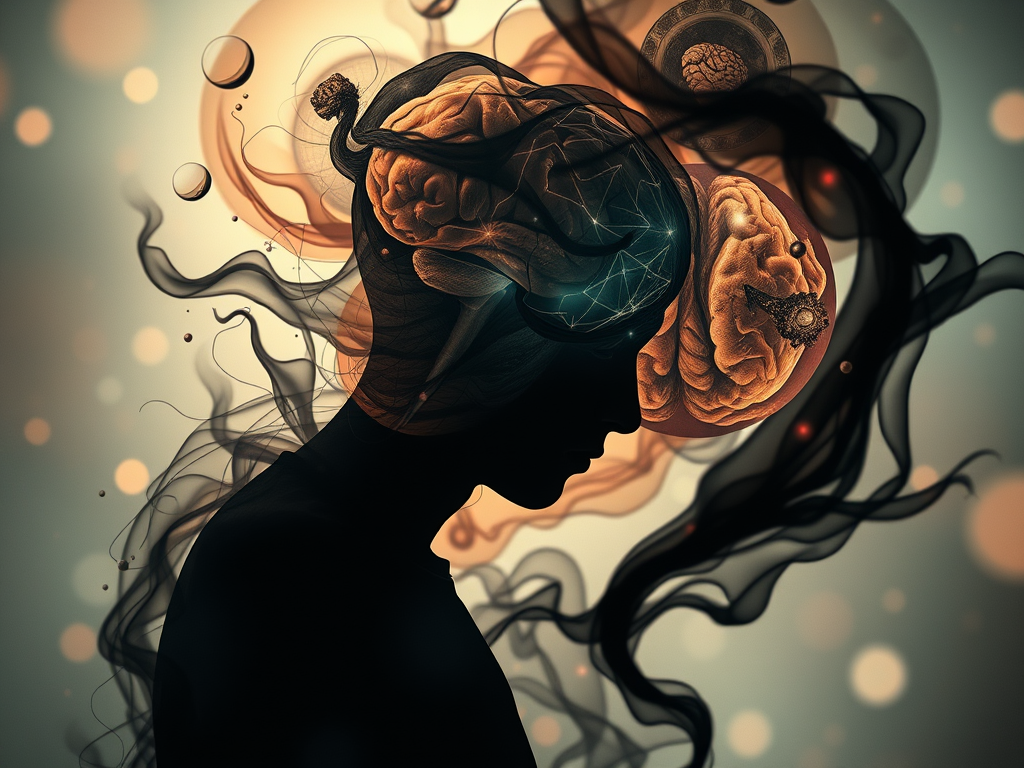
Questioner (Q): Is there a material or immaterial basis to everything?
Imaginary Philosopher: I wouldn’t ask that. It creates a false dichotomy and presumes too much.
Q: You don’t think it’s an important question?
IP: I think we urgently need to question the small visions driving us towards a cliff. Materialism is a blindingly short-sighted vision that degrades our relationship to earthly life. But I wouldn’t focus on an answer.
Q: Why not?
IP: Any answer to this question is a form of reductive materialism itself, creating dichotomy and conflict. Positive certainty is destructive. We end up thinking we’re absolutely right about something, and those who hold an opposing view become enemies.
Opposing views needn’t be in conflict. Materialism and Immaterialism are only what we see when facing different directions. It’s similar to microscopic and macroscopic visions. The microscope and the telescope don’t argue with each other. Each has limitations, which are partially completed by the other.
Q: Are you saying it’s both?
IP: Yes, that, and more, they’re all limited.
Q: What are the limitations of both views?
IP: Imagine the absurdity of visiting a doctor because your face is stuck in a frown. The materialistic doctor examines the face, and concludes that the cause of the frozen frown is a combination of changed patterns in blood flow, muscular tension, and temperature, recommending muscle relaxants. Such a doctor would dismiss “sadness” as a cause, because the existence of an immaterial state of mind would be pure conjecture. There’s no material proof of a mind that feels sad.
This may seem absurd, but this is how a typical scientist approaches the study of the material world. We measure the physical attributes of the world and don’t even bother to wonder if these complex systems of order indicate an immaterial intelligence of the earth itself. Materialism limits our vision.
But if we adhere to an opposing viewpoint – that only mind or spirit is real – then the body and the earth itself fade in importance, appearing merely as discardable clothing obscuring the spirit, or as mere illusions, or inanimate shells.
Western culture seems to be vacillating between these two extremes. An abstract Platonism that led to a Sky God divorced from earthly life, becoming a puritanical hatred of the body, which are all different forms of idealism.
And then this strange scientific materialism, which also degrades matter and mines the earth as if it were inanimate.
So, both viewpoints are limited.
Earthly life has been demeaned by both extremes, because we lost a “vision” of sacred matter — a materiality unsevered from the immaterial.
Q: Isn’t this vision of “sacred matter” another competing belief?
IP: Yes, it could degrade into another material fetish of a belief. Do we necessarily move from a belief in materialism or a belief in some form of immaterialism to a belief in “sacred matter?” Many believe that we can only move from one positive belief to another, that it’s impossible to relate intelligently to the world without a symbolic structure that guides us. But this belief is also limiting.
Is it possible to not merely question each belief from a new position of belief, but to question the whole category of “belief”, so that one is not merely thinking about previous forms of thought, but relating to every belief with unvested interest, or ultimate uncertainty?
Read More » Negative Geography